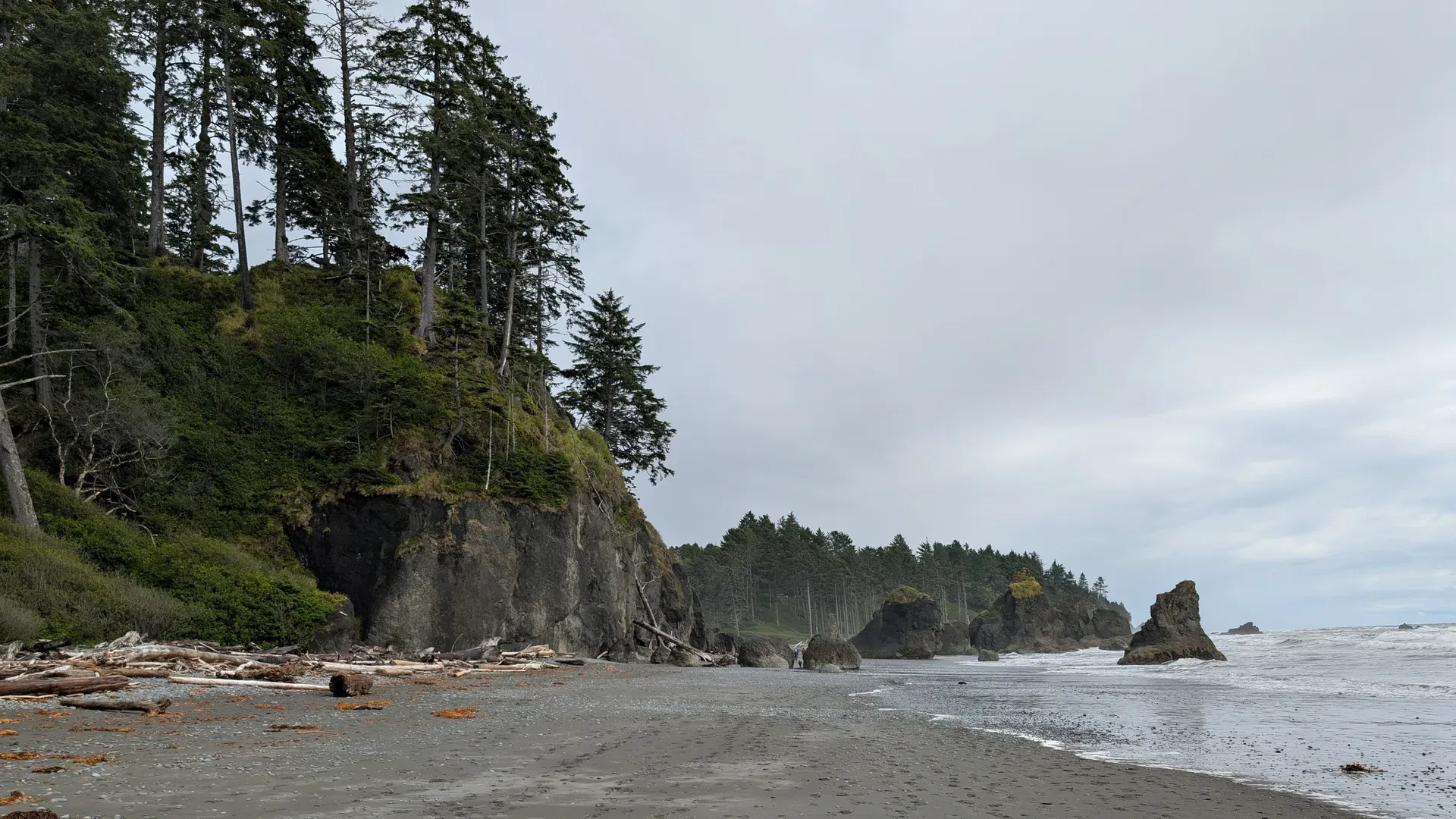
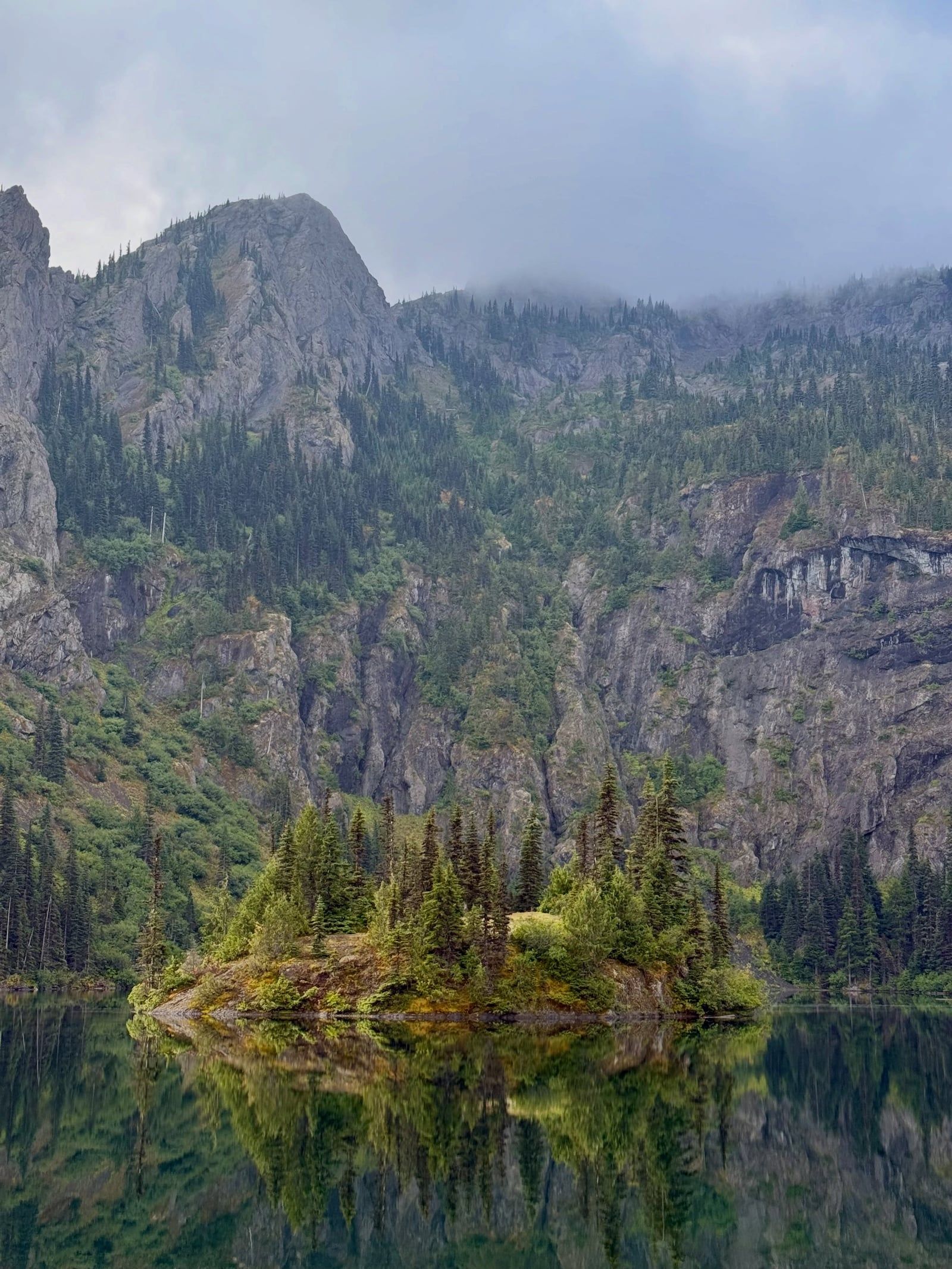
Olympic National Park covers 922,651 acres on Washington's Olympic Peninsula, roughly 45 miles west of Seattle. It protects three distinct ecosystems—glaciated mountains, temperate rainforests, and wild Pacific coastline—within a single boundary.
Olympic National Park occupies 922,651 acres of the Olympic Peninsula in northwestern Washington, roughly 45 miles west of Seattle. Highway 101 forms a ring around the park's perimeter, connecting the major entrances. There aren't any roads crossing the interior. The landscape divides into three distinct zones. Glacier-capped peaks dominate the center. Temperate rainforests fill the western river valleys. A separate 73-mile strip of rugged coastline borders the Pacific Ocean.
It's a UNESCO World Heritage Site and an International Biosphere Reserve. The park contains 16 endemic animal species and eight endemic plant species found nowhere else on Earth. Federal wilderness designation protects 95 percent of the land (876,447 acres). This leaves the vast majority of the park accessible only on foot. Visitors drive to the edges, park at trailheads or visitor centers, and walk.
Weather dictates access. The Hoh Rain Forest on the western slopes absorbs almost 12 feet of rain annually. The northeastern corner sits in a rain shadow and stays comparatively dry. Winter storms frequently close high-elevation roads like the 18-mile route to Hurricane Ridge. Heavy rains flood coastal trails and swell rivers.
Most visitors arrive via Interstate 5 and Highway 101, or take a Washington State Ferry across Puget Sound from Seattle. A half-day visit from Port Angeles covers Hurricane Ridge and Lake Crescent. Experiencing all three major ecosystems requires at least three days of driving. Midday waits at popular entrances run up to two hours in July and August. Arrive before 10 a.m. to secure parking.
Federal protection of the Olympic Peninsula began in 1897. President Grover Cleveland designated the area as the Olympic Forest Reserve to halt the rapid logging of the region's timber. Twelve years later, President Theodore Roosevelt established Mount Olympus National Monument. He aimed to protect the native Roosevelt elk population, which faced severe hunting pressure.
The monument status restricted some commercial use, but logging interests continually lobbied to reduce the protected boundaries. President Franklin D. Roosevelt visited the peninsula in 1937 to survey the contested forests. He supported a stronger conservation measure. Congress passed the enabling legislation the following year. FDR signed the bill on June 29, 1938, officially creating Olympic National Park.
The Civilian Conservation Corps arrived in the 1930s and 1940s. These crews cut trails, erected ranger stations, and built the early road network. Much of this infrastructure remains in use today. The park expanded several times, most notably adding the 73-mile coastal strip to protect the shoreline from highway development. In 1988, Congress designated 876,447 acres of the park as the Olympic Wilderness. This federal designation permanently banned motorized equipment, bicycles, and mechanized transport across 95 percent of the park.
Today, the National Park Service manages the land from its headquarters in Port Angeles. The park sees over three million recreational visits annually. Most historical structures, like the 1926 Lake Quinault Lodge and the Lake Crescent Lodge, operate as seasonal hotels. Historic ranger stations still serve backcountry hikers. Book rooms at Lake Crescent a year in advance if you're planning to stay inside the park boundaries.
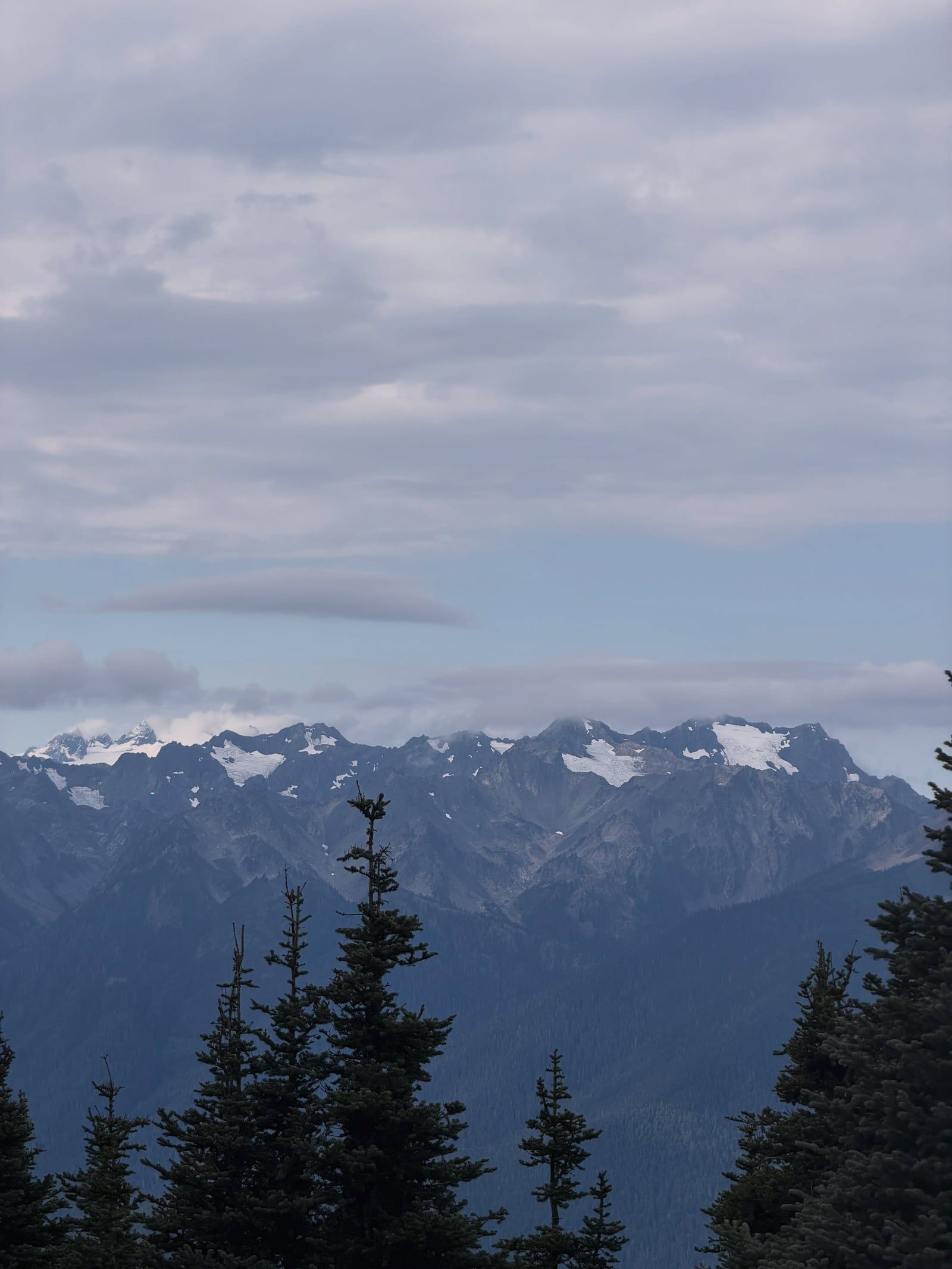
Mount Olympus anchors the park's interior at 7,980 feet. It receives an estimated 50 feet of snow each year. This heavy precipitation feeds 32 named glaciers. The mountains create a sharp rain shadow across the peninsula. Storms blow in from the Pacific Ocean, hit the western slopes, and drop massive amounts of water. The Hoh and Quinault river valleys absorb nearly 12 feet of rain annually.
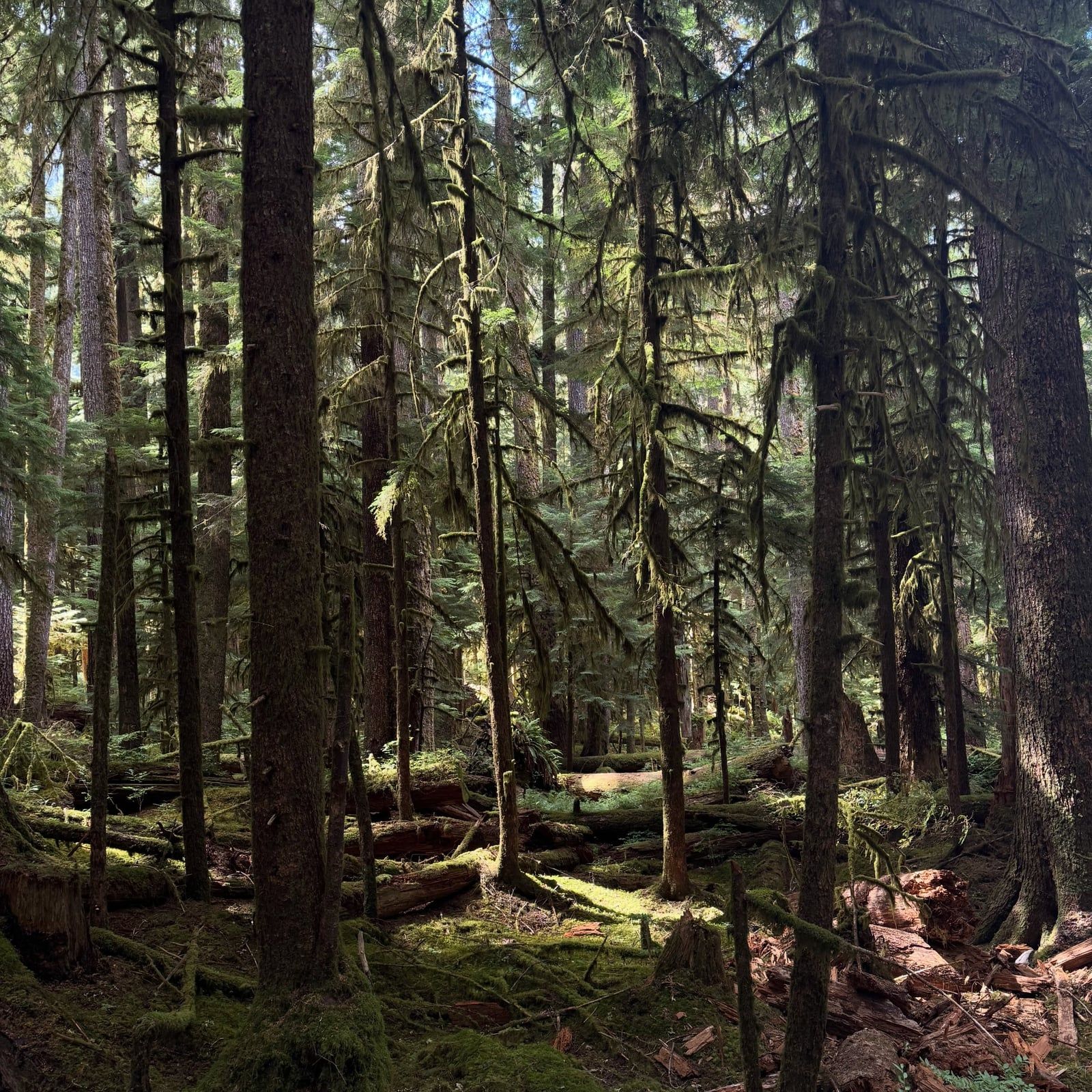
These western valleys hold massive old-growth temperate rainforests. Sitka spruce and Douglas fir trees dominate the canopy. Thick curtains of club moss drape over bigleaf maples, filtering the sunlight into a dim green glow. The forest floor is a dense mat of ferns and decaying nurse logs. The 0.8-mile Hall of Mosses Trail in the Hoh Rain Forest provides a flat, accessible route through this ecosystem.
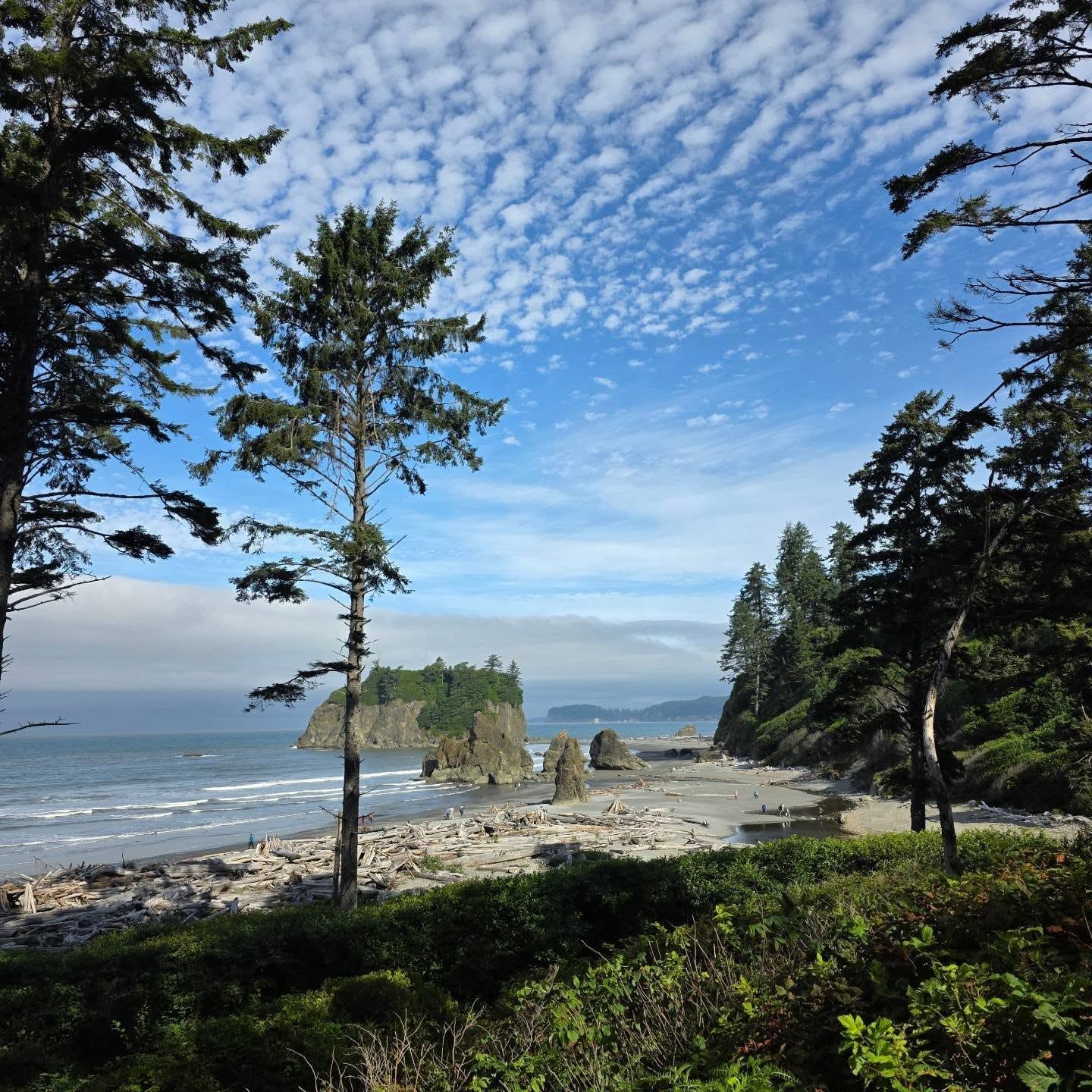
The park's coastal strip sits entirely separate from the mountainous core. Rialto Beach and Ruby Beach feature gray sand, massive driftwood logs, and steep basalt sea stacks rising from the surf. Tides dictate movement here. Hikers walking the 1.5 miles to the Hole-in-the-Wall rock formation at Rialto Beach must time their trip with the receding water.
Lake Crescent fills a glacially carved basin along Highway 101. The lake is known for its deep, clear blue water and lacks the nitrogen that supports algae growth. A 1.8-mile round-trip hike from the lake leads to Marymere Falls. Always carry a printed tide chart from a visitor center when exploring the coast, as sneaker waves routinely sweep over the lower rocks.
Eight Native American tribes have ancestral ties to the lands and waters of the Olympic Peninsula: the Hoh, Jamestown S'Klallam, Lower Elwha Klallam, Makah, Port Gamble S'Klallam, Quileute, Quinault, and Skokomish. These communities have harvested salmon, hunted elk, and gathered cedar bark in the region for thousands of years. The park protects numerous archaeological sites that document this continuous habitation.
At Wedding Rocks, located along the park's northwestern coast, hikers can see ancient petroglyphs carved into the basalt boulders. These carvings depict whales, hunters, and sailing ships. The site sits along the 9-mile Ozette loop trail. The Makah Tribe operates a museum in nearby Neah Bay, outside the park boundaries, displaying artifacts recovered from a coastal village buried by a mudslide 500 years ago.
The park is a living laboratory for ecological restoration. In 2014, the largest dam removal project in U.S. history concluded on the Elwha River inside the park. The removal allowed wild Pacific salmon to return to their historic spawning grounds for the first time in a century. When visiting the Elwha Valley, walk the short Madison Falls trail to see the recovering river ecosystem.
The Hoh Rain Forest receives almost 12 feet (3.6 meters) of rain per year.
President Theodore Roosevelt originally protected the area to save the native Roosevelt elk.
Mount Olympus receives an estimated 50 feet of snow annually, sustaining 32 named glaciers.
There aren't any roads crossing the park's interior; 95 percent of the land is roadless wilderness.
The Olympic marmot is an endemic species found only in the high alpine meadows of this park.
The park's 73-mile coastal strip is completely detached from the main mountainous section.
Drones are strictly prohibited everywhere within the boundaries of Olympic National Park.
The entrance fee is $30 for a private vehicle, valid for seven consecutive days. Motorcycles cost $25, and individuals on foot or bicycle pay $15. Annual and interagency passes are also accepted.
The park is open 24 hours a day, 365 days a year. However, high-elevation roads like Hurricane Ridge frequently close during winter storms. Visitor centers also close on major holidays like Thanksgiving and Christmas.
June through September offers the most reliable weather, open facilities, and long daylight hours. May and September provide good access with noticeably fewer crowds. Winter brings heavy rain and frequent road closures.
You don't need a reservation to enter the park. You do need advance reservations for peak-season camping at major campgrounds like Hoh and Kalaloch. Overnight wilderness permits also require a reservation through recreation.gov.
Pets are prohibited on almost all trails, in the wilderness, and inside park buildings. You can walk leashed pets in drive-in campgrounds, picnic areas, and on a few specific paths like the Spruce Railroad Trail.
The park covers 922,651 acres and features 660 miles of trails. You need at least three days to drive between and explore the mountain, rainforest, and coastal ecosystems. A half-day trip only allows time for one area.
The park protects over 70 miles of wild Pacific coastline with sea stacks and tide pools. It also contains massive old-growth temperate rainforests like the Hoh and Quinault valleys. These forests receive up to 12 feet of rain annually.
No. Launching, landing, or operating unmanned aircraft is completely prohibited everywhere within the park boundaries. This federal rule protects wildlife and visitor safety.
The park recorded 2,947,503 recreational visits in 2023. That number rose to 3,717,267 visits in 2024. It is a heavily visited national park.
Mount Olympus is the highest peak at 7,980 feet. It supports 32 named glaciers due to massive annual snowfall. The mountain receives an estimated 50 feet of snow each year.
Browse verified tours with free cancellation and instant confirmation.
Find Tours