Three days is enough to see all three faces of Olympic National Park — glaciers, Pacific surf, and moss-draped rainforest — but only if you plan it as a loop, not a checklist. The park covers 922,650 acres with no roads through the middle; Highway 101 circles it and dead-end roads branch off toward each highlight. Done right, the trip is one of the best in the national park system. Done wrong, it's three days of windshield time.
This itinerary strings Hurricane Ridge, Lake Crescent, Sol Duc, one or two wild beaches, the Hoh Rainforest, and the Quinault Valley into a clockwise loop with two lodging bases. It budgets your driving honestly, sequences Day 2 around the tide chart, and tells you exactly what to cut when weather or crowds turn against you.
3 Days in Olympic National Park at a Glance
Yes, the plan is doable — and here's the honest math. The full loop from Seattle, around the peninsula, and home runs just under 500 miles with about 11 hours behind the wheel spread across three days. That's manageable because the driving comes in chunks, not one epic haul: the longest single stretch is Day 3's run from the Hoh down the coast and back to Seattle.
| Day | Headline stops | Sleep | Driving |
|---|---|---|---|
| 1 | Hurricane Ridge, Hurricane Hill, Marymere Falls, Lake Crescent | Port Angeles or Lake Crescent | ~1.5 hours |
| 2 | Sol Duc Falls, hot springs soak, Rialto or Second Beach | Forks or Kalaloch | ~2.5–4 hours |
| 3 | Hoh Rainforest, Ruby Beach, Tree of Life, Quinault Valley | Home (or Lake Quinault) | ~4–5 hours |
Two lodging bases make the loop work: Port Angeles (or Lake Crescent Lodge) for nights 1–2, then Forks or Kalaloch for night 3. One base fails here because Hurricane Ridge sits 45 minutes southeast of Port Angeles while the Hoh Rainforest sits an hour west of Forks — you'd spend your trip backtracking along Highway 101.
Getting there takes about 2.5–3.5 hours from Seattle, depending on route. The pleasant option is the Seattle–Bainbridge ferry: a 35-minute crossing, then roughly two hours of driving to Port Angeles. Most people fly into Sea-Tac, rent a car, and do exactly that. If you'd rather not plan the driving yourself, a self-guided driving tour handles the route and the stops for you.
One rule governs everything: swap your days to match the weather. Mountain views need clear air; the rainforest and the beaches actually improve in drizzle and fog. Check the forecast the night before you leave Port Angeles and shuffle accordingly.
Know Before You Go: Fees, Reservations, and Logistics
Entry costs $30 per private vehicle, valid for seven consecutive days and covering everyone inside. America the Beautiful and other interagency passes work too. There's no park-wide timed-entry program — unlike Glacier or Rocky Mountain — so you don't need to win a reservation lottery to visit. Buy the pass at the gate or in advance through Recreation.gov.
A few things do require bookings. Kalaloch Campground takes reservations May 15 through September 20 on recreation.gov, and the Hoh, Mora, Sol Duc, Fairholme, and Staircase campgrounds also reserve during peak season. Overnight backpacking needs a wilderness permit ($8 per person per night plus a $6 reservation fee). If you're heading to Cape Flattery or Shi Shi Beach, that's Makah tribal land — a separate Makah Recreation Permit, bought in Neah Bay, is required and stays valid for the calendar year.
Cell service dies fast outside the towns, so download offline maps before Port Angeles and fill your gas tank there too — Forks is your last reliable fuel before the coast. Call the park's road and weather line at 360-565-3131 the morning of any mountain drive. And check the NOAA tide chart for La Push (station 9442396) the night before any beach day; that number decides your Day 2 schedule.
Pack for rain in any month: waterproof shell, non-cotton layers, boots that handle mud and wet rock, a headlamp for dusk tide-pooling, and a cooler loaded with groceries. Temperatures swing 10–20°F in a single day here. Travelers starting in the city can also skip the driving entirely with tours from Seattle.
Best Time to Visit for a 3-Day Trip
Late June through early September is the reliable window: mild temperatures, minimal rain, and nearly every road and facility open, with daylight from about 5 am to 10 pm near the solstice. That's also peak crowd season, so early arrivals at Hurricane Ridge, Sol Duc, and the Hoh stop being advice and become requirements.
September is the connoisseur's pick. Most areas stay open, the light turns golden, and the summer lines disappear. May works similarly but with more weather risk at elevation. November through March is the wet, quiet season — Hurricane Ridge opens weekends only, weather permitting, and the Sol Duc road and hot springs close from roughly late October to late March. The Hoh visitor center also runs on a seasonal schedule.
Rain is possible every month, even July. That's not a reason to cancel; it's the reason to keep your day order flexible. A wet forecast moves the rainforest and beach days forward and saves Hurricane Ridge for whatever clear window appears.
Where to Stay and Eat
Base 1 is Port Angeles for nights 1 and 2 — the largest town on the peninsula, 45 minutes from Hurricane Ridge and 45 minutes from Sol Duc, with the park's main visitor center. Lake Crescent Lodge is the atmospheric alternative right on the lake, but it books out far ahead for summer. Base 2 is Forks for night 3: unglamorous, affordable, and 50–60 minutes from the Hoh Rainforest. Kalaloch Lodge trades convenience for an oceanfront room above the surf.
Camping splits into two categories. Only Kalaloch, Mora, and Sol Duc Hot Springs campgrounds take reservations (roughly $15–24 a night), and they go fast; most others are first-come, first-served. Do not arrive on a summer Friday hoping to find a site — that's how vacations get re-planned at 9 pm.
The food strategy that saves the most daylight: one big grocery stop in Port Angeles on arrival, then a cooler in the trunk. Lake Crescent, Rialto, and Ruby Beach are all built for picnics. For hot meals, Port Angeles gastropubs handle arrival night — Next Door Gastropub is the local favorite — and Sully's Drive-In in Forks does the 'Bella Burger' in about the time it takes to gas up.
Day 1: Hurricane Ridge and Lake Crescent
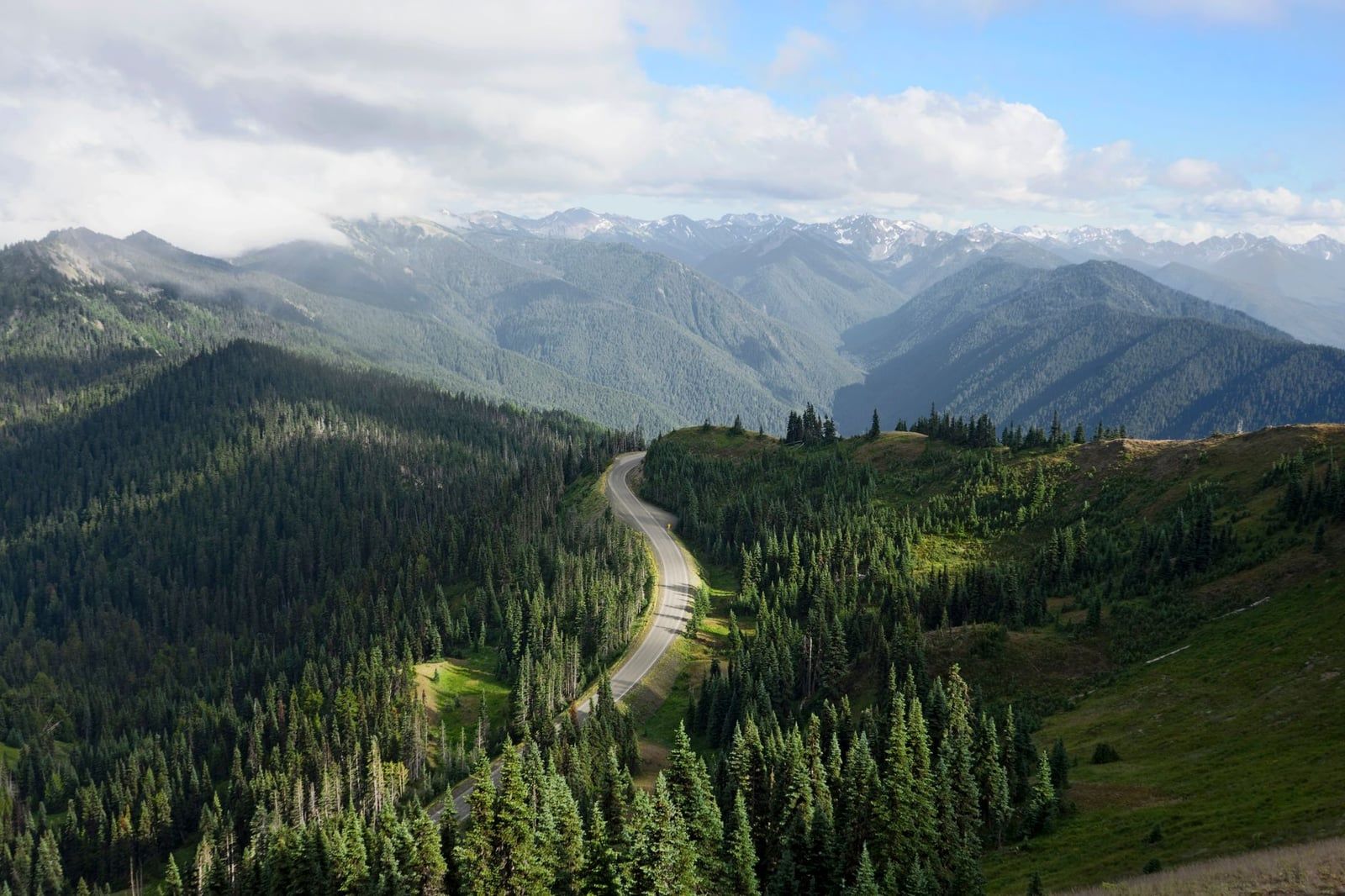
Morning: Hurricane Ridge and Hurricane Hill
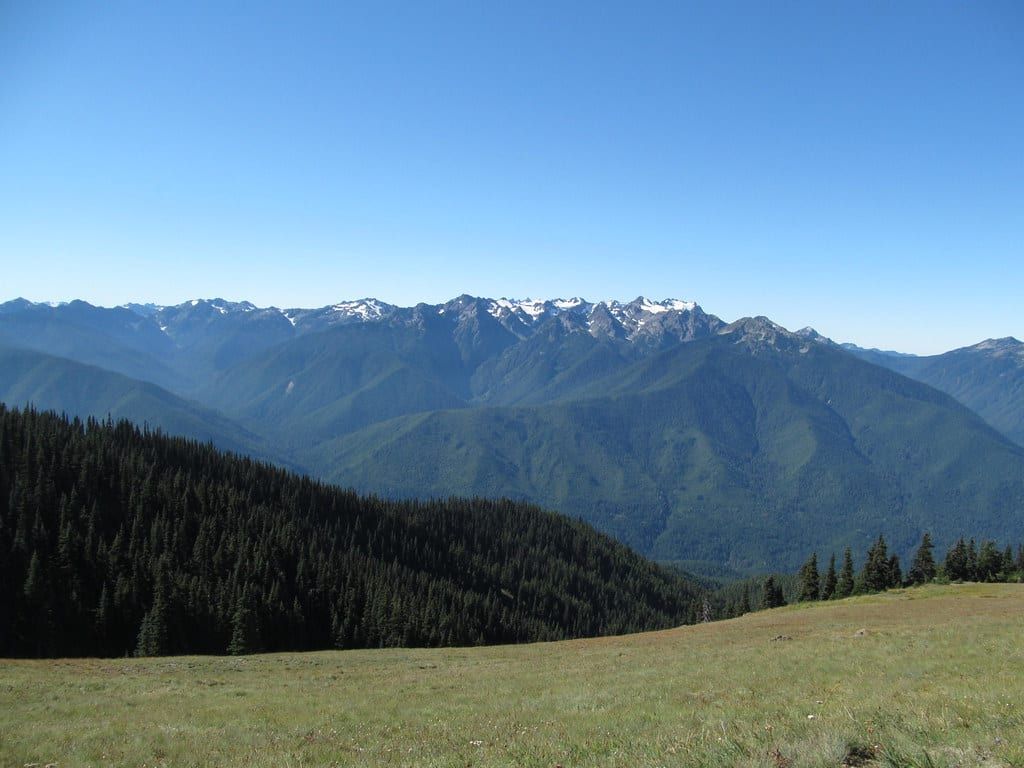
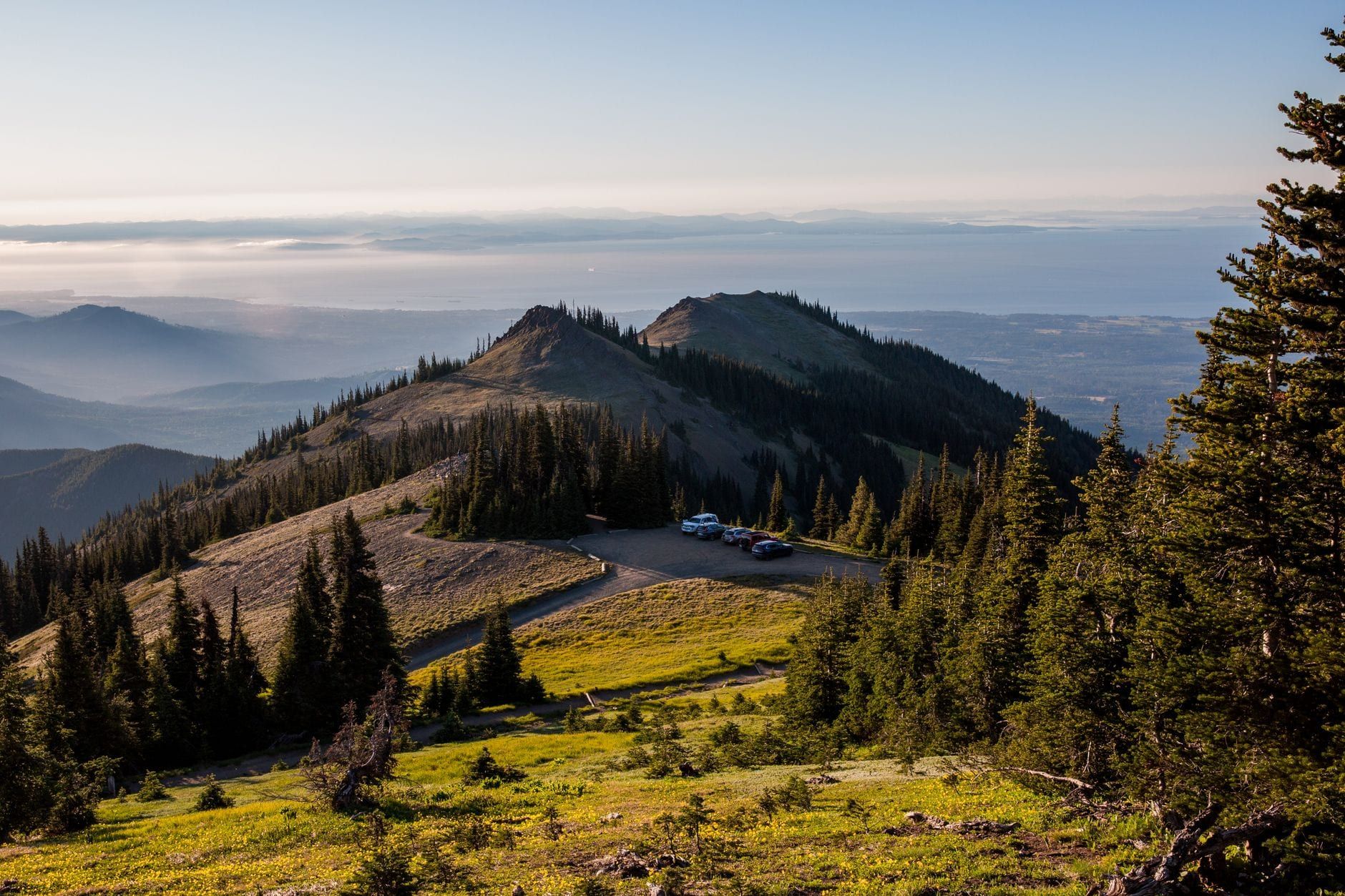
Leave Port Angeles by 8 am in summer — the road up is 17 miles and about 45 minutes, and the parking lot at the top fills by mid-morning. At 4,242 feet, the ridge is the park's most accessible alpine country, with the Olympic Mountains laid out from the parking area itself. Watch the meadow edges for Olympic marmots; they exist nowhere else on Earth.
If the weather holds, hike the Hurricane Hill Trail: 3.2 miles round trip on pavement, about 700 feet of gain, and a 360-degree payoff that reaches Vancouver Island and the Strait of Juan de Fuca on a clear day. Budget 90 minutes. If clouds sit on the ridge, skip the hike, drive back down, and save the day for the lake — the ridge in fog is a parking lot with a view of gray.
Midday: Two Waterfalls and an Easy Descent
Two waterfall stops break up the drive west on Highway 101. Madison Falls is a tenth of a mile on pavement — wheelchair-accessible, 60 feet of falling water, ten minutes total. Marymere Falls takes 1.8 miles of round-trip walking through old-growth forest from the Storm King Ranger Station at Lake Crescent to a 90-foot falls. Do both if you're moving fast; Marymere alone if you're not.
Want a bigger morning? Mount Storm King is the strenuous option — 4.1 miles round trip, about three hours, with a rope-assisted scramble near the summit. Bring gloves for the ropes. It's the best view on the north side of the park and it earns every foot of its 2,000-foot climb.
Afternoon: Lake Crescent
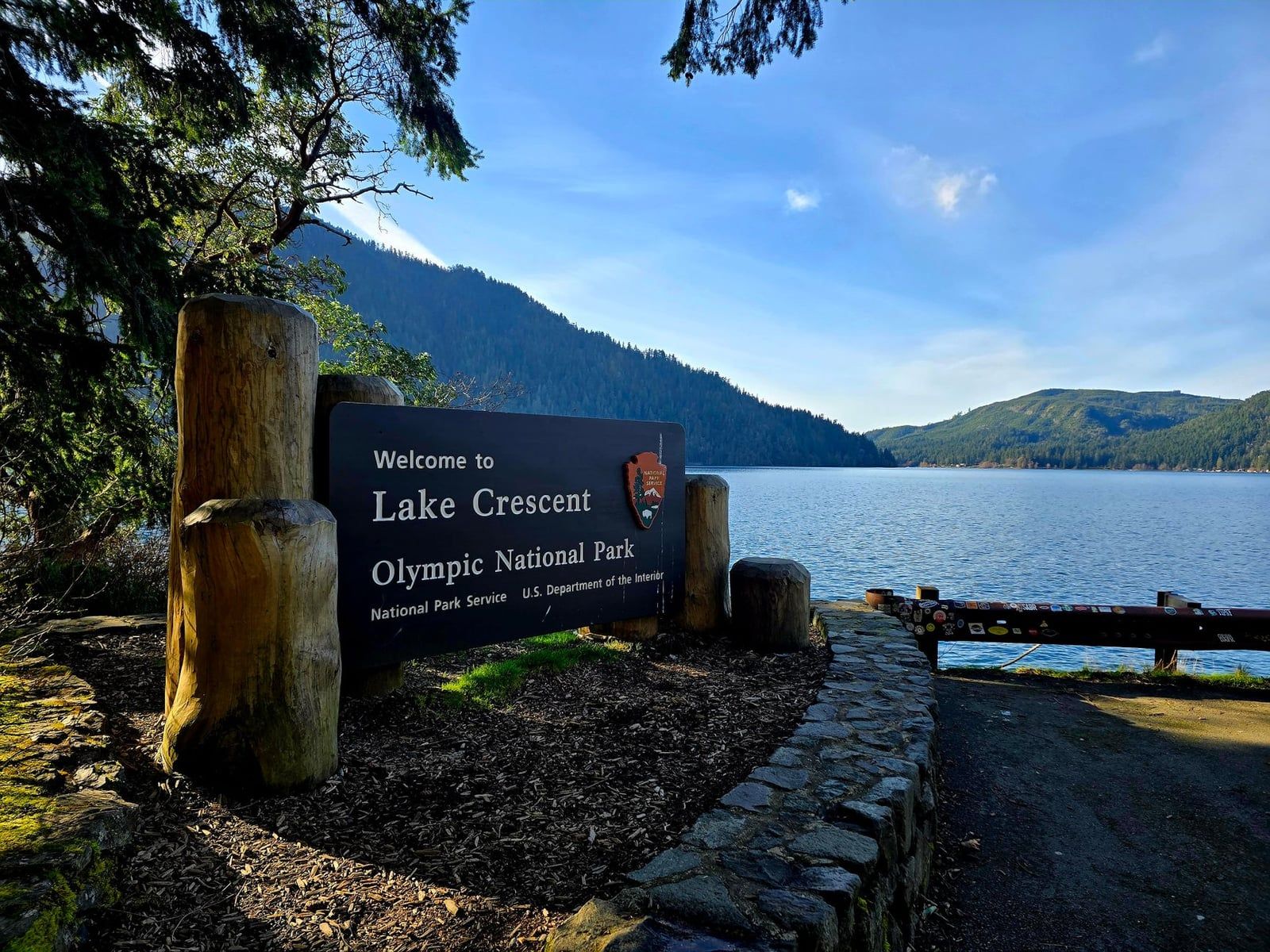
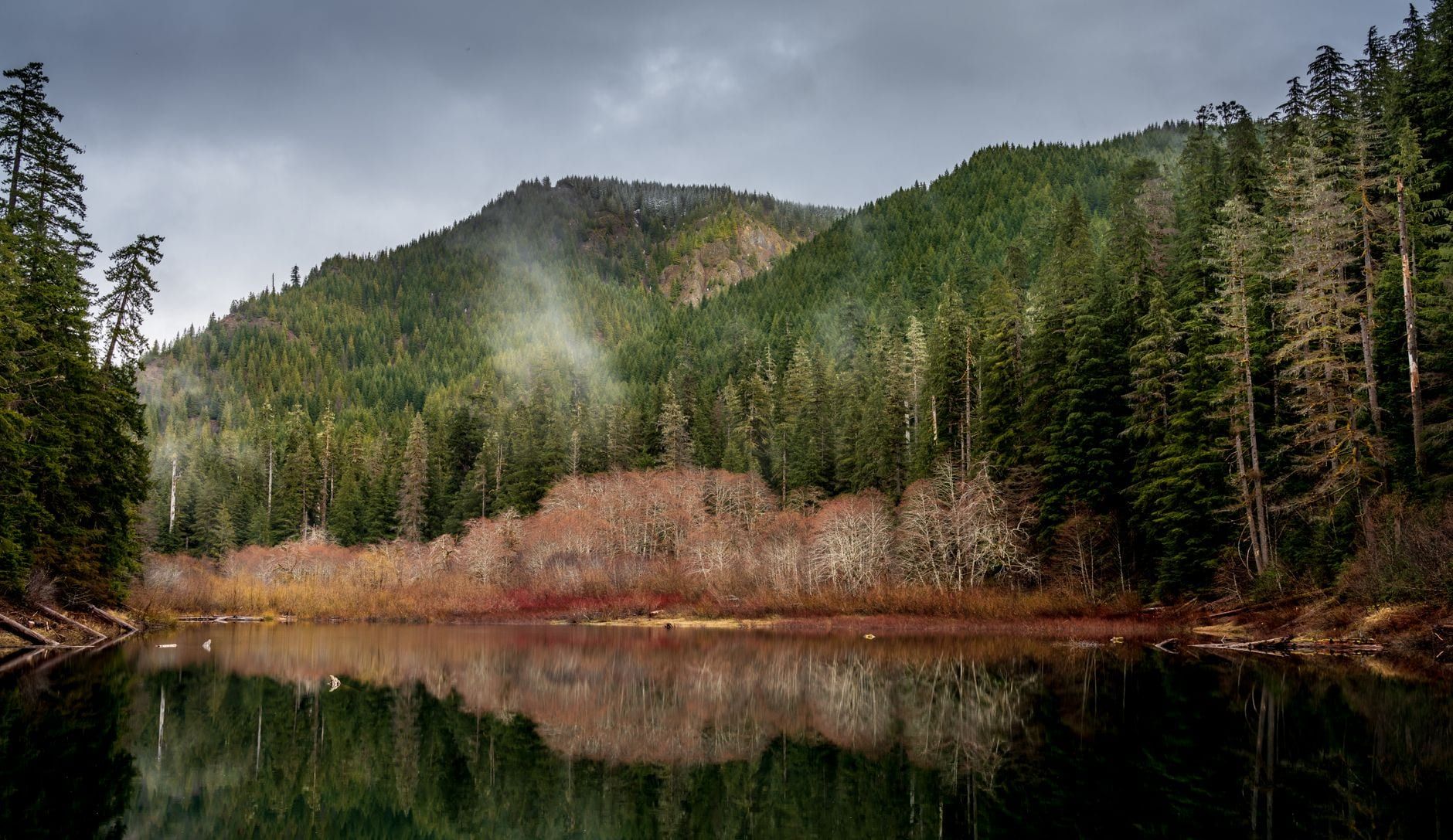
Spend the afternoon on the lake, whose glacial water is so clear and deep blue it looks dyed. Lake Crescent Lodge rents kayaks, canoes, and paddleboards in summer; the Log Cabin Resort does too. Swimming off the lodge's beach is cold and worth it after a ridge morning. Grab a picnic table, stay for sunset over the water, and drive back to Port Angeles in the dark. Our full Lake Crescent guide covers hikes, swimming spots, and where to stay.
Crowd-avoidance notes: Deer Park, reached by a gravel road with no services, delivers big alpine views with a fraction of the visitors — high-clearance vehicles only. Clallam Transit has run a summer shuttle from Port Angeles to the ridge, which sidesteps the parking crunch entirely. And since the 2023 lodge fire, confirm the road is open before you commit. If you want more trail options for this day or any other, our best hikes in Olympic guide sorts them by region.
Day 2: Sol Duc, the Coast, and the Tide Clock
Day 2 runs waterfalls in the morning and surf in the afternoon, and the tide chart — not your appetite — sets the schedule. Look up tomorrow's low tide for La Push tonight, then build the day backward from it: the beach hike gets the low-tide window and everything else fills in around it.
Morning: Sol Duc Falls and an Optional Soak
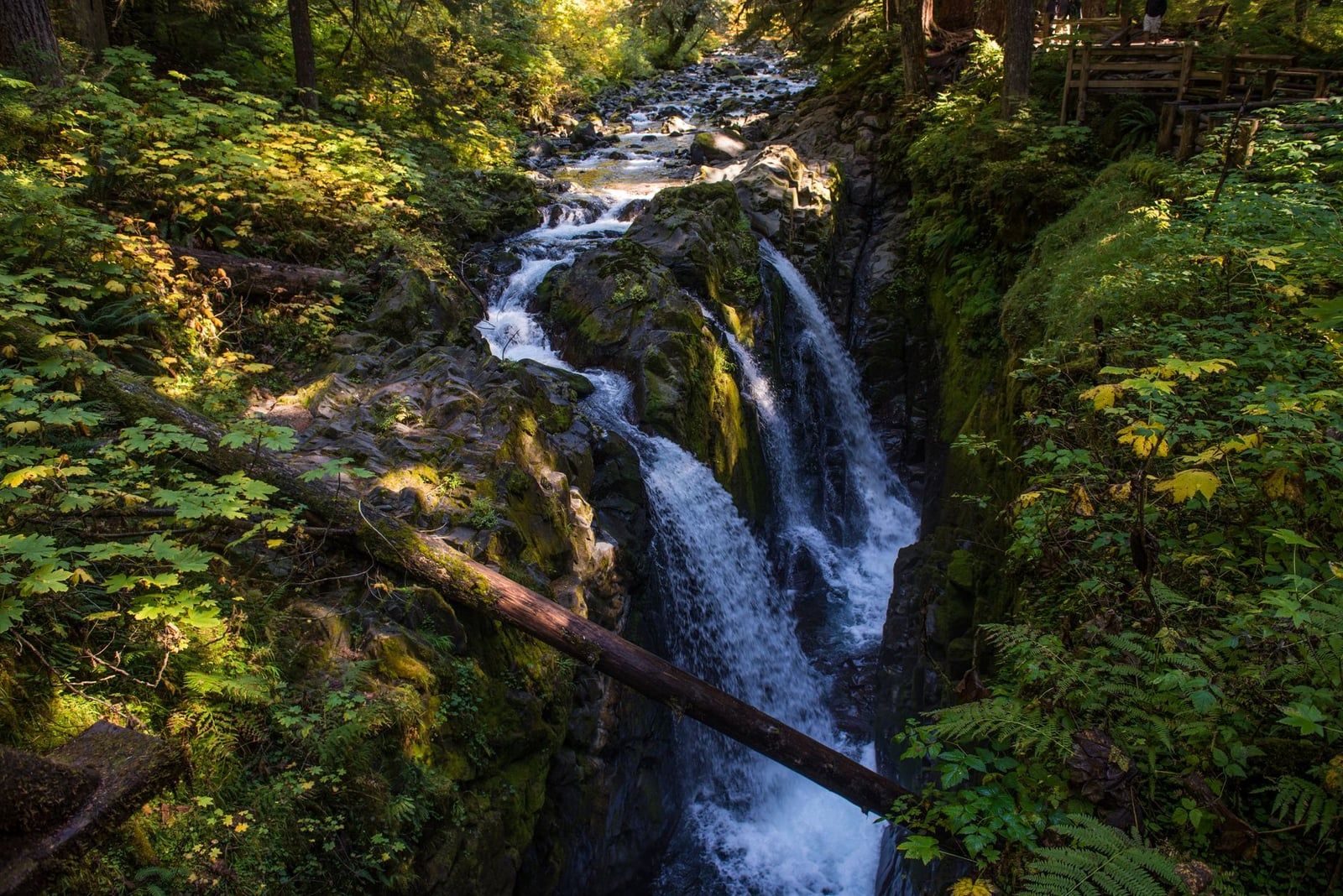
Start at Sol Duc Falls, a 1.6-mile round-trip walk through old-growth forest to a waterfall that splits into three chutes in a narrow slot canyon. The trail is gentle and the falls run hard year-round. If you're here late summer into fall, add the Salmon Cascades overlook a short drive up the road, where salmon leap the rapids on their way upstream.
The Sol Duc Hot Springs Resort sits near the trailhead: three mineral pools ranging 99–104°F plus a freshwater pool. Non-guests can buy day passes, with towels and lockers for rent, and soaks run in 1.5-hour sessions reserved in person, first-come. It's a 90-minute detour from your day — a good one after a cold morning, if the tide schedule allows. The resort operates roughly late March through late October.
Afternoon: One Beach, Timed to the Tide
Rialto Beach is the drive-up choice. From the parking lot it's 3.3 miles round trip up the beach to Hole in the Wall, a sea arch carved into a headland that you can walk through — and only through — near low tide. Wear closed-toe shoes; the route is cobble, slick rock, and driftwood. Arrive as the tide drops, eat lunch on the logs, and let the tide keep falling while you poke the tide pools. Our Olympic tide pool guide covers what you'll find in them, from sea stars to anemones.
Second Beach is the wilder option: about a mile of forest trail each way, descending to sea stacks, tide pools, and the best sunset on this coast. It costs more effort than Rialto and gives back more drama. If your low tide lands late in the day, Second Beach at golden hour is the easy call.
Here's the decision rule most itineraries dodge. Cape Flattery — the northwesternmost point of the contiguous U.S., reached by an easy 1.2-mile boardwalk on Makah land — adds about 2.5 hours of driving plus a permit stop in Neah Bay. If you add it, pick exactly one beach. Without it, two beaches fit if the tides cooperate. Never all three; that's a day of driving pretending to be a day of sightseeing.
End the day in Forks: gas, groceries, and if the Twilight thing means anything to you, a quick photo stop. Two good overnight options are a Forks motel or the oceanfront Kalaloch Lodge, an hour south. For help choosing among all of Olympic's beaches, our dedicated guide breaks down access, permits, and tide-timed plans.
Day 3: Hoh Rainforest, Ruby Beach, and Quinault
The final day doubles as the drive home: rainforest in the early morning, then the south-coast beaches and the Quinault giants strung along Highway 101 southbound. It's the biggest driving day of the three, which is exactly why the first stop carries a hard deadline.
Early: The Hoh Rainforest
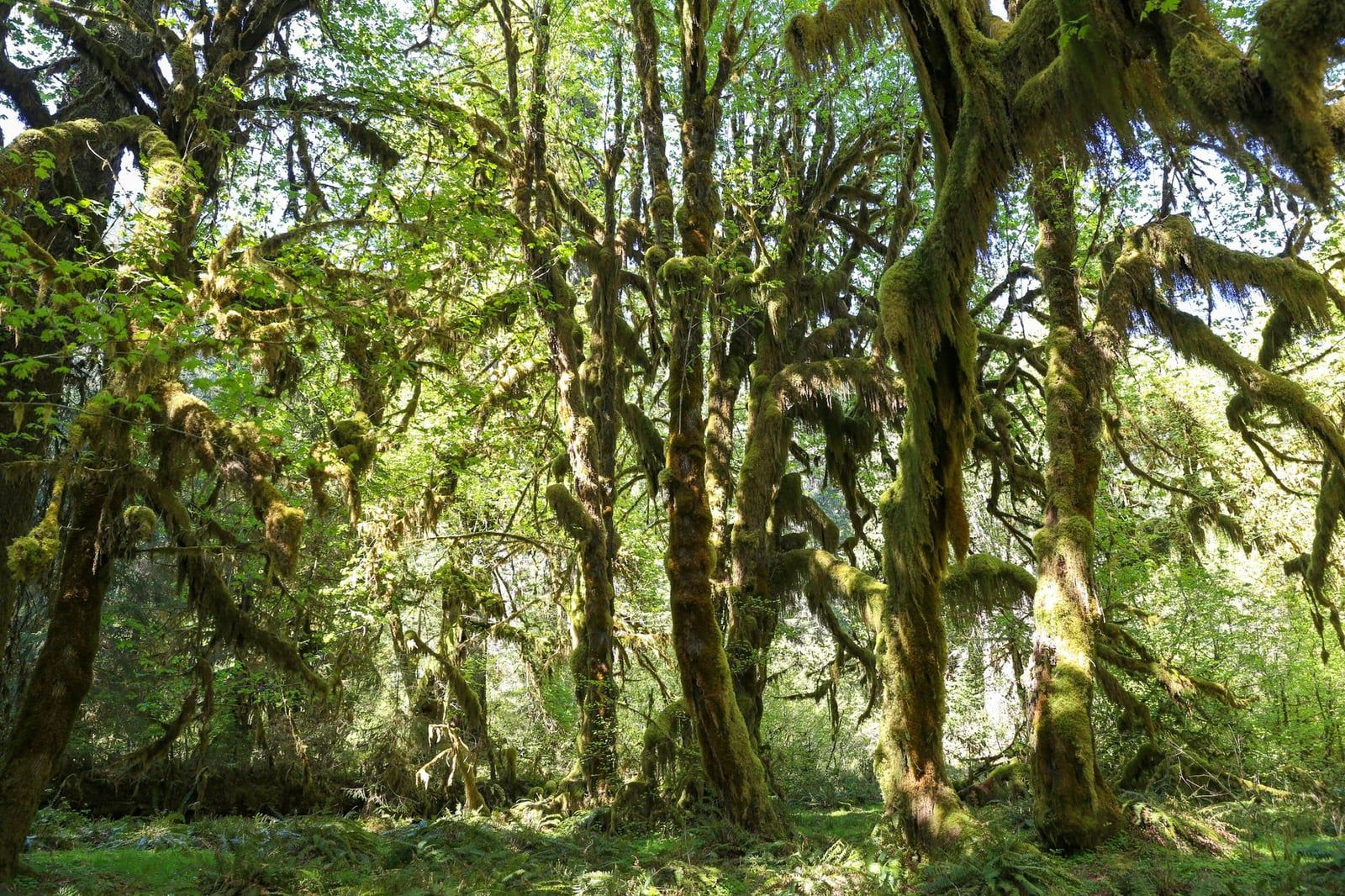
Be at the Hoh when the gate opens — before 9 am in summer. The parking lot is small and mid-morning waits of one to two hours have become routine; one traveler following a published itinerary hit a two-hour line at 10 am. Note the Hoh also adds about an hour of round-trip driving off Highway 101, so this early start is what makes the rest of the day work.
Walk both loops. The Hall of Mosses is 0.8 miles through old-growth forest where bigleaf maples wear curtains of club moss and the light comes down green. The Spruce Nature Trail is 1.2 miles along the Hoh River and Taft Creek. Together they're about two hours at a camera-stopping pace. The valley gets around 12 feet of rain a year — a third of Seattle's total falls in a month here — and Roosevelt elk graze the meadows near the road.
Midday: Ruby Beach and the Tree of Life
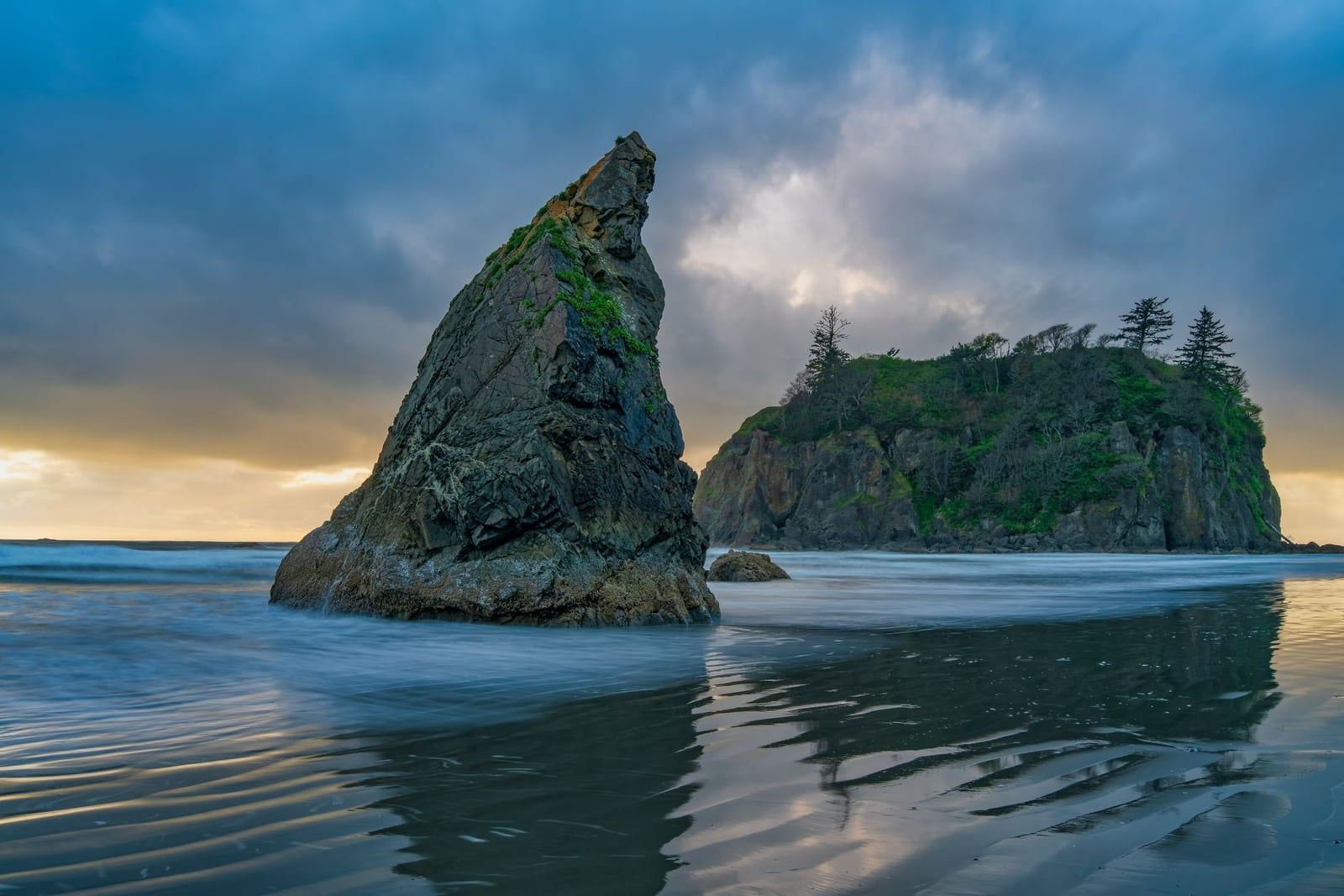
Ruby Beach, about 90 minutes south, is the easiest sea stacks on the Olympic coast — a short walk from the parking lot through a driftwood maze to tide pools at the base of the rocks. It's the natural lunch stop on this route. Twenty minutes farther south, at Kalaloch, the Tree of Life perches over a hollowed-out bluff: a centuries-old Sitka spruce whose roots hang exposed above the beach. Look at it. Don't stand under it or hang from the roots — it's genuinely unstable, for both you and the tree.
Afternoon: The Quinault Valley
The Quinault Valley, about an hour south of Kalaloch, is the Hoh without the crowds. The Rain Forest Nature Trail is a short interpretive loop; from the ranger station on the lake's north shore you can add the Kestner Homestead Trail (1.5 miles) and the half-mile Maple Glade Rain Forest Trail. Don't skip the World's Largest Sitka Spruce: a 0.4-mile round-trip walk to a tree about 1,000 years old, roughly 191 feet tall with a 58-foot-11-inch circumference. Then have a look at Lake Quinault Lodge, built in 1926, before the drive home.
One quirk worth knowing: Lake Quinault's north shore is national park, but the south shore — where the lodge sits — is Olympic National Forest, with different pass rules. The return drive to Seattle runs about 2.5–3 hours, longer with ferry waits. If Day 3 feels too full, cut Quinault and drive straight home up 101 — the Hoh and Ruby Beach are the non-negotiables.
If You Have More or Fewer Than 3 Days
With two days, keep one beach and one rainforest and cut Sol Duc — or cut Hurricane Ridge instead if the forecast is fog. The logic is weather-driven, not preference-driven: pick whichever mountain-or-forest pairing the sky supports. We have a full two-day Olympic itinerary that works through the cuts in detail. With one day, choose a single area and see it properly: Hurricane Ridge on a clear day, the Hoh or a beach in the wet.
A fourth day unlocks the corners this loop skips. Cape Flattery and the Makah Museum in Neah Bay — if you passed on Day 2 — or Shi Shi Beach, an 8.8-mile round-trip hike on the Makah Reservation covered by the same recreation permit. Lake Ozette offers a 9-mile loop pairing a boardwalk forest trail with wild beach and ancient petroglyphs at Wedding Rocks. Closer in, the Staircase area and Deer Park thin the crowds considerably.
Bigger ideas: whale watching out of Port Angeles, a day trip to Victoria, British Columbia on the Coho ferry, or an overnight beach backpacking trip with a wilderness permit. And if you're weighing Olympic against Washington's other marquee park, decide before you book — a fourth day is also enough to add a taste of Mount Rainier.
Frequently asked questions
Is 3 days enough for Olympic National Park?
Yes, for the highlights — one day per ecosystem covers Hurricane Ridge, the coast, and the Hoh. But the loop is roughly 500 miles and 11 hours of driving, so expect full days. Four or five days lets you add Cape Flattery, Shi Shi Beach, or unhurried beach time.
Do I need a reservation or timed entry for Olympic National Park?
No timed-entry reservation is required to enter — just the $30-per-vehicle fee, valid for 7 consecutive days. Check the NPS alerts page before travel, since Hurricane Ridge access and services have shifted since the May 2023 lodge fire. Kalaloch Campground does require reservations May 15–September 20.
What is the best month to visit Olympic National Park?
Late June through early September: warm, mostly dry, and everything open. September trades a little warmth for far fewer crowds and most areas stay accessible. In winter, Hurricane Ridge opens weekends only and the Sol Duc road and hot springs close from roughly late October to late March.
Which beach should I choose: Rialto, Second Beach, or Ruby Beach?
Rialto is drive-up, with the 3.3-mile round-trip walk to the Hole in the Wall arch at low tide. Second Beach needs a 1-mile forest hike each way and delivers the best sea stacks and sunsets. Ruby Beach is the easiest access for a short stroll and tide pools. Pick by your tide window and energy.
Can you soak at Sol Duc Hot Springs without staying at the resort?
Yes. Day-use passes cover three mineral pools at 99–104°F plus a freshwater pool, with towel and locker rentals. Sessions run 1.5 hours, reserved in person on a first-come basis. The resort generally operates late March through late October.
Do I need a permit for Cape Flattery or Shi Shi Beach?
Yes — a Makah Tribe Recreation Permit, purchased in Neah Bay, is required for both. It's valid for the calendar year, so one permit covers Cape Flattery's 1.2-mile boardwalk and a Shi Shi Beach hike on the same trip.
Where should I stay each night for a 3-day itinerary?
Nights 1–2 in Port Angeles or at Lake Crescent Lodge, closest to Hurricane Ridge and Sol Duc. Night 3 in Forks (50–60 minutes from the Hoh) or oceanfront at Kalaloch Lodge. Book summer lodging months ahead.
When should I visit the Hoh Rain Forest to avoid crowds?
Arrive before 9 am in summer — the lot is small and waits of 1–2 hours have been reported by mid-morning. The Hoh visitor center is seasonal. The Quinault Rain Forest is the quieter alternative, with its own record-size trees.