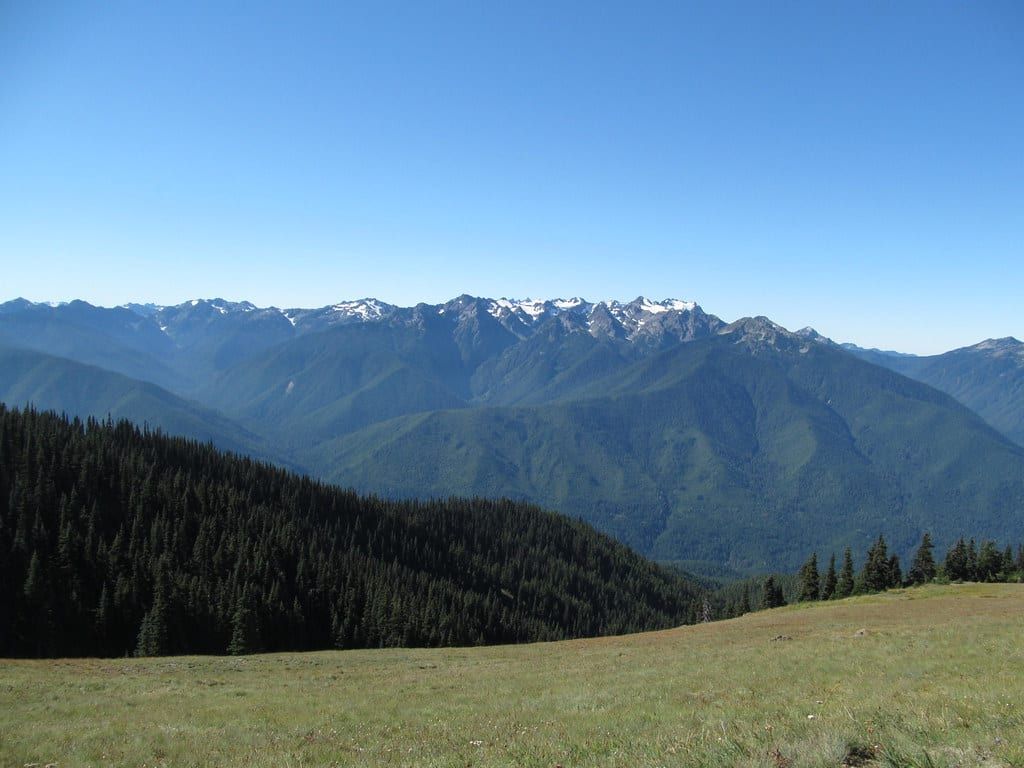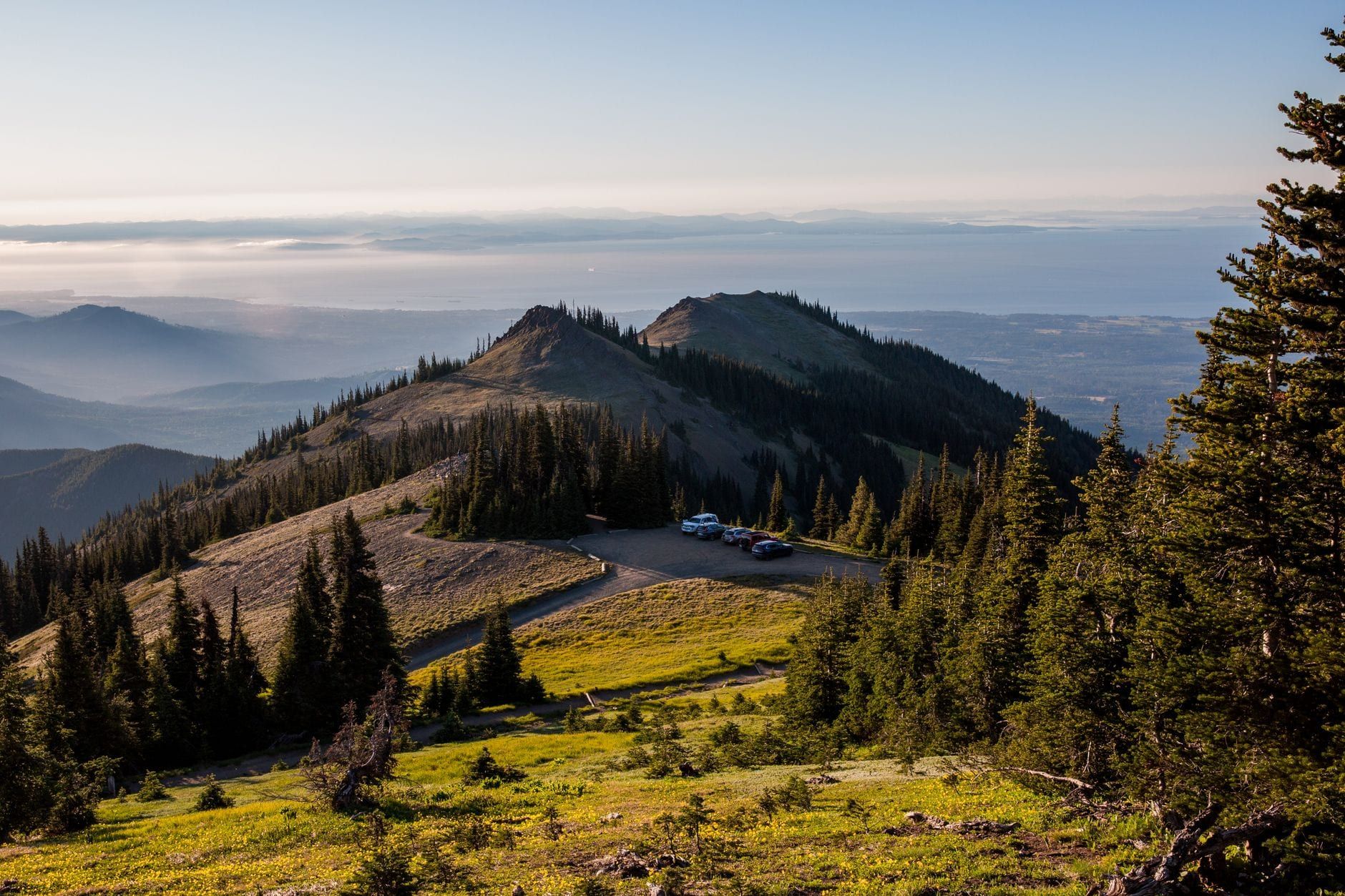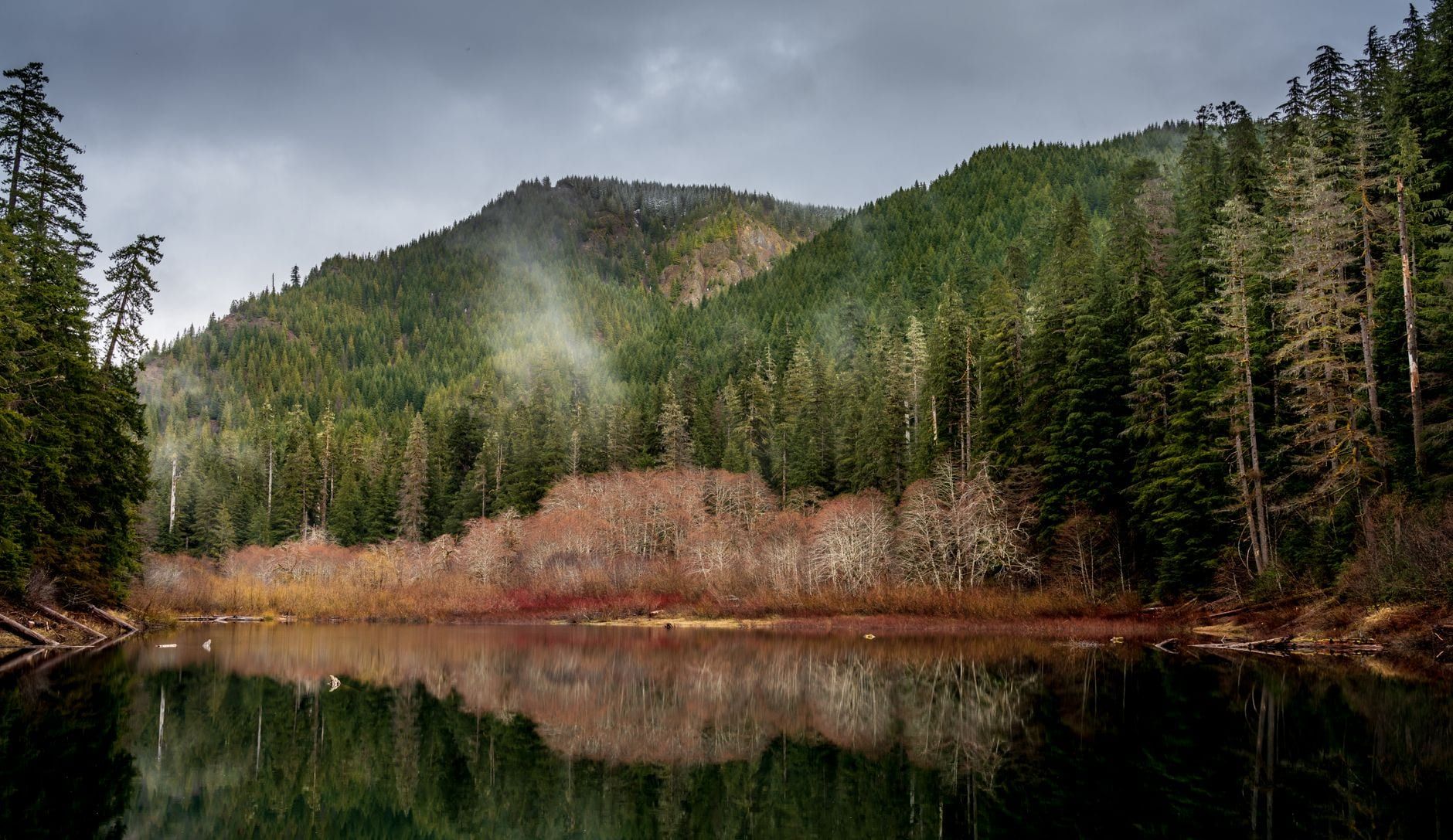
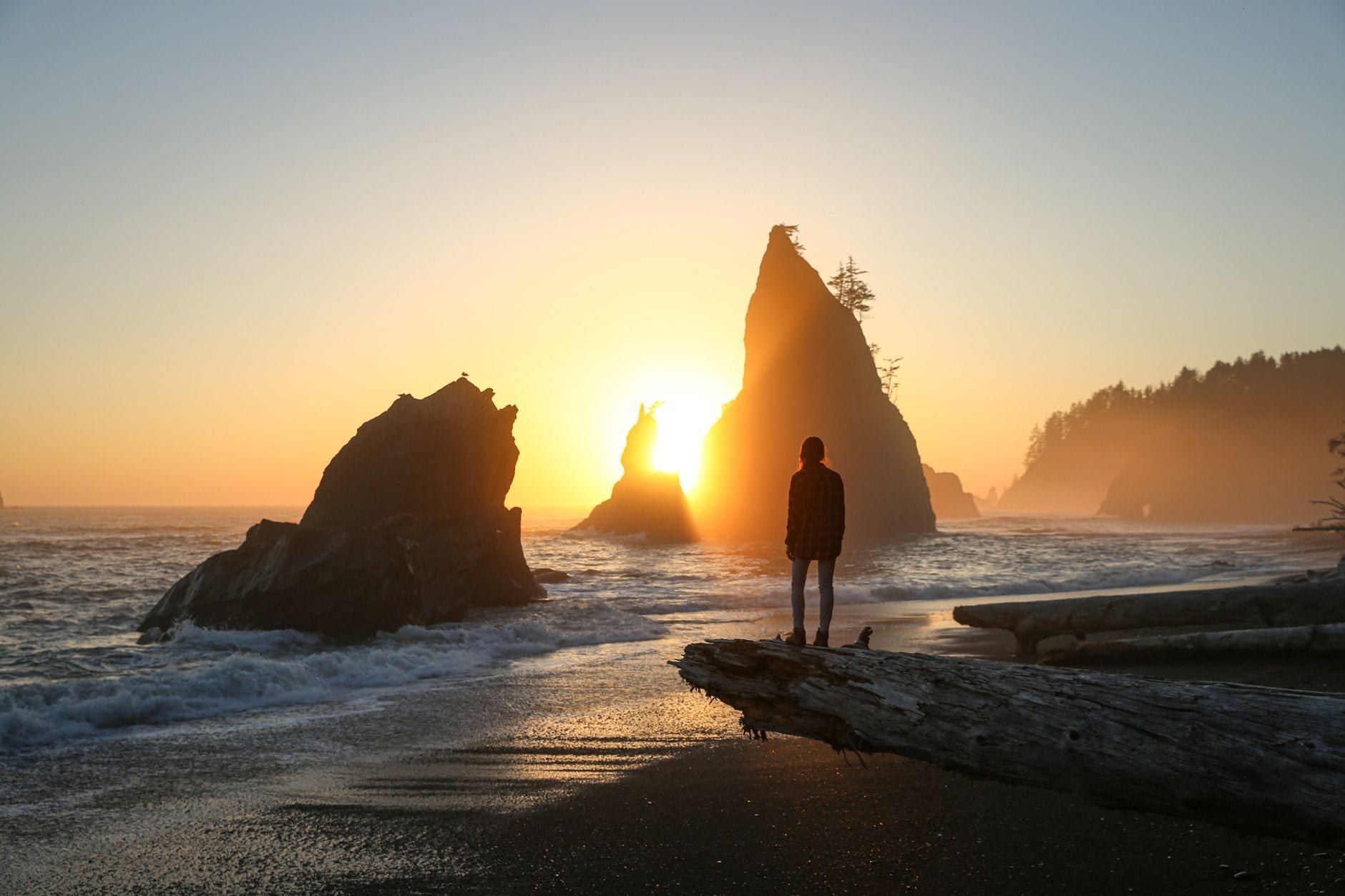
Olympic National Park protects 73 miles of Pacific shoreline — a detached strip of wilderness coast where sea stacks stand offshore, drift logs pile the tide line, and tide pools open twice a day. None of it is developed, and several of the best beaches begin with a forest hike. That wildness is the draw, and it changes how you plan a visit.
This guide covers the nine beaches worth your time, from drive-up Ruby Beach to the 8-mile Shi Shi day. It puts every fee and permit in one place — including the $10-per-day Quileute parking fee that took effect May 1, 2026 — and shows you how to sequence a trip around the tides instead of fighting them. To see how the coast fits alongside the mountains and rainforest, start with our guide to the best things to do in Olympic National Park.
Quick Answer: The 9 Best Olympic National Park Beaches at a Glance
Start with how much effort you want to spend. Rialto, Ruby, Kalaloch and First Beach are drive-up or nearly so; Second and Third Beaches take short forest trails; Shi Shi and Ozette are full-day hikes. The nine beaches, in the order they appear below:
- Easiest access: Ruby, Rialto, Kalaloch, First Beach
- Best sunset and photos: Ruby Beach and Second Beach
- Best tide pools: Beach 4, Hole-in-the-Wall, Point of the Arches
- Wildest day hikes: Shi Shi Beach and the Ozette Triangle
- Camping on the sand: Kalaloch, Second Beach, Shi Shi
- Tribal land, separate fees: First Beach, Second Beach trailhead, Shi Shi trailhead
Two of the nine aren't technically in the park. First Beach lies on the Quileute Reservation, and the Shi Shi trailhead sits on Makah Reservation land before the trail drops into the park's coastal strip. That's why they carry their own fees — and why removing rocks, shells or driftwood there is prohibited.
What Makes Olympic's Beaches Different (Wilderness Coast 101)
The park's coastal strip runs 73 miles and is separated from the mountain core by private and tribal land — no road reaches most of it. "Beach" here means cobbles, dark sand and stacked driftwood, with a wall of forest behind you. You come to walk, tidepool and camp. Sunbathing never really enters it.
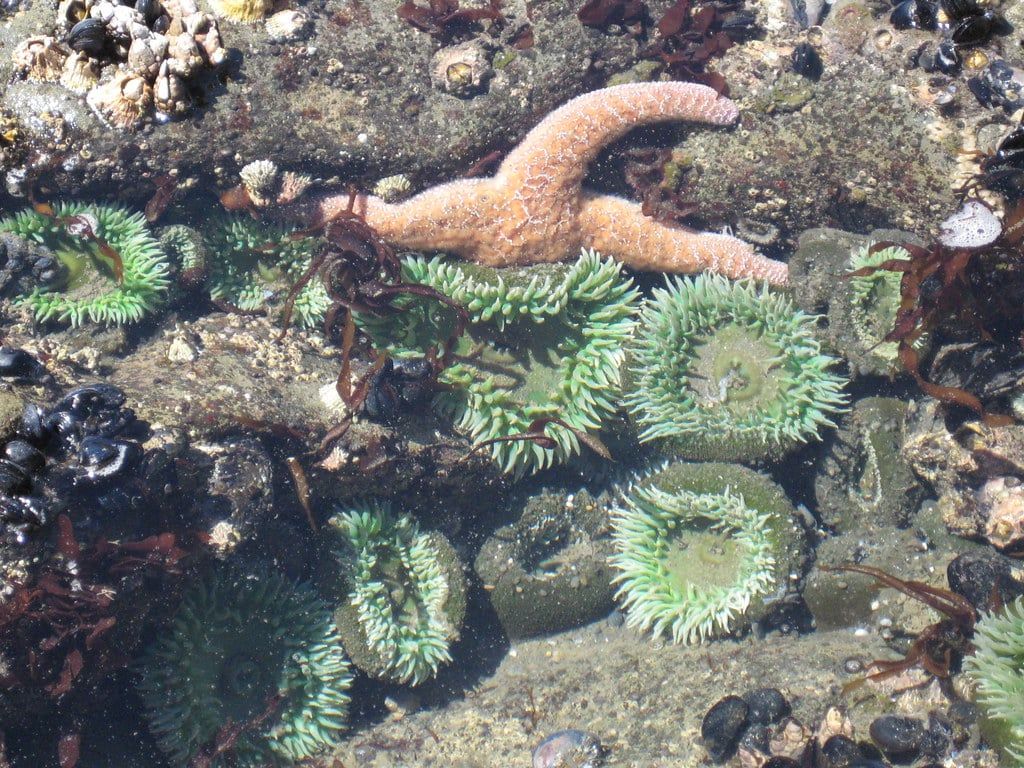
Sea stacks are what's left of cliffs. Waves cut caves into the base, caves grow into arches, and when an arch collapses the harder rock behind it stands offshore as a tower. Ruby, Rialto, Second, Third, Shi Shi and the Ozette coast all have them; the lineup at Point of the Arches is the densest. Between tides, the rocks hold anemones, sea stars and gooseneck barnacles in pools you can crouch over for an hour — our tide pool guide covers the best spots and times.
Gray whales pass close to shore in April–May and again in October–November, and Kalaloch is a good post in both windows. Bald eagles work the driftwood line, seals haul out on offshore rocks, and seabird colonies crowd protected refuge islands offshore. Bring binoculars.
As for swimming: don't. The water is frigid year-round, rip currents run hard — notably off Ruby Beach — and the park has no lifeguards. Wading is fine if you watch the surf. Anyone who actually wants to swim should head to Lake Crescent instead.
Rialto Beach & the Hole-in-the-Wall Walk
Rialto is the best big-reward, low-effort beach in the park, and its signature walk is the model for every coastal hike here: a flat beach stroll timed to the tide.
1. Rialto Beach
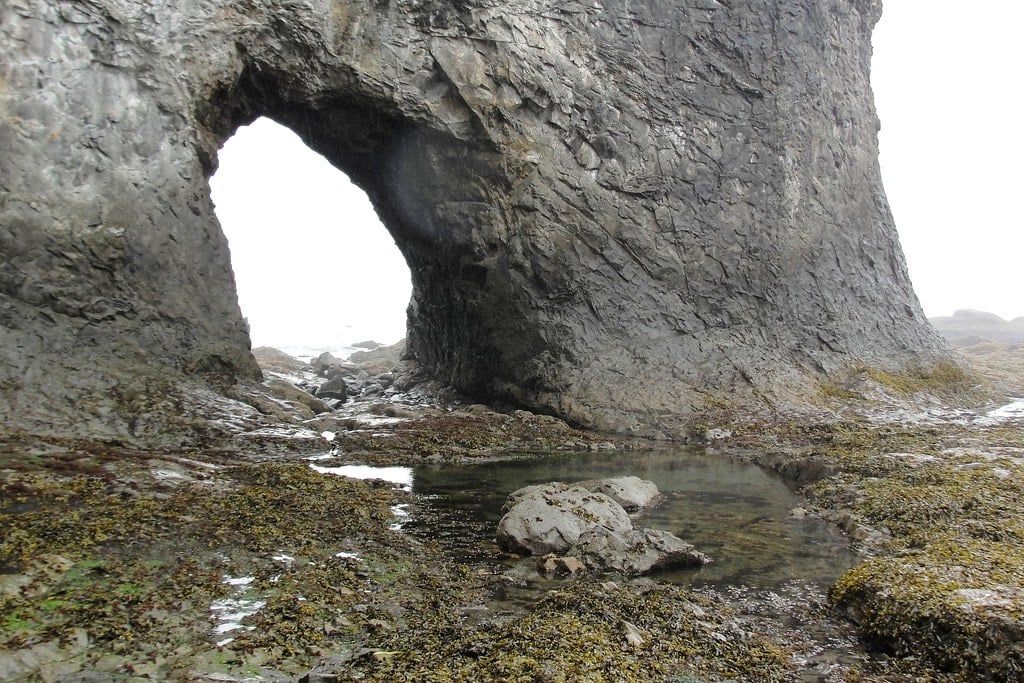
Drive Mora Road to its end, about 20 minutes west of Forks, and the access trail is roughly 165 feet long — one of the shortest beach approaches on this coast. The shoreline is dark pebbles and near-black sand, with drift logs the size of canoes and sea stacks starting just to the north.
A mile and a half up that shore, waves have drilled a full sea arch through a headland: Hole-in-the-Wall. The round trip is about 3 miles on beach, and timing is everything — the tide pools at the arch are exposed at low tide, and stretches of coast become impassable as the water rises. Start an hour before a low under 3 feet and you'll walk out and back with pools to spare. Ellen Creek crosses the beach en route, usually an easy wade, sometimes knee-deep after rain.
Dispersed camping sits between Ellen Creek and the arch, with a wilderness permit required. Dogs are allowed leashed only from the parking area to Ellen Creek — not beyond, and not while camping.
La Push: First, Second & Third Beaches
The three La Push beaches sit 15–20 minutes from Forks and share a Quileute Reservation address. Pick by how far you want to walk.
2. First Beach
First Beach is the drive-up one — park and you're on sand. It sits on Quileute Reservation land outside the park, picked up fame as a Twilight surfing spot, and has cabins at the Quileute Oceanside Resort steps from the water. Driftwood piles run its whole length. Tribal rules apply: stay in designated areas, pack out your trash, and leave the rocks, shells and driftwood where they lie.
3. Second Beach
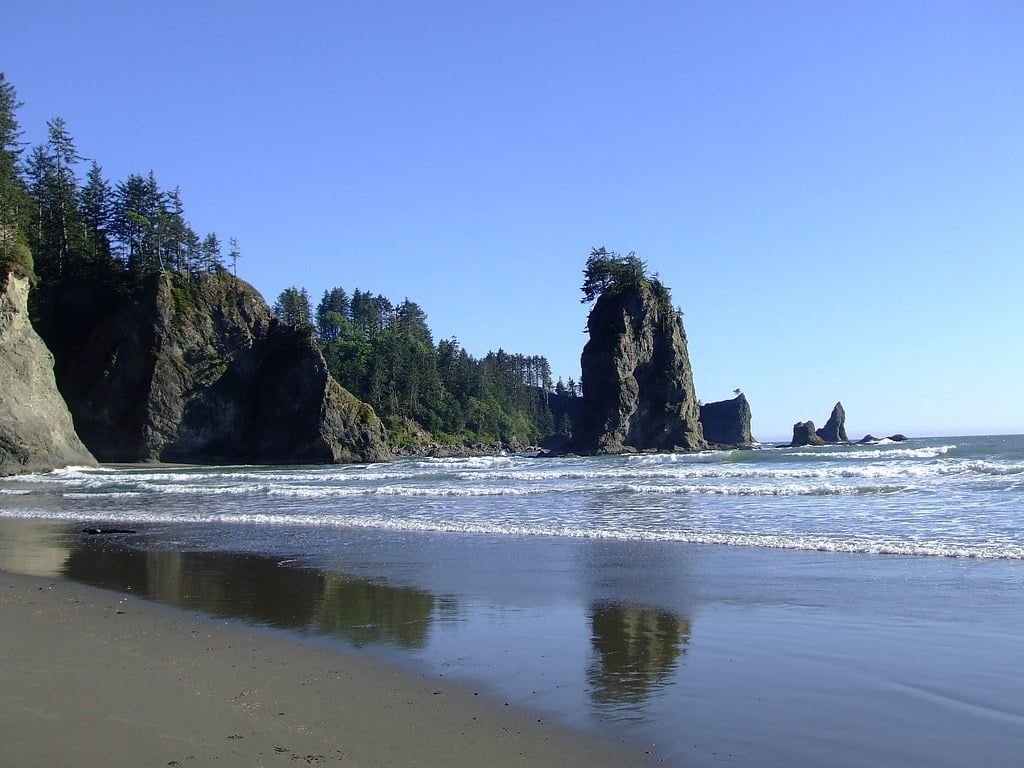
Second Beach takes a 0.7-mile forest trail with about 200 feet of descent, then opens onto the coast's most photographed mile: sea stacks offshore and the Quateata natural arch at the far end. It faces due west, which makes it the park's best sunset. Parking at the trailhead costs $10 per day — a Quileute fee in effect since May 1, 2026. Camping on the sand is allowed with a wilderness permit.
4. Third Beach
Third Beach is the hiker's option: 1.4 miles one way, dropping 200–270 feet to a wilder shore with the Giants Graveyard sea-stack cluster offshore and, in season, Strawberry Bay Falls spilling onto the sand. The trailhead lot is tiny, with no overflow — arrive early or skip it. Backpackers use it as the gateway to the South Coast wilderness route.
Ruby Beach & the Kalaloch Area: Tree of Life, Beach 4 & the Southern Beaches
The southern cluster chains together off Highway 101 — Ruby, Beach 4 and Kalaloch sit within about 20 minutes of each other, and the Hoh Rain Forest is under an hour north. If you only have one afternoon on the coast, spend it here.
5. Ruby Beach
Ruby is a quarter-mile walk from the parking lot, about five minutes, and it's the park's signature beach: sea stacks, drift logs, and sand flecked with garnet-like almandite crystals that give it its name. Tide pools open around Abbey Island at low tide. Sunset here is the best in the park, and an accessible overlook near the lot lets you watch it without the trail. The lot fits only about two dozen cars, so come early or at dinner hour.
6. Kalaloch Beach & the Tree of Life
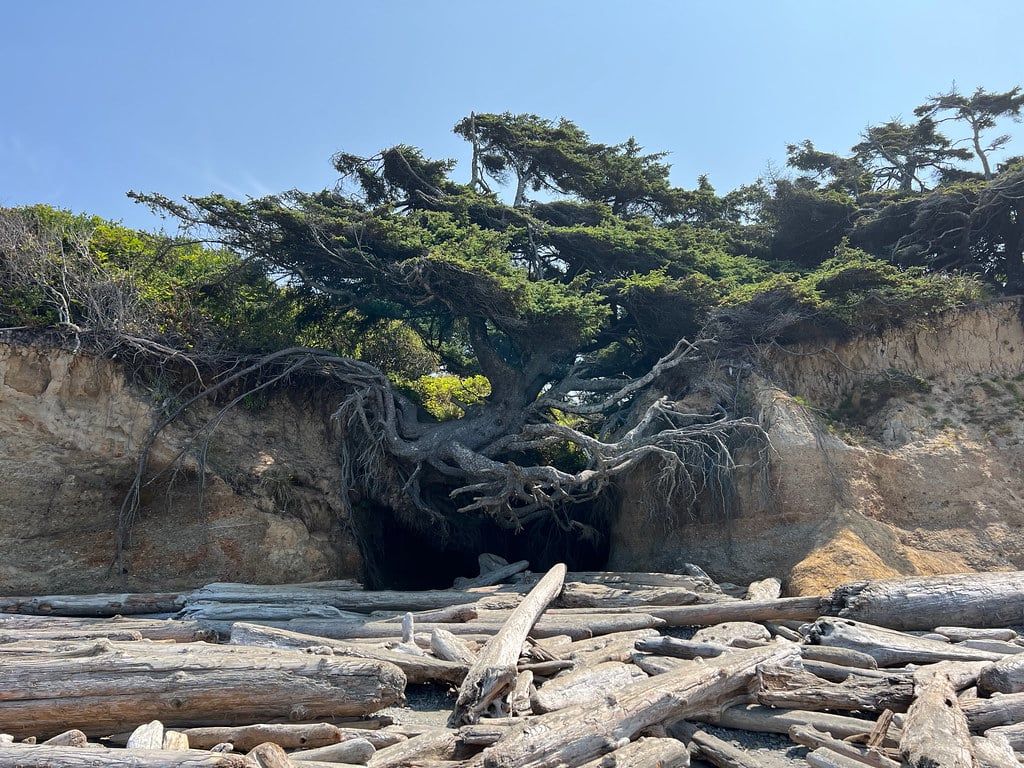
Kalaloch is the easy one — drive straight onto broad sand. Just below Kalaloch Campground, the Tree of Life, a Sitka spruce whose entire root system spans an eroded hollow in the bluff, hangs on against the odds and the ocean. The campground is open year-round and reservable in peak season, one of the few spots in Washington where you camp steps from the Pacific. Kalaloch Lodge sits on the bluff above.
7. Beach 4 (and Beaches 1–3)
Beach 4 is the tidepooling stop. The trail is 0.2 mile with one rope-assisted boulder scramble, and at low tide the rocks below hold the richest intertidal life on this stretch, layered in banded turbidite formations. Look west for the abandoned Destruction Island Lighthouse. Beaches 1, 2 and 3 just north are minor stops: spruce burls and driftwood at 1, a huge and usually empty pebble shore at 2, more tide pools and marine life at 3.
Shi Shi Beach & Point of the Arches
Shi Shi is the trophy beach — the most dramatic shoreline in the park and the most work to reach. Treat it as a full-day commitment, not a quick stop.
8. Shi Shi Beach & Point of the Arches
The trail runs 2 miles one way from a trailhead on the Makah Reservation near Neah Bay. The second mile is reliably wet and muddy even in August; boardwalk sections help, but don't expect dry boots. Visiting in August or early September, after the dry season, is the sane play. Parking requires a Makah Recreation Pass, sold in Neah Bay — buy it in town before you drive out.
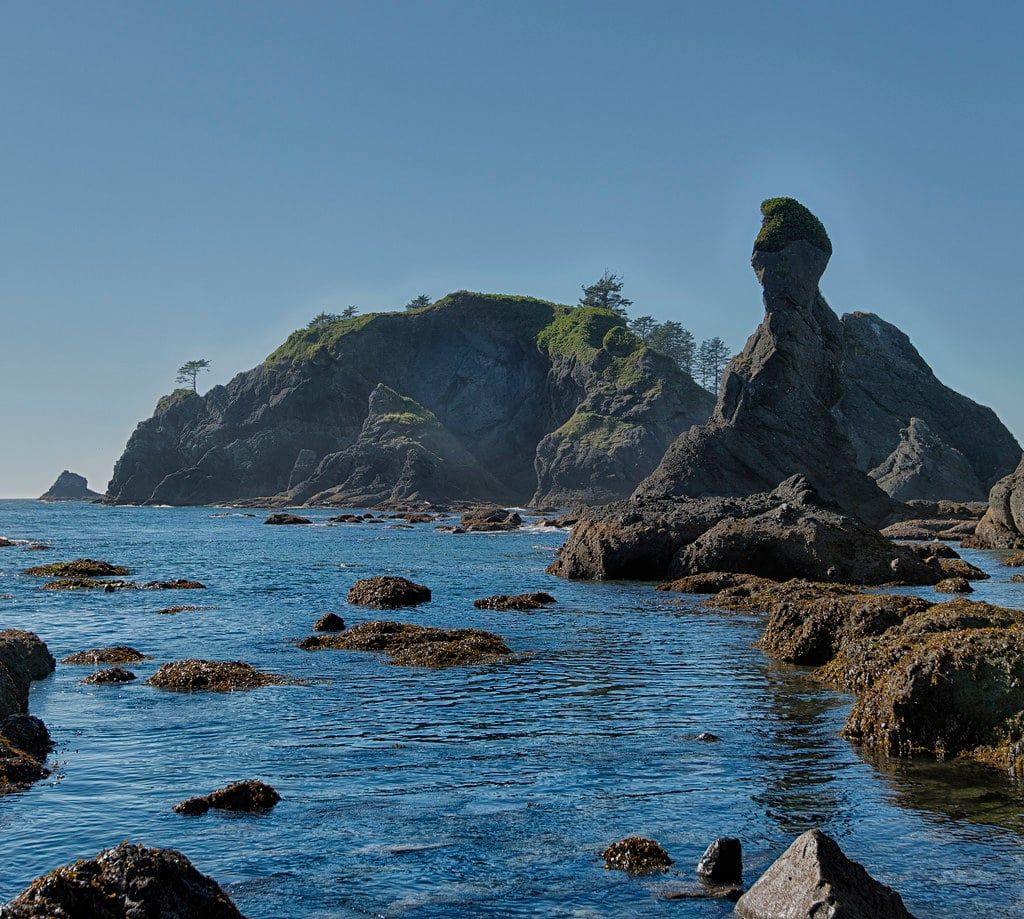
The beach itself is the wide, sandy foreground; the show is 2 miles further south at Point of the Arches, the coast's densest run of sea stacks, arches and tide pools. That makes an 8-mile day round trip, so aim for a low tide when you hit the arches. Camping behind the beach is popular with backpackers — it requires an Olympic wilderness permit plus an approved bear-resistant canister for all scented items, because raccoons, not bears, are the thief you're defending against. Overnight rules on the Makah end differ from the park's, so check locally before you camp.
If you've driven all the way to Neah Bay, add Cape Flattery — the northwest tip of the contiguous United States, a short drive away, covered by the same Makah pass.
Ozette: Cape Alava, Sand Point & the Ozette Triangle
Ozette is the wilderness day hike most visitors skip. The trailheads sit at Lake Ozette, about 1 hour 15 minutes north of Forks, and both routes cross forest and coastal prairie on boardwalk before dropping to the ocean.
9. Cape Alava, Sand Point & the Ozette Triangle
The Cape Alava Trail runs 3.1 miles one way to the westernmost point in the contiguous United States — a rocky, driftwood-heavy wilderness beach. The Sand Point Trail runs 2.8 miles to a broader, sandier beach. If you only do one leg, do Sand Point; your knees will thank you.
Link the two trails along the beach and you have the Triangle: roughly 9 miles, about 3 of them on shore between the forest legs. Partway along the coast, Wedding Rocks preserves Indigenous petroglyphs — look, don't touch or trace. The beach leg needs the same tide awareness as everywhere on this coast. With a wilderness permit you can camp at either end and split it into an easy overnight.

Tides, Safety & How to Read a Tide Chart
Everything on this coast bends to the tide, so learn to read a tide table before you pick a beach. Target lows under about 3 feet — minus tides are the jackpot for tide pools — and arrive roughly an hour before the low, so you explore while the water is still falling. Visitor centers and coastal ranger stations hand out free printed tide tables. Take one: cell service dies along much of the coast, and an app you can't load is not a plan.
Never round a headland on a rising tide. Around much of this coast the beach pinches to nothing at high water, and people get stranded every year. Fix your turnaround time before you start and keep it.
- Drift logs weigh tons and waves move them — never stand between surf and a log.
- Sneaker waves run farther up the beach than the ones before them.
- Don't turn your back on the ocean, especially on wet rock.
- Mussel beds and wet rock are slick; wear grippy, waterproof shoes.
- Tsunami evacuation signs mark low-lying stretches — note where yours is.
None of this is complicated. Follow it and the coast is one of the safest wild shorelines you'll ever walk.
Passes, Permits & Practical Logistics
Money on this coast comes in three layers: park entry, tribal fees at two trailheads, and camping permits. The table puts the current numbers in one place; full hours and entry fee details are on our park info page.
| Pass or fee | Cost | Where it applies |
|---|---|---|
| Vehicle entry, 7 days | $30 | All beaches inside the park |
| Olympic annual pass | $55 | Park-wide, 12 months |
| America the Beautiful | $80 | All U.S. federal lands, 12 months |
| Makah Recreation Pass | Sold in Neah Bay | Shi Shi trailhead, Cape Flattery |
| Quileute parking | $10/day | Second Beach trailhead (since May 1, 2026) |
| Wilderness camping permit | $8/person/night + $6 | Any overnight on a wilderness beach |
Any beach overnight needs that wilderness permit, booked through recreation.gov, plus an approved bear canister for all scented items. Where beach fires are allowed, they must sit below the high-tide line and at least 10 feet from driftwood. Our Olympic backpacking guide covers the rest.
Base yourself where your beaches are. Forks is the practical hub for Rialto and La Push. Port Angeles, the biggest town, is about 1.5 hours away and better if you're splitting the coast with the mountains. Kalaloch Lodge and its campground put you on the sand itself; Neah Bay is the only sensible base for Shi Shi. Reservable campgrounds like Kalaloch and Mora fill by noon on summer weekends.
From Seattle, budget 3–4 hours to the coast. Driving around via I-5 and Highway 101 is simplest; Washington State Ferries cut the corner — Seattle–Bainbridge (35 minutes), Seattle–Bremerton (60) or Edmonds–Kingston (30) — followed by two-plus hours of highway. Our tours from Seattle page compares the options if you'd rather not drive yourself.
Dogs, briefly: leashed pets are allowed on Rialto only from the parking area to Ellen Creek, and on the Kalaloch strip including Ruby Beach. They're banned on Second, Third, Shi Shi and the Ozette coast. And whatever your dates, check park road conditions that week — storm damage closes coastal roads regularly, and the 2026 Mora Road closure is the current example.
Planning Your Trip: Beach Clusters, One-Day Plans & the Best Season
Group the beaches by cluster, because no road follows the coast. Neah Bay (Shi Shi) sits nearly two hours from Rialto by road. Mora (Rialto) and La Push (First, Second, Third) are both 15–20 minutes from Forks. The Kalaloch cluster — Ruby, Beach 4, Kalaloch — strings along Highway 101 with stops about 20 minutes apart, and Ozette hangs off on its own to the north.
One well-timed day covers the three easiest beaches:
- Rialto Beach at the morning low tide — walk to Hole-in-the-Wall while the tide is out.
- Second Beach around midday for the trail, sea stacks and Quateata arch.
- Ruby Beach for sunset.
With a second day, split by end of the coast. Day one: the southern cluster plus the Hoh Rain Forest, which is under an hour north of Ruby. Day two: the La Push trio, or the full Shi Shi trip out to Neah Bay and Cape Flattery. Our 3-day Olympic itinerary shows how it all chains together.
June through September is the warmest, driest window and the busiest — one visitor reported a 45-minute entry wait at the Hoh on a summer Saturday, though the beaches stay quieter than the rainforest. Spring trades some weather for minus tides and gray whales; fall brings storms and empty trailheads; winter is for watching those storms from a safe distance. Rain is never off the table in any month. For a month-by-month breakdown, see our best time to visit guide.
Whatever the forecast says, let the tide chart set the day's order — not the itinerary.
Frequently asked questions
Can you swim at the beaches in Olympic National Park?
No. The water is cold year-round, rip currents are strong — especially near Ruby Beach — and there are no lifeguards. Wading is fine with care; for actual swimming, head to Lake Crescent.
Are dogs allowed on Olympic National Park beaches?
Leashed dogs are allowed on Rialto Beach only between the parking area and Ellen Creek, and on the Kalaloch strip including Ruby Beach. They're not allowed on Second Beach, Third Beach, Shi Shi, or the Ozette wilderness coast.
Which beach has the best tide pools in Olympic National Park?
Beach 4, Hole-in-the-Wall at Rialto, Point of the Arches at Shi Shi, and the south end of Second Beach. Aim for a low tide under about 3 feet — a minus tide is ideal — and arrive before the tide bottoms out.
Do I need a pass or permit to visit the Olympic National Park beaches?
Park entry is $30 per vehicle for 7 days ($55 Olympic annual, $80 America the Beautiful). Add the Makah Recreation Pass to park at the Shi Shi trailhead, $10 per day for Quileute parking at Second Beach (since May 1, 2026), and a wilderness permit plus bear canister for any overnight on the beach.
Ruby Beach or Rialto Beach — which should I visit?
Do both if you have a day. Ruby is the easiest and most iconic: a quarter-mile walk to sea stacks and the park's best sunset. Rialto rewards walkers with the 3-mile round trip to the Hole-in-the-Wall arch and its tide pools.
How many days do you need to see the Olympic National Park beaches?
One full tide-matched day covers Rialto, Second Beach and Ruby. Two to three days adds Shi Shi or the Ozette Triangle, plus the Kalaloch area and Beach 4.
What is the most scenic beach in Olympic National Park?
Point of the Arches at Shi Shi is the most dramatic sea-stack lineup. Second Beach gives the best scenery per effort, and Ruby Beach is the most iconic and easiest to reach.
Is First Beach at La Push inside Olympic National Park?
No — First Beach is on Quileute Reservation land with drive-up access. Second and Third Beaches are inside the park, but their trailheads and parking sit on tribal land, which is why the $10-per-day Quileute fee applies.
Sources
- nps.gov/olym/planyourvisit/fees.htm
- nps.gov/olym/planyourvisit/tidepool-activities.htm
- nps.gov/olym/planyourvisit/tides-and-your-safety.htm
- nps.gov/olym/planyourvisit/pets.htm
- nps.gov/olym/planyourvisit/wilderness-reservations.htm
- nps.gov/olym/planyourvisit/visiting-kalaloch-and-ruby-beach.htm
- nps.gov/olym/learn/management/olympic-fun-facts.htm