Both parks sit within a half-day drive of Seattle, and they deliver opposite versions of Washington. Olympic spreads 922,651 acres across the Olympic Peninsula — glacier-capped mountains, 73 miles of wild Pacific coast, and rainforest that drinks nearly 12 feet of rain a year. North Cascades packs everything into jagged, glaciated peaks that see barely 30,000 visitors a year. One is a sampler of three ecosystems; the other is a single, intense mountain landscape. This guide compares them on scenery, hiking, crowds, timing, cost, and days needed, so you can match the park to your trip instead of guessing.
North Cascades vs Olympic at a Glance
Pick Olympic unless solitude and steep alpine trails top your list. It's Washington's most visited park for a reason: rainforest, coast, and mountains inside one boundary, with short trails near the car everywhere you stop. North Cascades is the specialist's choice — more than 300 glaciers, near-empty trails, and views you have to climb for. The two aren't interchangeable; they're different trips, not better and worse versions of the same one.
| Olympic | North Cascades | |
|---|---|---|
| Annual visitors | About 3 million (2.9M in 2023, 3.7M in 2024) | Roughly 30,000 (park proper) |
| Entrance fee | $30 per vehicle, 7 days, cashless | Free |
| Signature scenery | Rainforest, Pacific coast, alpine ridges | Serrated glaciated peaks, turquoise lakes |
| Crowds | Busy at famous stops, easy to escape | Near-empty beyond the highway corridor |
| Drive from Seattle | 2.5–3.5 hours | About 3 hours |
| Ideal trip length | 3–4 days | 2 days |
Both parks are at their best July through September. The fine print — seasonal roads, what "crowded" actually means at each, and how many days you can spare — is where the real decision lives, and that's what the rest of this guide covers.
The Scenery: Three Ecosystems in One Park vs the American Alps
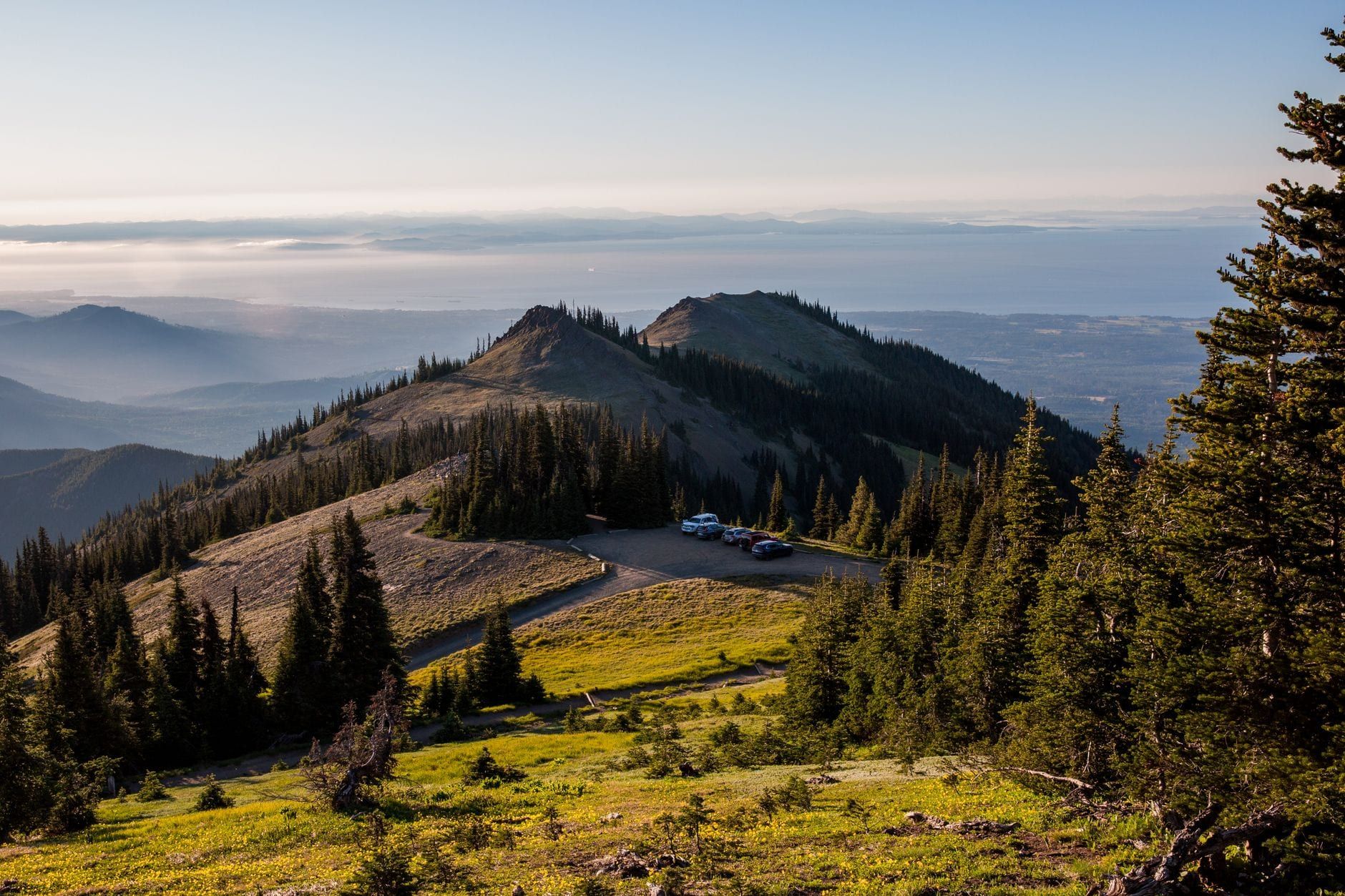
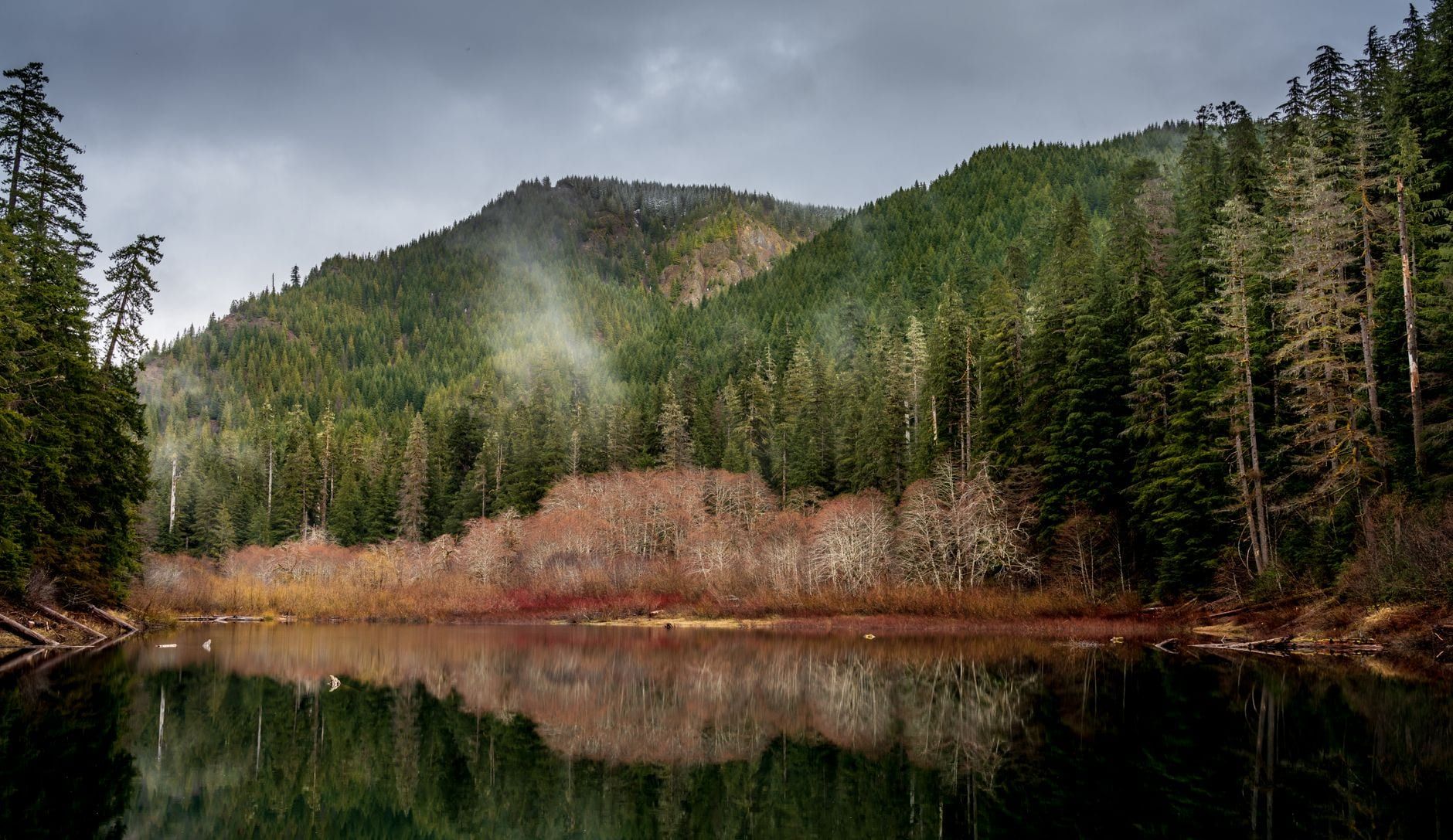
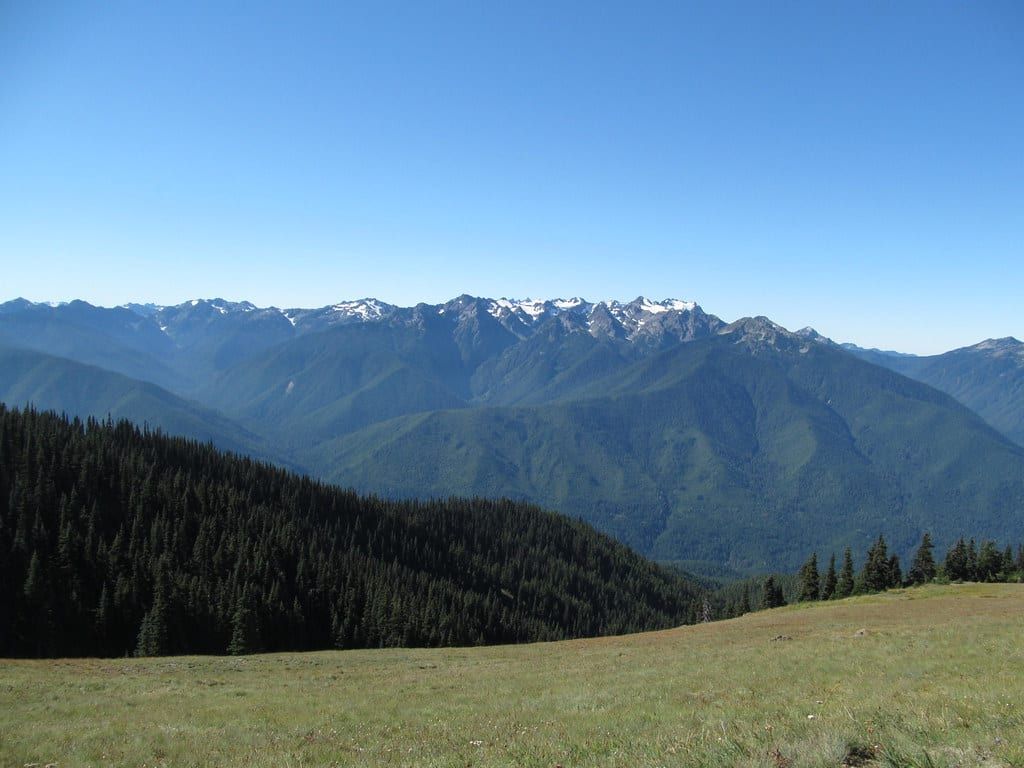
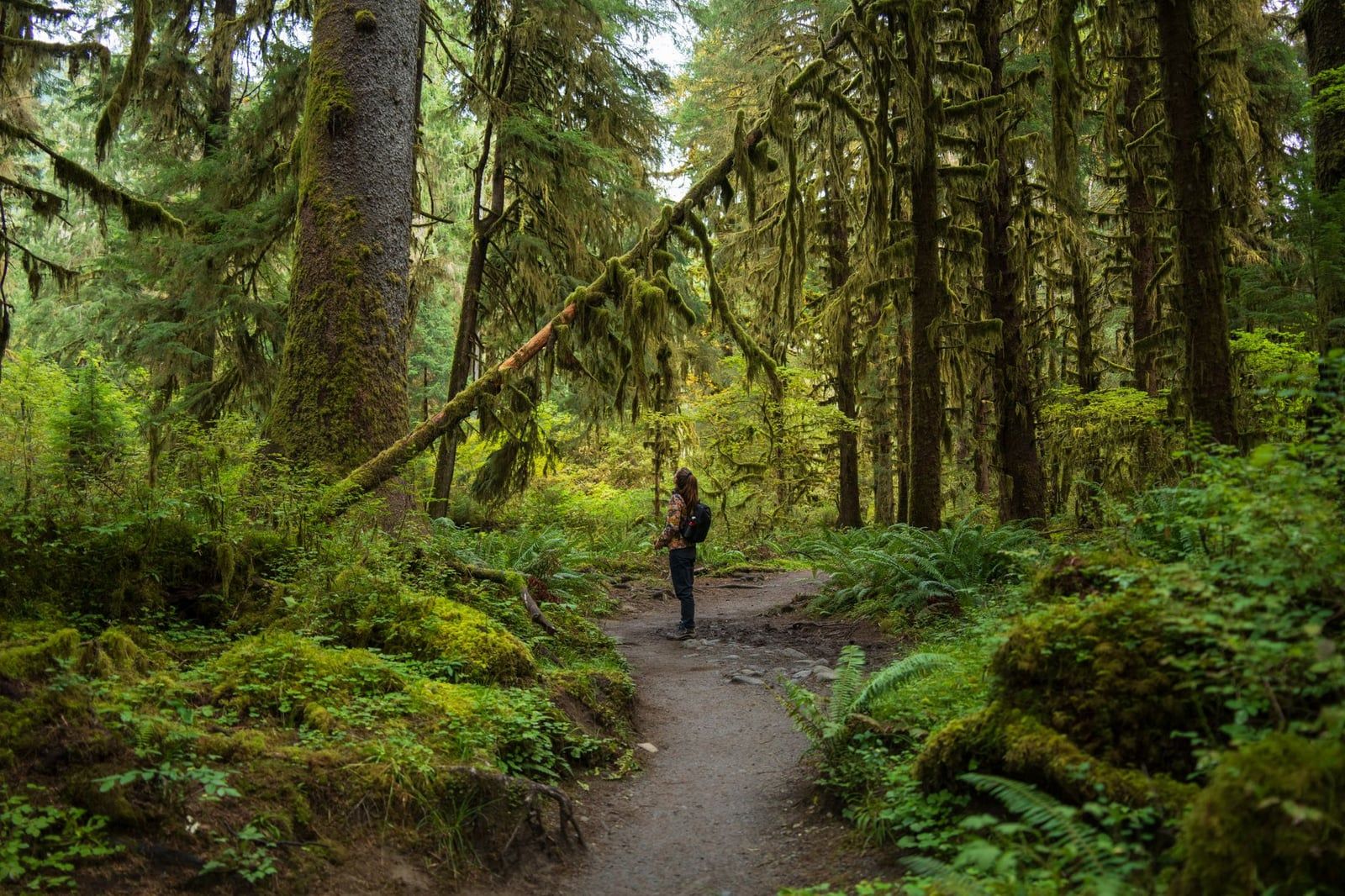
Olympic is the only park in Washington where you can stand under moss-draped old-growth maples in the morning and watch sea stacks at sunset. The Hoh Rain Forest on the western slopes receives almost 12 feet of rain a year, and the Hall of Mosses loop runs straight through it — bigleaf maples wrapped in club moss, ferns to knee height, green light filtered through the canopy. The coastal strip is separate from the mountainous core: 73 miles of wilderness shoreline where Ruby Beach and Rialto Beach pile driftwood against sea stacks and tide pools full of sea stars. Up at Hurricane Ridge, the road ends at panoramic views of the Olympic Mountains, with Mount Olympus at 7,980 feet anchoring the range and 32 named glaciers on its flanks.
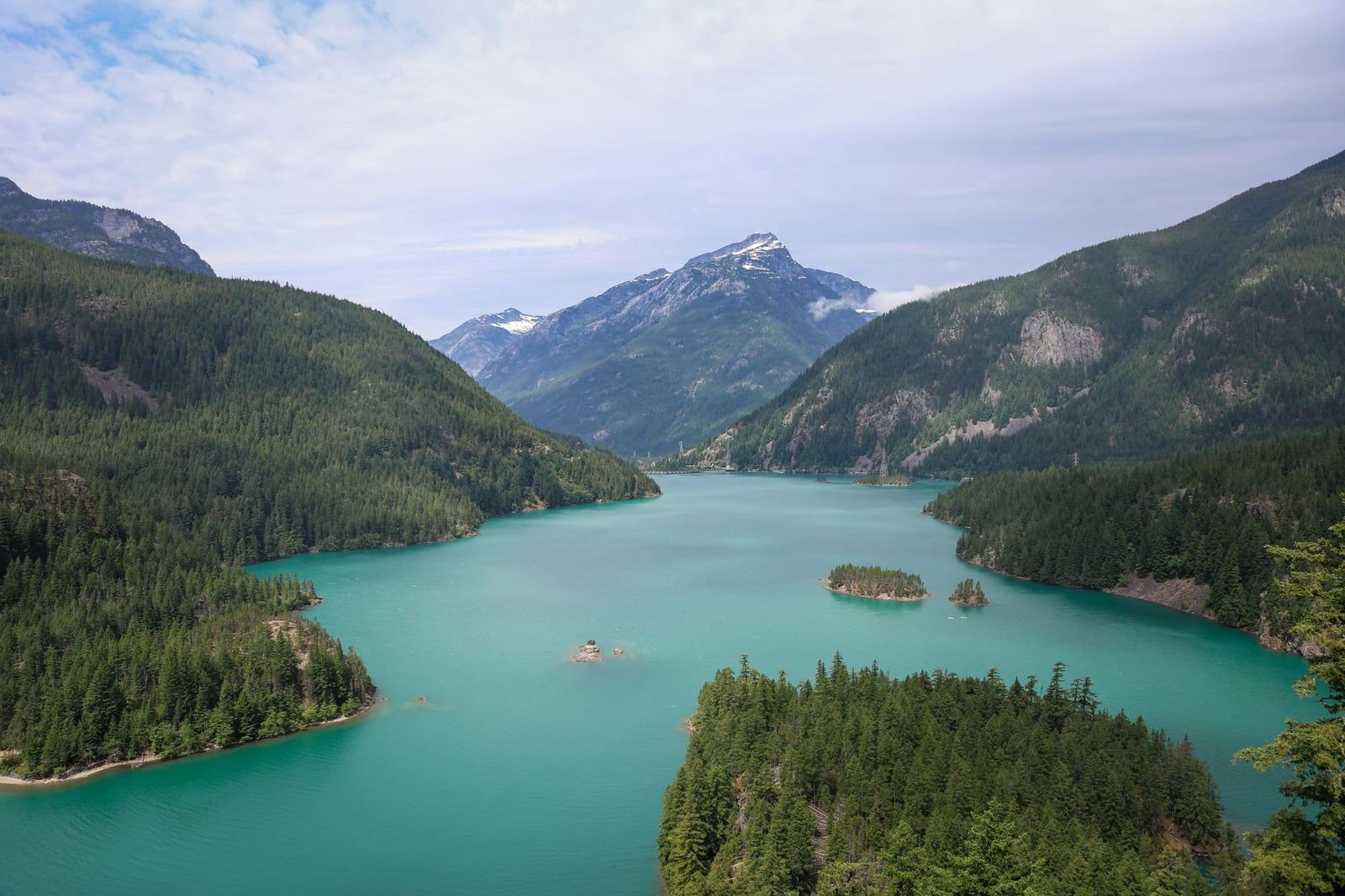
North Cascades goes deep instead of wide. People call it the American Alps for a reason: serrated, glaciated peaks stacked to the horizon, with more than 300 glaciers — the heaviest concentration in the contiguous United States outside Alaska. Diablo Lake, backed by snow peaks, glows turquoise from the highway overlook. The catch, and it's a big one: State Route 20 runs through Ross Lake National Recreation Area, between the park's two units, not through the park proper. The park itself is mostly roadless. Drive-through visitors see a fraction of what's there, which is exactly why it gets underrated — its best scenery is trail-earned.
Wildlife splits the same way. Olympic has Roosevelt elk herds in the Hoh and Quinault valleys, seals and whales off the coast, and Olympic marmots found nowhere else on Earth. North Cascades hosts around 75 mammal species, including grizzly bears, gray wolves, and moose — one of the few places in the lower 48 where all three persist. Olympic's credentials stack up on paper too: a UNESCO World Heritage Site since 1981, one of the first International Biosphere Reserves in 1976, with 95% of the park designated wilderness.
So "better scenery" isn't a real question here. If you want variety — three parks' worth of landscape in one entrance fee — it's Olympic. If you want intensity, and you're willing to hike for it, it's North Cascades.
Hiking and Activities: Easy Access vs Earned Views
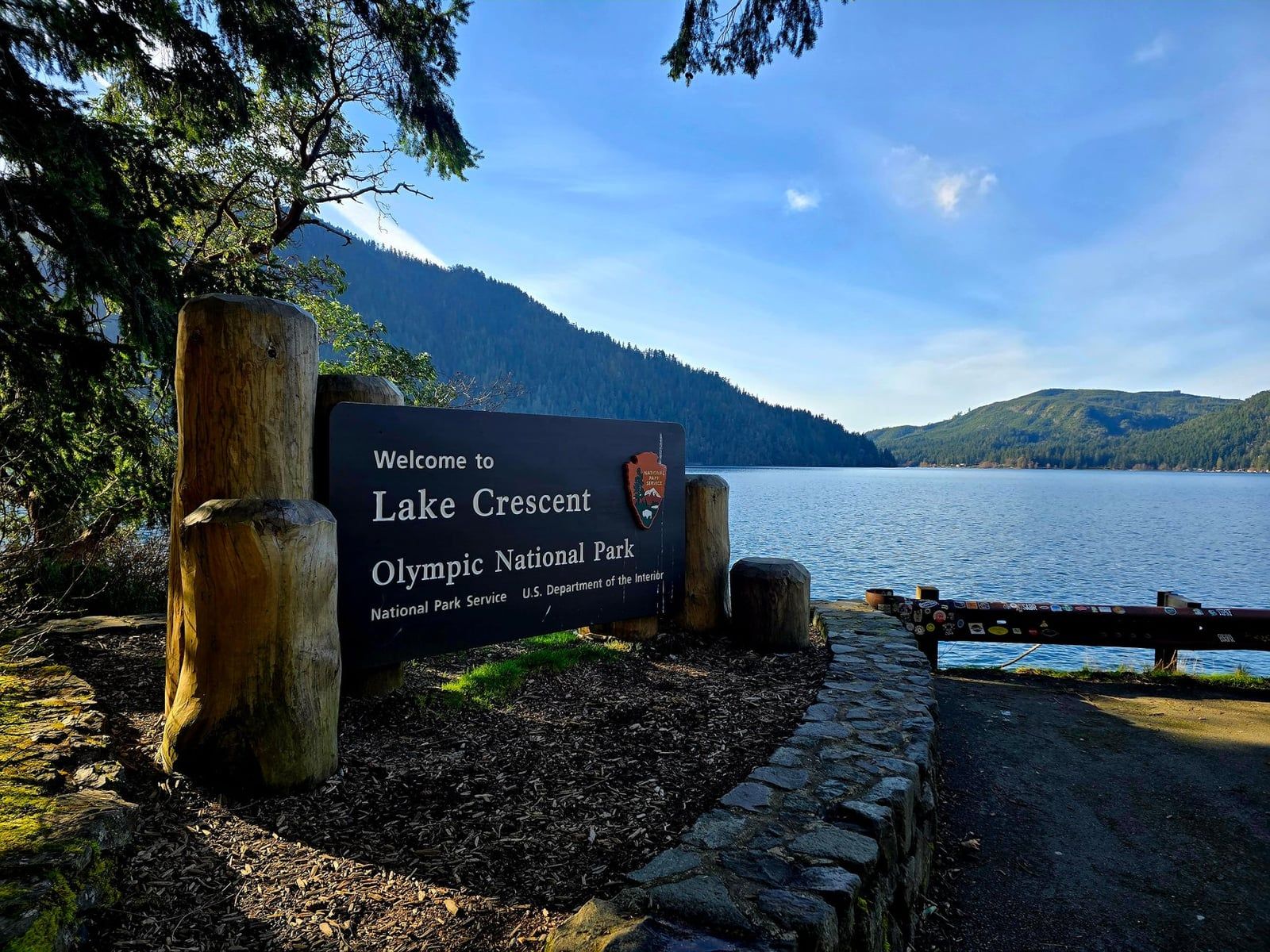
Olympic's trail list reads like a sampler menu. The Hall of Mosses is a 0.8-mile loop. Marymere Falls is about 1.8 miles round trip from Lake Crescent. Sol Duc Falls is an easy 1.6-mile walk, with hot-springs soaking pools at the trailhead. Rialto Beach to the Hole-in-the-Wall arch is a 1.5-mile beach walk timed to low tide. Hurricane Hill serves up alpine meadows on a mostly gentle climb, and Mount Storm King is the steep, sweaty option for anyone who wants a serious workout above Lake Crescent.
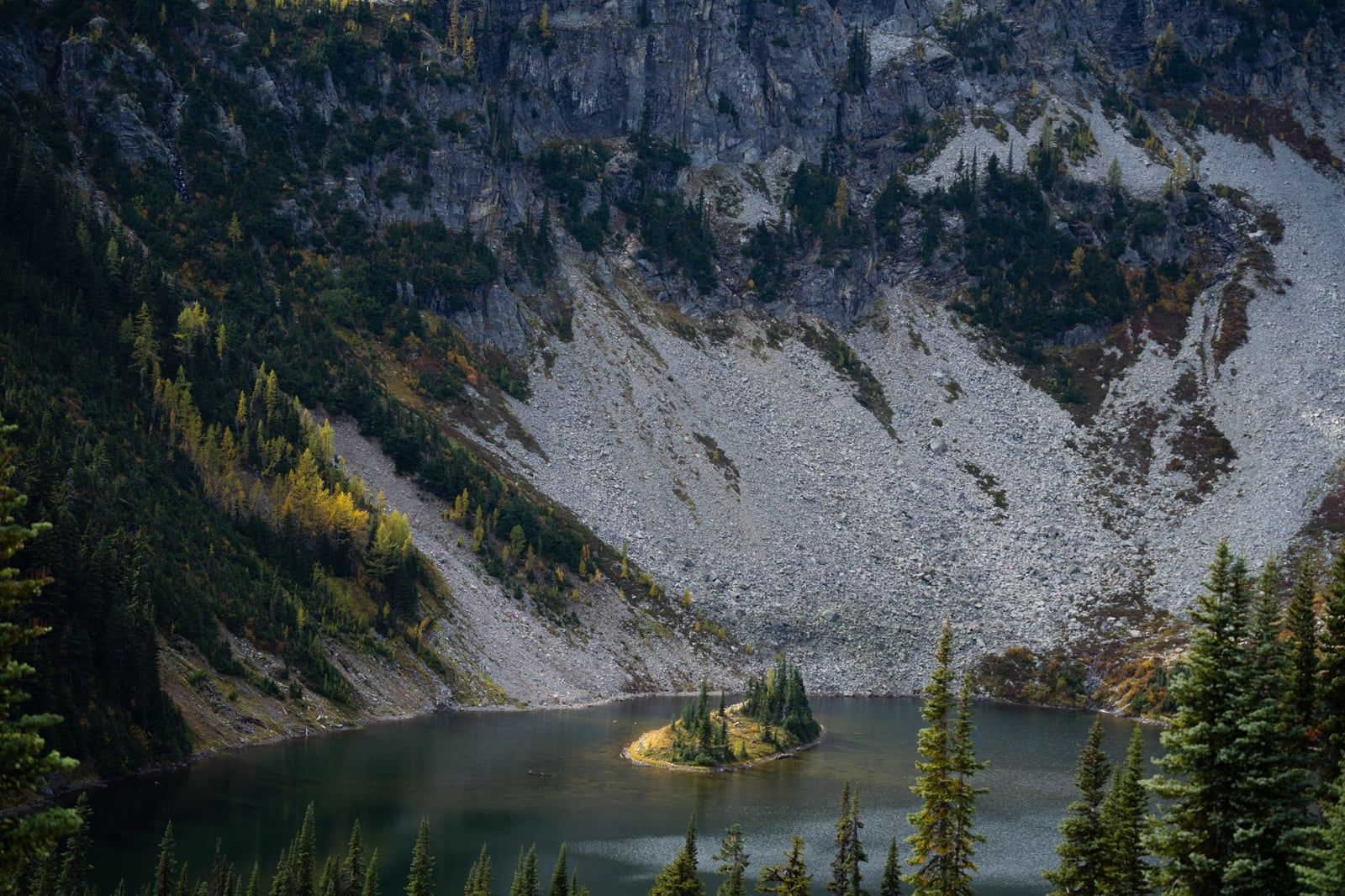
North Cascades asks more and pays more. Trails run longer and steeper, and the payoffs are bigger: Maple Pass Loop circling a ridge above alpine tarns, Blue Lake beneath granite walls, Cascade Pass climbing to a glacier-ringed cirque with the Sahale Arm extension for strong hikers. Not everything is hard — Rainy Lake is a paved, stroller-friendly loop to a glacier-fed lake — but the park's reputation rests on its demanding routes. If you want the full picture of what's walkable on the peninsula side, our guide to Olympic's best hikes breaks it down by region.
Here's what you'd trade, trail for trail:
| What you want | In Olympic | In North Cascades |
|---|---|---|
| Easy family loop | Hall of Mosses (0.8 mi) | Rainy Lake Loop (paved) |
| Moderate with big views | Hurricane Hill | Maple Pass Loop |
| Steep climb, big payoff | Mount Storm King | Cascade Pass + Sahale Arm |
| Iconic half-day outing | Rialto Beach to Hole-in-the-Wall | Diablo Lake Overlook (drive-up) |
For hikers, North Cascades is the stronger park — the alpine drama per mile is unmatched in Washington. For non-hikers, families, and anyone traveling with mixed abilities, Olympic wins outright: short trails, beach walks at sea level, hot springs, and gateway towns with real food and beds. Cascade Pass is the one North Cascades exception, a moderate, family-doable climb if your kids can handle a few miles of switchbacks.
Crowds: 3 Million Visitors vs 30,000
The raw gap is roughly a hundredfold. Olympic logged 2.9 million visits in 2023 and 3.7 million in 2024; North Cascades' park proper sees about 30,000 a year. On the ground that means Olympic's famous lots fill — the Hoh Rain Forest, Ruby Beach, Rialto Beach, and Hurricane Ridge all hit capacity on clear summer days, and once they do, entry gets metered with waits of 30 minutes to two hours. The peak window is 10am to 5pm.
But Olympic is enormous, and crowds there are local, not park-wide. When the Hoh lot is full, you can drive to a trailhead with open parking — the park's size absorbs its visitors if you're willing to relocate. North Cascades inverts the problem. Total solitude is the norm, yet its handful of highway trailheads still fill on summer weekends, because everyone funnels into the same short season and the same few access points. Real quiet there means hiking past the Highway 20 corridor.
The tactics that work at both:
- Arrive at trailheads before 10am — or after 4pm.
- Pick weekdays over weekends in July and August.
- Shift your trip to September if your calendar allows.
- Keep one backup trailhead in mind before you park.
When to Go: Seasons, Snow, and the Golden Larch Window
July through September is the sweet spot for both parks, but their off-seasons are opposites. In North Cascades, snow hangs on high-elevation trails until early-to-mid July, so the "real" season is compressed into roughly three months. Then Highway 20 shuts for winter — closures typically come by early November — which closes off the park almost entirely. North Cascades is, functionally, a summer-and-fall park.
Olympic never closes. The low-elevation rainforest and coast stay visitable all year, though the October-to-May wet season dumps well over 100 inches of rain on the western valleys — bring real rain gear and expect mud. Hurricane Ridge is the exception on the peninsula: winter storms close the alpine road regularly, though it does open for weekend snowshoeing and skiing when conditions cooperate. If you're weighing shoulder-season dates, our month-by-month timing guide goes deeper.
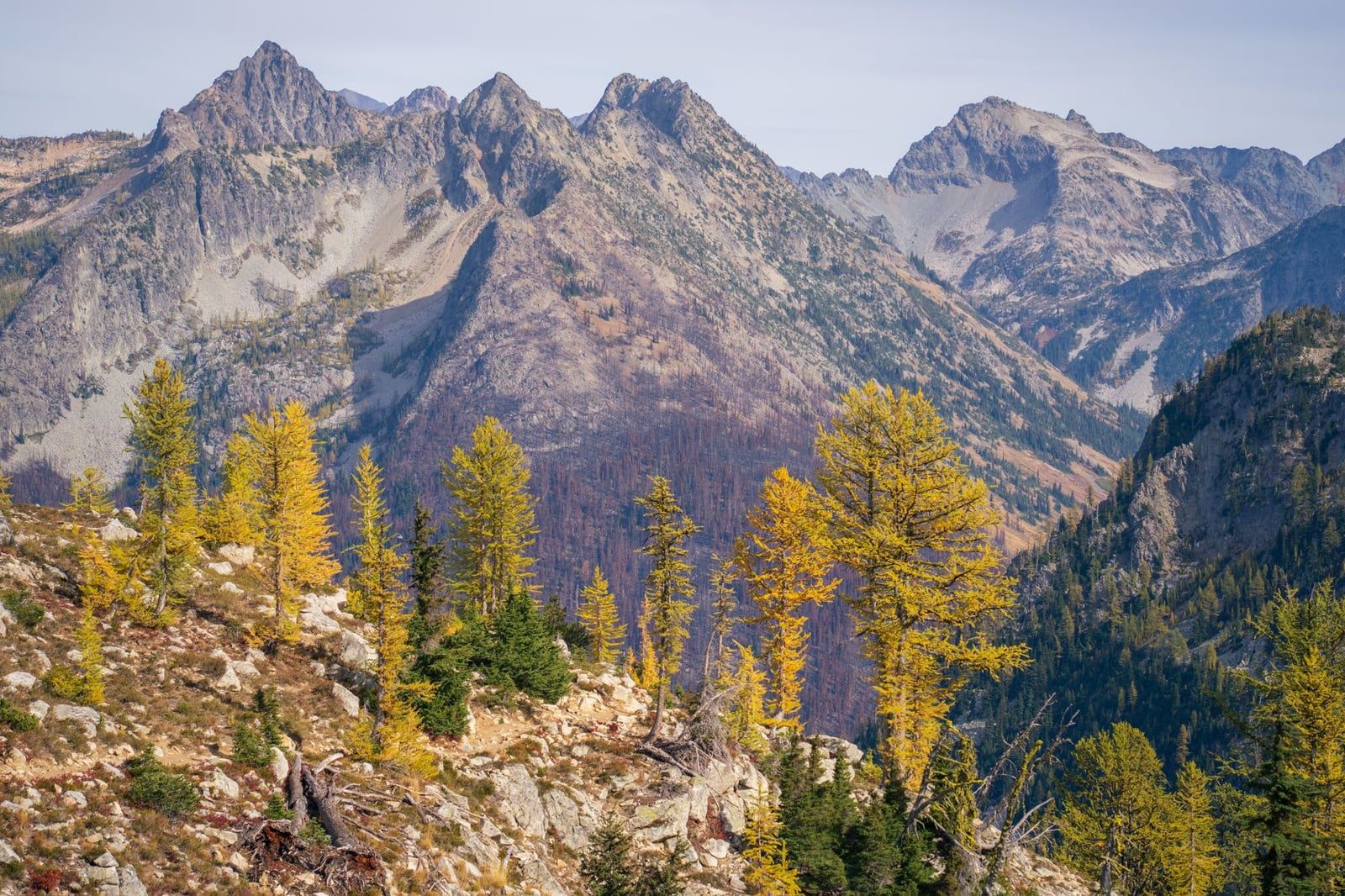
One insider window deserves a trip of its own: the larches. These alpine conifers — the only ones that turn color and drop their needles — go gold from about mid-September into late October in the North Cascades. The window is short, but it lands in the lowest-crowd, most reliably clear stretch of the year. A September trip gets you golden larches at Maple Pass and empty beaches at Olympic in the same week.
Getting There, Base Towns, and What It Costs
Seattle-Tacoma (SEA) is the airport for both. Olympic is 2.5–3.5 hours away depending on route — the Bainbridge Island ferry (a 35-minute crossing plus about two hours of driving) is the fastest way to Port Angeles, and driving around via Tacoma adds roughly 55 miles for similar time. North Cascades is about 3 hours via State Route 20 to Newhalem, or just 1.5 hours if you fly into Bellingham. Full route options are in our guide on how to get to Olympic National Park.
Inside Olympic, no road crosses the interior — Highway 101 circles the peninsula and connects every entrance, so each day involves real windshield time between zones. Base yourself in Port Angeles for the northern hits and Forks for the Hoh and the coast, or split nights among the five in-park lodges: Lake Crescent Lodge, Lake Quinault Lodge, Kalaloch Lodge, Sol Duc Hot Springs Resort, and Log Cabin Resort. North Cascades runs on Winthrop and Mazama, a Western-themed town and a quiet mountain hamlet east of the pass, plus boat-in options like Ross Lake Resort and the North Cascades Lodge at Stehekin.
Costs favor North Cascades hard. It's free to enter — no gate, no pass. Overnight trips need a free backcountry permit, and some adjacent trailheads require a Northwest Forest Pass, but that's it. Olympic charges $30 per vehicle for a 7-day pass, $25 for motorcycles, $15 per person on foot or bike, and it's cashless — no timed-entry reservation, though. Camping runs $15–$24 a night at Olympic and $24 at North Cascades' Colonial Creek, Goodell Creek, and Newhalem Creek campgrounds ($20 in Stehekin; Hozomeen is free). Olympic's wilderness permits cost $8 per person per night plus a $6 reservation fee.
The $80 America the Beautiful pass is only worth it if Washington is one stop on a bigger year: it breaks even at your third $30-park entry. For a single-park trip, just pay the Olympic fee at the gate and check current hours and fees before you go. Neither park requires any reservation to enter.
How Many Days You Need — and How to Split a Trip
Olympic needs at least 3 full days, and 3–4 is the sweet spot, because its three regions sit hours apart around the peninsula loop. A half-day from Port Angeles covers Hurricane Ridge and Lake Crescent; a taste, nothing more. A 4-day split works like this: Hurricane Ridge and Lake Crescent on day one, the Hoh Rain Forest on day two, the coast (Rialto, Ruby, or Second Beach) on day three, and Sol Duc Falls or the Quinault valley on day four. Our 3-day Olympic itinerary has the mile-by-mile version with 2- and 4-day options.
North Cascades is a 2-day park: one day for the highway corridor (Diablo Lake Overlook, Washington Pass, Rainy or Blue Lake), one day for a single big hike like Maple Pass or Cascade Pass. A Seattle day trip is possible but costs about 3 hours each way, which limits you to roadside stops and one short trail. Guided day tours from Seattle make more sense for Olympic, where the ferry-and-drive logistics eat the same hours but deliver a full park day.
Match the park to your calendar. Two days: one park only — North Cascades if you're hiking hard, Olympic if you're not. Three to four days: Olympic, full stop. Five to seven days: both, as a loop.
Can You Do Both in One Trip?
Yes, but budget the drive honestly. The nearest entrances are about 220 road miles and roughly 5 hours apart, because Puget Sound sits between them and forces you around it. Between specific destinations it gets worse — Rialto Beach to Diablo Lake can approach 7 hours. Straight-line the parks are only about 130 miles apart; the water is the whole story.
Timing matters twice. Seattle traffic adds real minutes if you cross the metro at rush hour, so leave early or late in the day. And Highway 20 through North Cascades closes by early November with snow lingering on trails until mid-July, which means a combined trip only really works from July through October.
A 6-day split handles it: two days in North Cascades (overnight in Winthrop, hit the highway overlooks plus one big hike), then the drive west — about 4 hours from Winthrop to Port Angeles — and four days around the Olympic loop. With 7 days you can add slack for weather; with 10, Washington travelers fold in Mount Rainier for the full three-park circuit.
The Verdict: Which Park Should You Choose?
Pick Olympic if:
- It's your first trip to Washington.
- You want rainforest, coast, and mountains together.
- You're traveling with kids or non-hikers.
- Your dates fall outside July–September.
Pick North Cascades if:
- Solitude is your top priority.
- You're a strong hiker with proper footwear.
- Glaciated peaks are the whole point.
- You want a short, Seattle-based getaway.
For most people asking this question, the answer is Olympic. It has the widest range of scenery, the easiest access to all of it, and the most reasons to come back — and it works in October when North Cascades is gated by snow. The one clean exception: if you're a backcountry-minded hiker who counts other people as a cost, drive straight to Highway 20 and don't look back.
If Olympic is your pick, start with our first-timer's guide to things to do in Olympic, then build your days from the itinerary above. The park rewards planning more than any other in Washington — its geography demands it.
Frequently Asked Questions
Is Olympic or North Cascades better for first-timers?
Olympic. Three ecosystems in one park, more road-accessible highlights, and short trails everywhere make it forgiving for first visits. Choose North Cascades only if jagged glaciated peaks and solitude matter more to you than variety, and you're comfortable on longer hikes.
Which park is less crowded?
North Cascades, by roughly a hundredfold — about 30,000 recreation visits a year in the park proper versus around 3 million at Olympic. The caveat: its few highway trailheads still fill on peak summer weekends, while Olympic's hot spots like the Hoh are busiest from 10am to 5pm.
Which park is better for kids or non-hikers?
Olympic. Short, flat options like the Hall of Mosses and Marymere Falls, plus beach walks, Sol Duc Hot Springs, and gateway towns with real lodging. North Cascades' best scenery is trail-earned, which suits older kids used to longer distances.
Can you visit Olympic and North Cascades in one trip?
Yes. The nearest entrances are about 220 road miles and roughly 5 hours apart via routes around Puget Sound — up to 7 hours from Rialto Beach to Diablo Lake. A 6–7 day Seattle loop works: 2 days in North Cascades, 3–4 in Olympic. Check Highway 20's status if you're traveling after early November.
How many days do you need in each park?
Olympic needs a minimum of 3 days, ideally 3–4, because its regions are spread around the peninsula. North Cascades is a 2-day park: the highway corridor plus one or two hikes. A Seattle day trip there is possible but costs about 3 hours each way.
Do either park require reservations or timed entry?
No timed-entry reservation is required at either park. Olympic charges $30 per vehicle for a 7-day pass (cashless), while North Cascades is free — though overnight trips need a free backcountry permit and some adjacent trailheads require a Northwest Forest Pass.
When do the larches turn golden in North Cascades?
Typically mid-September into late October — a short window that also happens to pair low crowds with some of the clearest weather of the year at both parks.