One park, three climates, and a timing decision that genuinely changes your trip. Olympic National Park packs glacier-capped peaks, 73 miles of wild Pacific coast, and old-growth rainforest into 922,651 acres on Washington's Olympic Peninsula, and each of those zones runs on its own weather clock. You can stand in a fern-carpeted forest getting rained on while the ridge above you bakes in sunshine an hour's drive away.
That's the short version of why "when should I go?" has no single answer here. The good news: a few patterns hold. Roughly 75% of visitors come in summer, the park is open 24 hours a day year-round, and the shoulder seasons quietly deliver most of the summer experience at a fraction of the crowds. Here's how to pick your dates.
The Quick Answer: When to Visit Olympic National Park
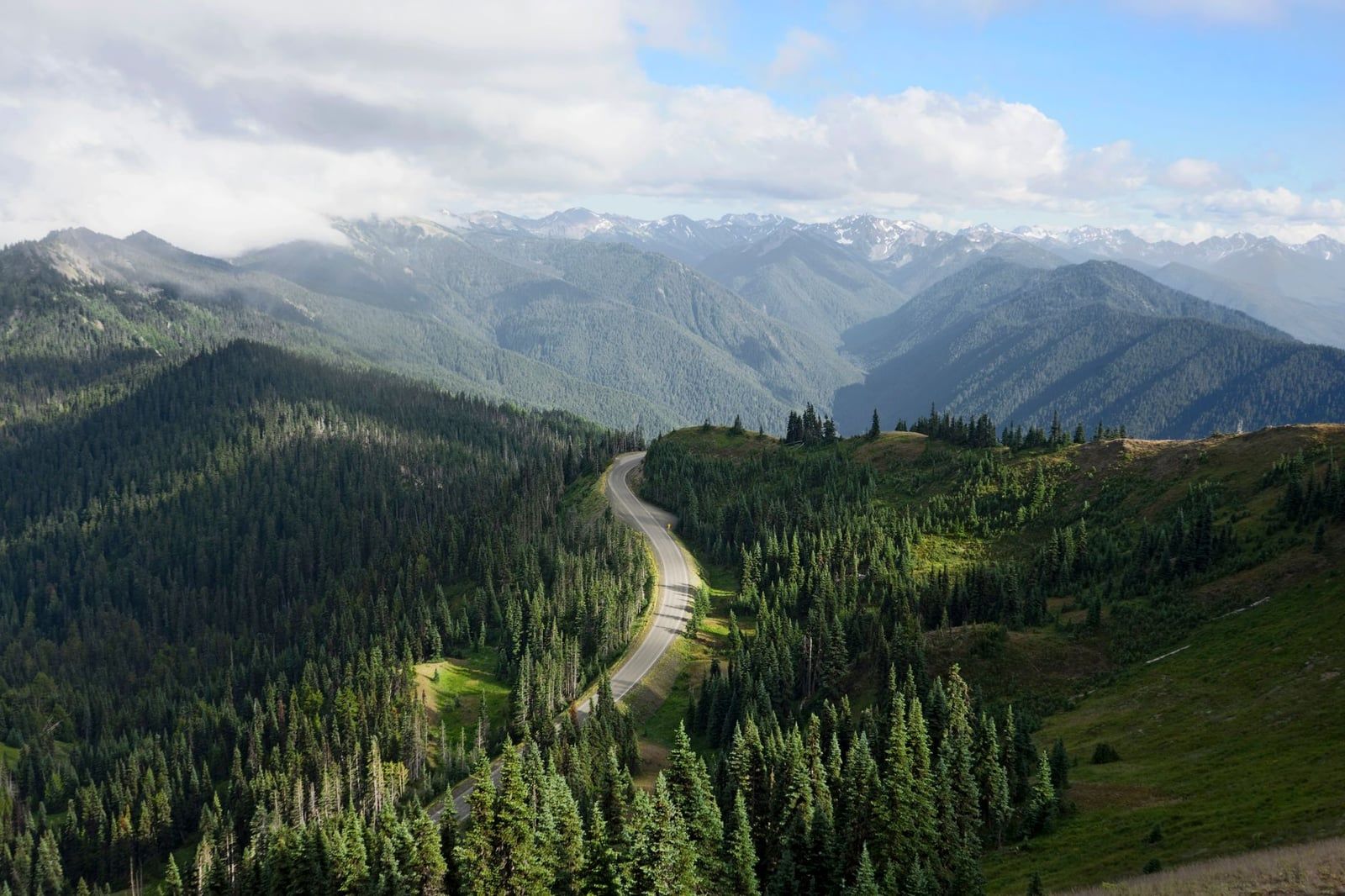
July and August are the classic answer: the driest months (about 5–6 days of rain each versus 20-plus in winter), every road and facility open, and close to 16 hours of daylight. If you want the highest odds of standing on Hurricane Ridge in sunshine, that's your window. The trade-off is peak crowds — more than 500,000 people visit per month in summer, and parking at the Hoh Rain Forest and Hurricane Ridge can fill by mid-morning.
The insider picks are mid-May and, better still, the third week of September through the first week of October. The crowds subside after Labor Day, every area of the park remains open, lodging gets easier to book, and the elk rut, salmon runs, and fall color all arrive at once. Mid-May is damper but quieter, with snowmelt pushing the waterfalls to their loudest. If you're new to the park, start with our suggested Olympic itinerary to see how these windows shape a route.
One caveat shapes every plan: pack rain gear no matter the month. Olympic's micro-climates are unpredictable, and afternoon thunderstorms can sweep the high country even in August. The park averages about 120 inches of rain a year overall. And if your dates are flexible, avoid the summer holiday weekends — Memorial Day, July 4, and Labor Day — when entrance stations and trailhead lots back up badly.
Olympic's Climates: Why the Best Time Depends on Where You Are
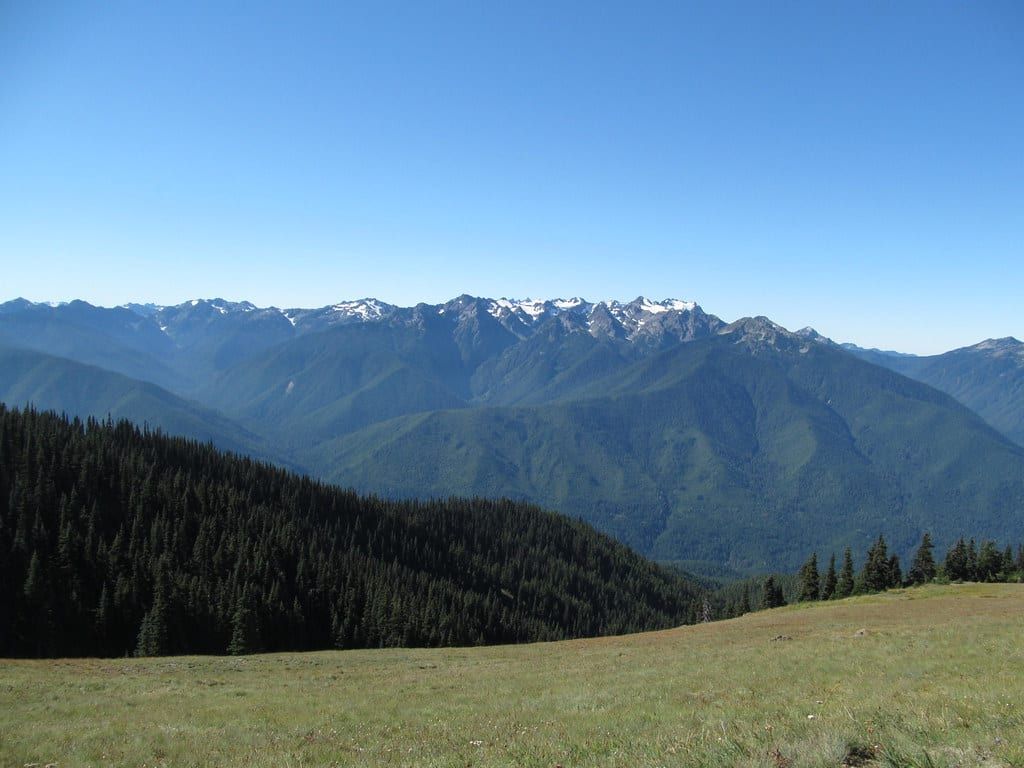
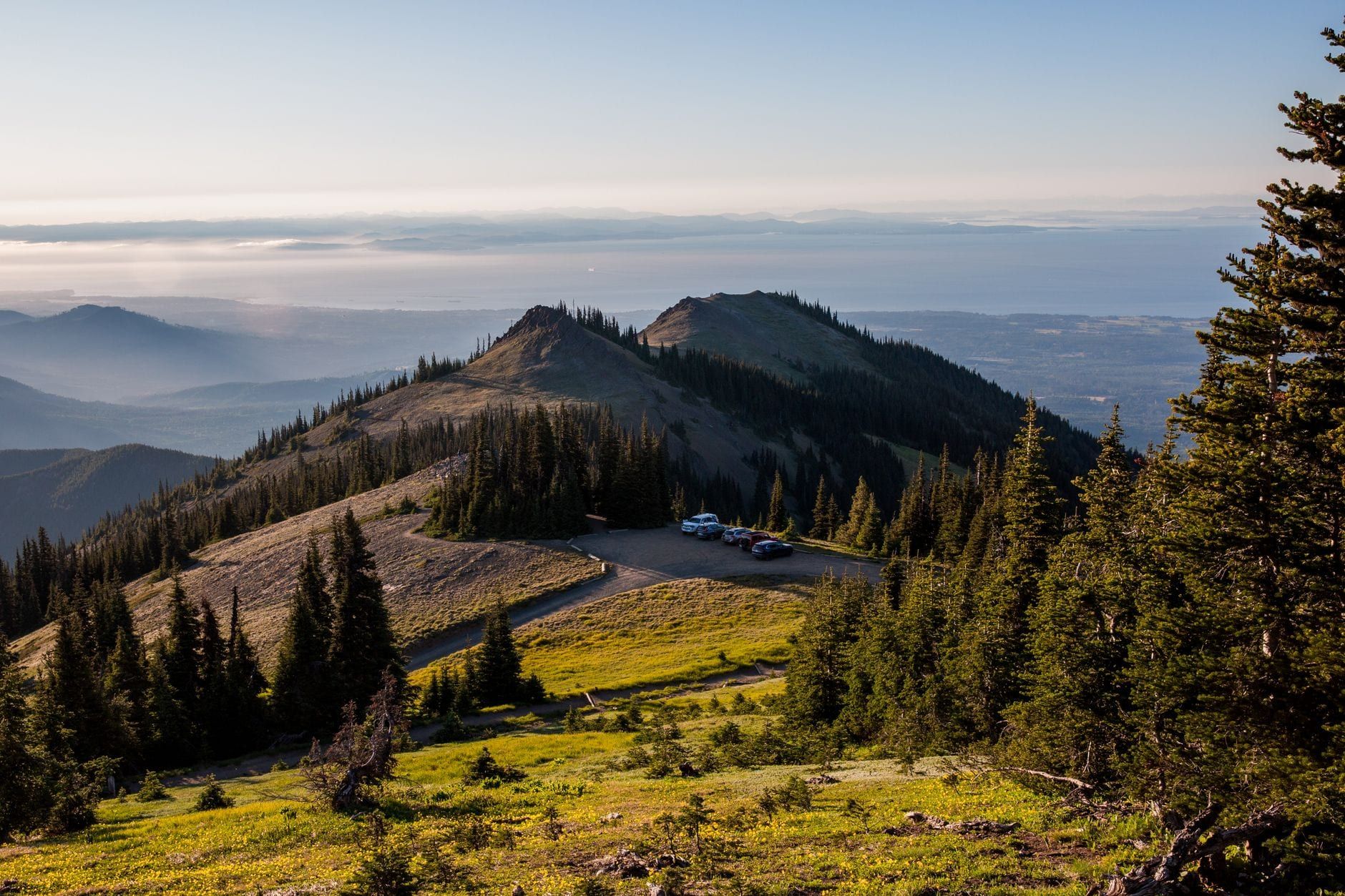
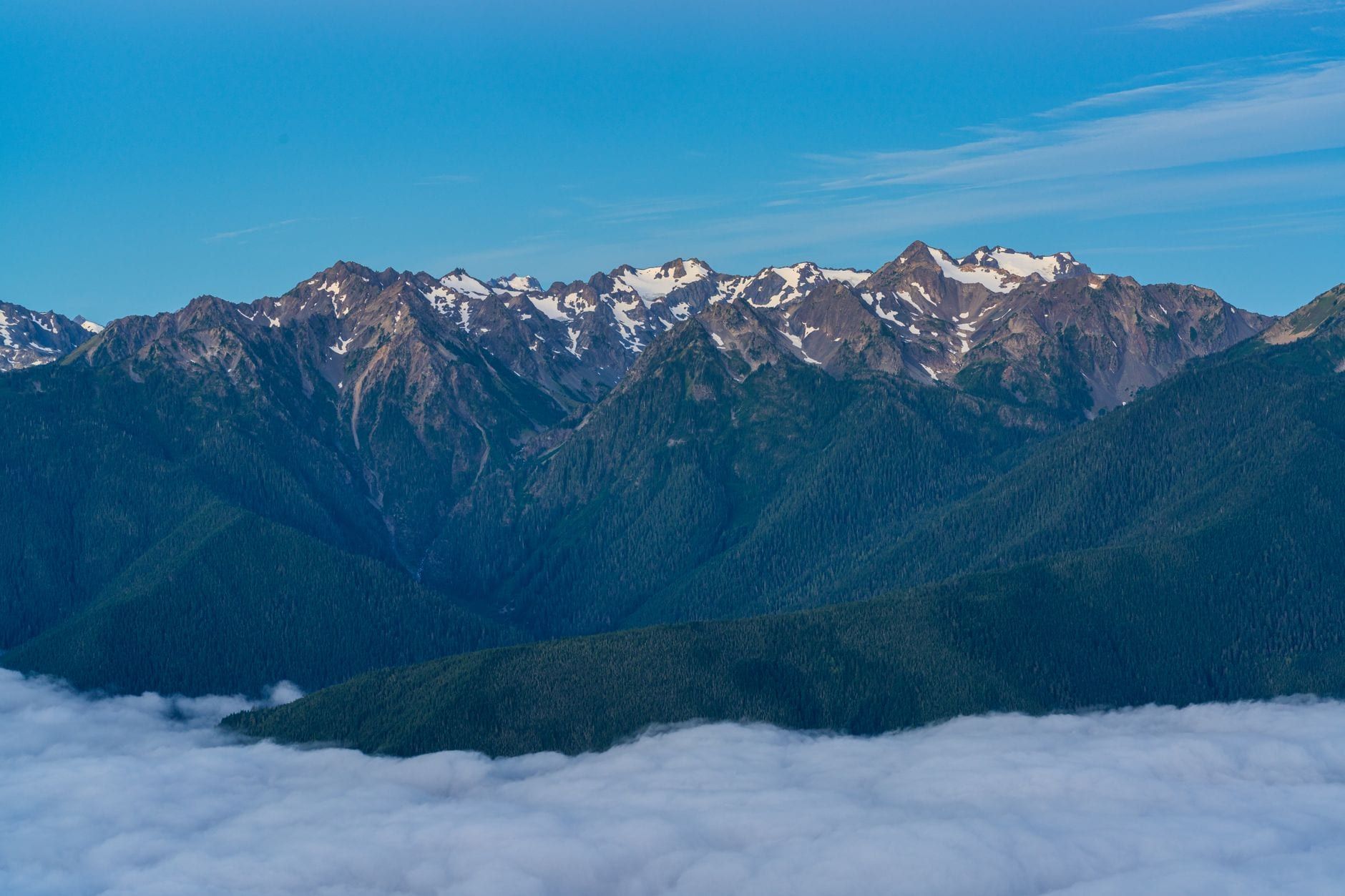
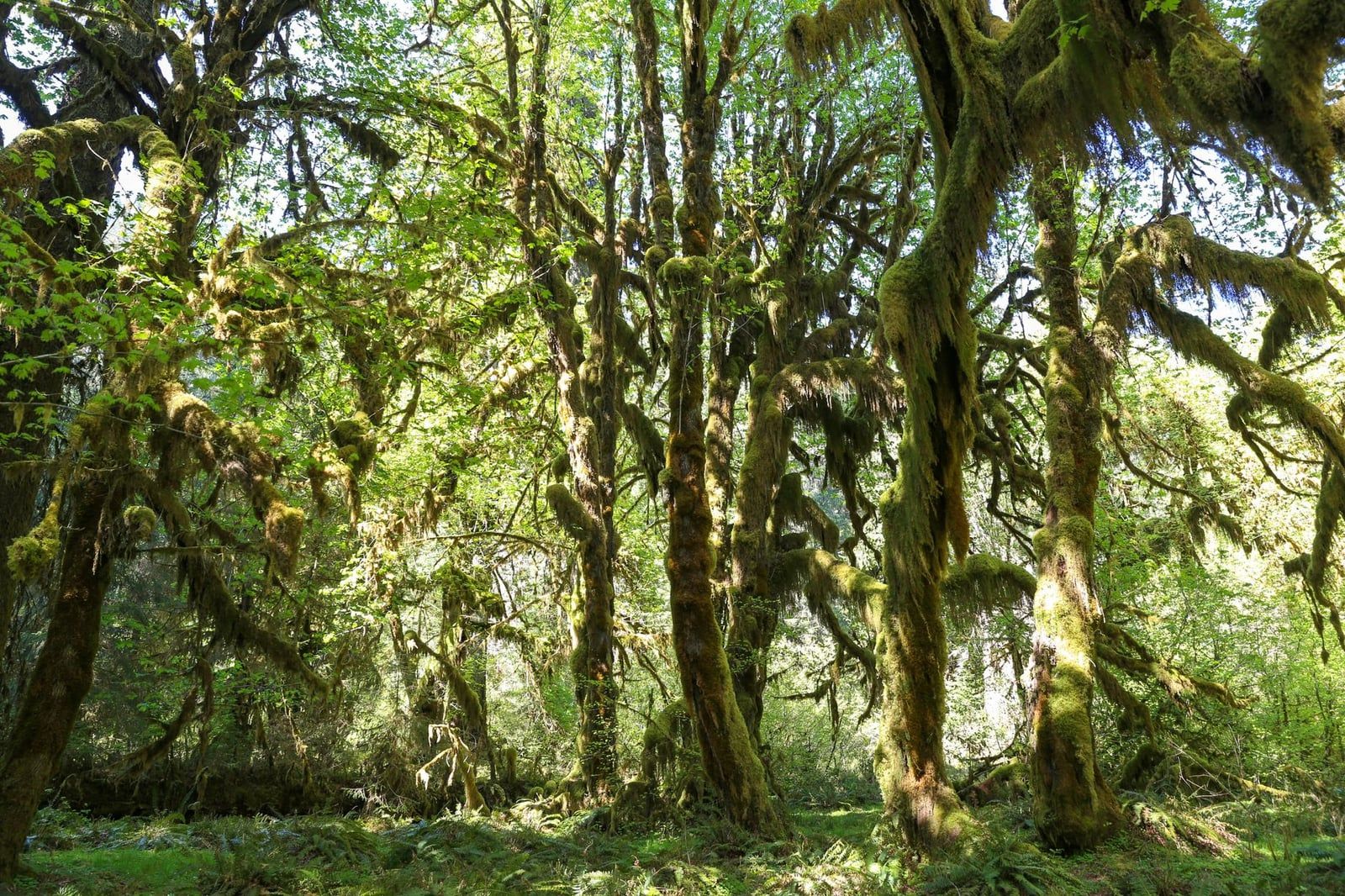
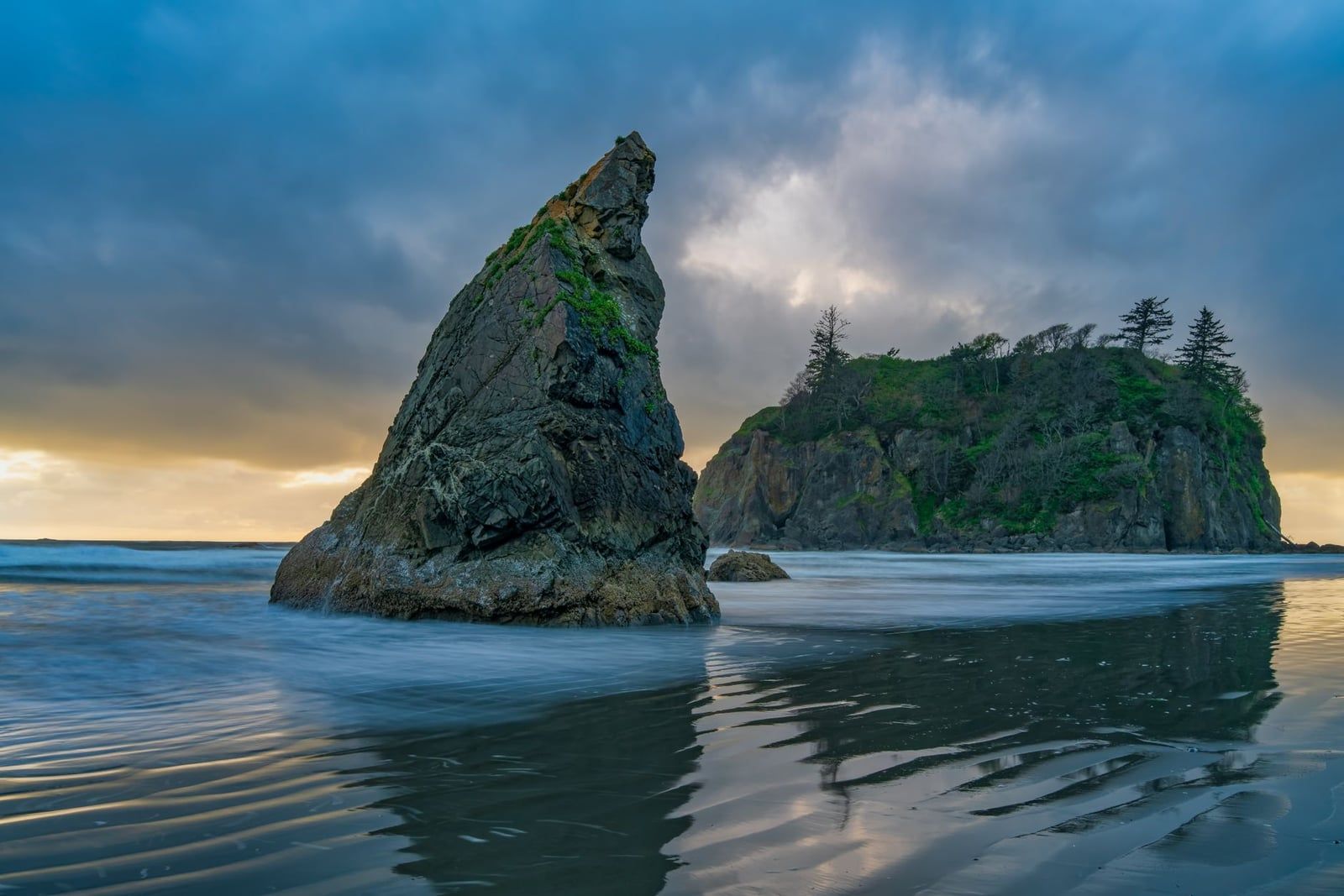
Olympic is really three parks wearing one boundary. The subalpine zone around Hurricane Ridge (5,242 feet) spends winter under 30–35 feet of snow and runs cool even in July, when average highs sit at just 57°F. The temperate rainforest — Hoh and Quinault — gets 100–140 inches of rain a year, with the Hoh averaging 144 inches and the flanks of Mount Olympus catching nearly 300. The Pacific coast stays mild, with July highs around 68°F at Rialto Beach and winter lows that rarely dip below freezing.
That July spread — 57°F at Hurricane Ridge, 68°F on the coast, 74°F in the Quinault valley — is about 17 degrees inside a single park, on the same day. At park headquarters in Port Angeles, January averages 48/35°F with 13.32 inches of rain; July averages 74/50°F with 1.99 inches; November is the wettest month at 15.61 inches.
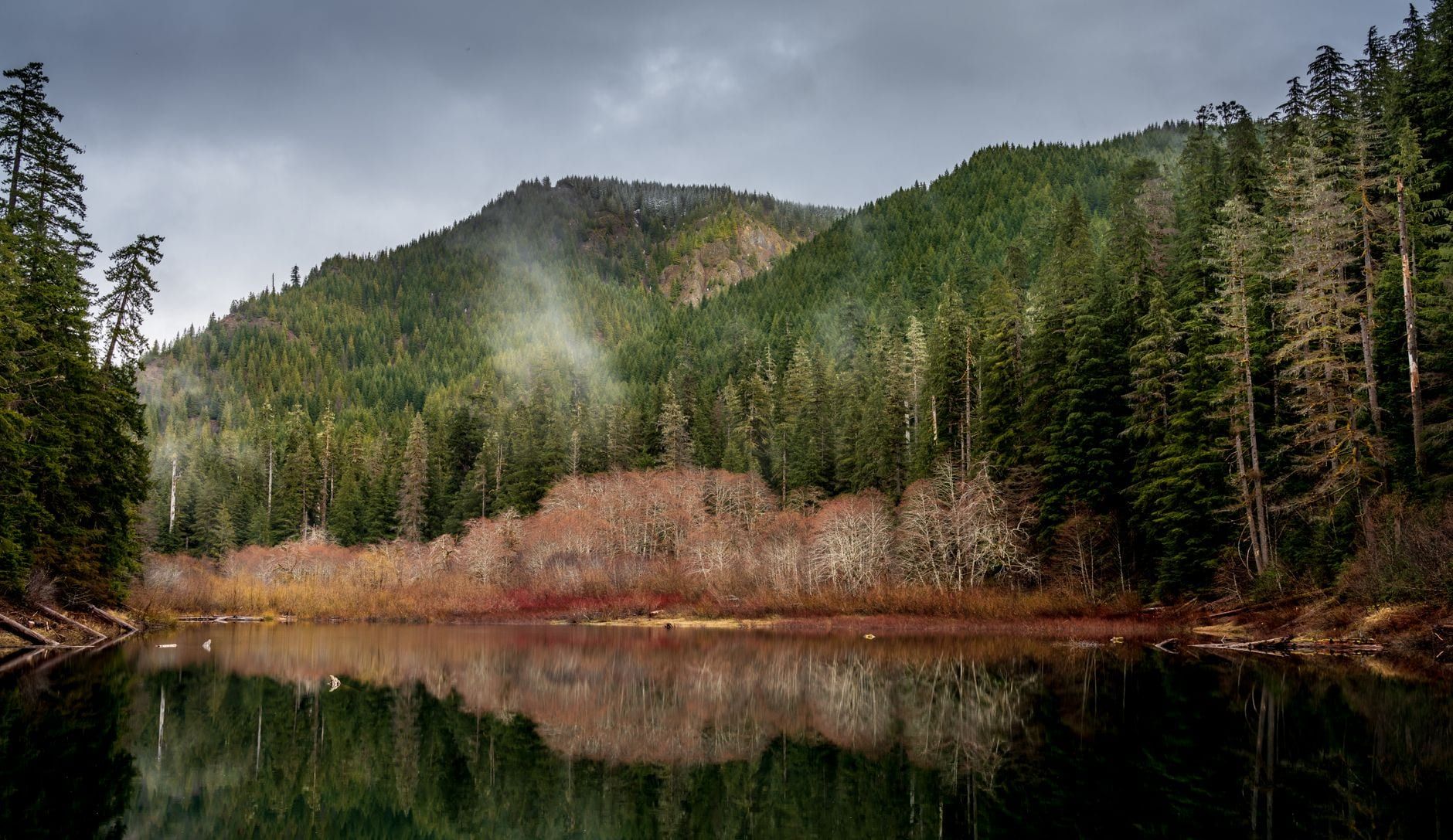
The rain shadow does the rest. The Olympic Mountains wring out Pacific storms on their western slopes, leaving the northeast corner around Port Angeles and Sequim the driest ground on the peninsula. So when the Hoh is a downpour, Lake Crescent and the Elwha Valley are often merely damp — a useful fact on a Lake Crescent day.
The practical rule: you can usually outrun bad weather by driving. It's 45 minutes to an hour between zones, and no roads cross the park's interior, so a rainy morning in the rainforest can become a dry afternoon on the coast. Build that flexibility into your dates and you'll use it.
Olympic National Park Month by Month
Here's the whole year at a glance — weather, crowds, what's open, and a verdict for each month. Use it to shortlist dates, then read the season sections below for the full picture.
| Month | Weather | Crowds | What's open | Best for |
|---|---|---|---|---|
| Jan | 40s°F coast, deep snow up high | Very quiet | Hurricane Ridge weekends only | Storm watching, snowshoe days |
| Feb | Wettest stretch, 21 precip days | Very quiet | Hurricane Ridge weekends only | Solitude, rainforest in the rain |
| Mar | Rain easing, gray whales passing | Quiet | Ridge weekends only; whales offshore | Whale migration, waterfalls filling |
| Apr | Showers, waterfalls building | Quiet | Ridge daily most days, trails muddy | Waterfalls, tide pools |
| May | Milder and drier | Moderate; Memorial Day busy | Ridge daily, Sol Duc reopening | Best weather-to-crowd balance |
| Jun | Green, 5–6 rain days | Busy from late month | Nearly everything open | Wildflowers, pre-peak crowds |
| Month | Weather | Crowds | What's open | Best for |
|---|---|---|---|---|
| Jul | Driest; Ridge highs just 57°F | Peak | Everything open | High-country hiking, puffins |
| Aug | Warm, dry, occasional t-storms | Peak | Everything open | Full access, tide pools |
| Sep | Mild; first rains late month | Drops after Labor Day | Everything open, hours trimming | Best all-round month |
| Oct | Rain returns, snow possible on Ridge | Light | Most areas; Fairholme campground closes | Elk rut, salmon, foliage |
| Nov | Wettest month, 15.6 in at HQ | Very quiet | Sol Duc road closes mid-month | Storm watching on the coast |
| Dec | Storms, snowpack building | Very quiet | Ridge weekends only | Snow sports, solitude |
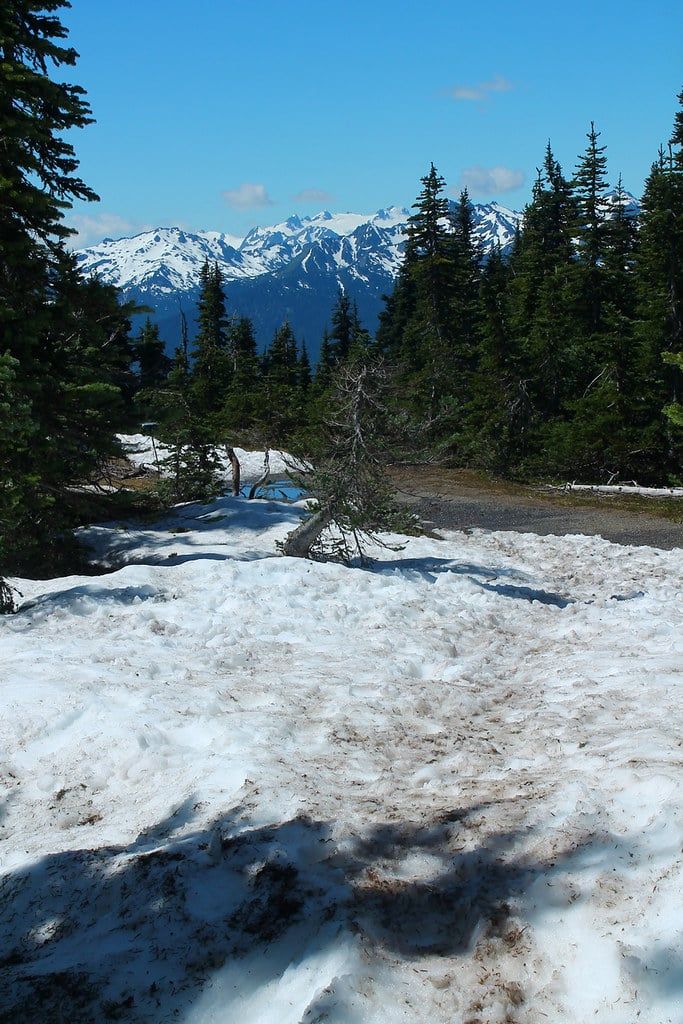
Three dates anchor the year. Hurricane Ridge Road goes from daily to weekends-only (plus holiday Mondays) from November through April. The Sol Duc Road typically closes mid-November to mid-March. And the first high-country snow usually hits Hurricane Ridge in October, ending the wildflower season that can begin as early as late June.
Season by Season: What Each One Is Really Like
Every season in Olympic trades something for something else — access for solitude, warmth for water, crowds for color. Here's what each one actually gives you, and who it suits.
Spring (March–May): Waterfalls and Whales
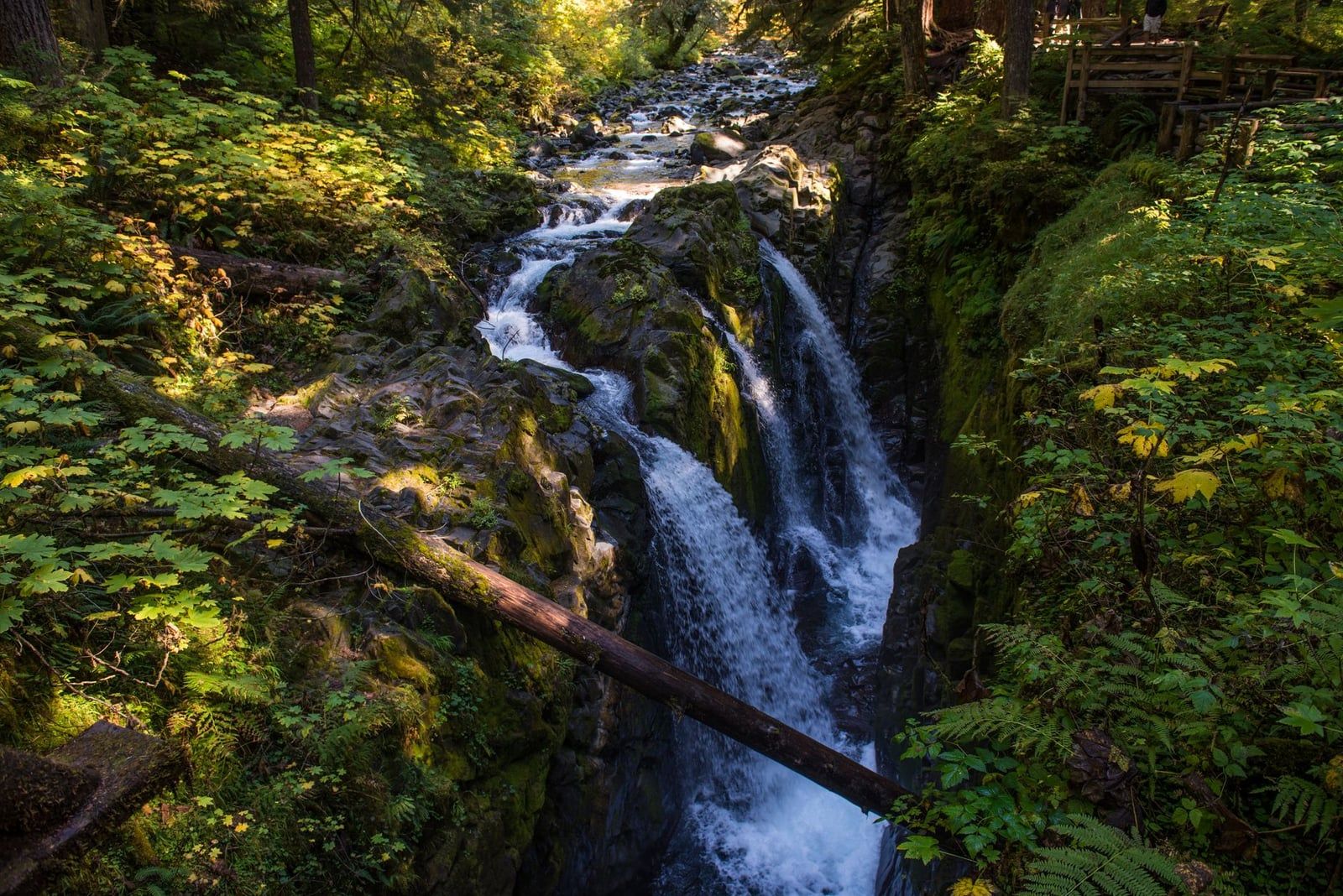
Spring is when Olympic is at its loudest and its wettest. Snowmelt puts Marymere Falls and Sol Duc Falls at full power, gray whales migrate past the coast from March through May, and elk calves appear in the lowland valleys. Expect up to 19 rain days a month in some areas and trails that stay muddy into June. Hurricane Ridge opens daily in May, but the high trails hold snow well past that.
Bring waterproof boots and a tolerance for drizzle, and you'll have the rainforest nearly to yourself. Mid-May is the season's best week — drier than March, greener than July, and quiet everywhere.
Summer (June–August): Everything Open, Everyone Here
Summer delivers what every other season can't: reliable access. Every road is open, every visitor center runs full hours, and daylight stretches from roughly 5 a.m. to 10 p.m. around the solstice. High-country trails finally shed their snow, the coast warms into the 60s, and fog often burns off the beaches by afternoon. Watch for thunderstorms above treeline — they're brief but real.
The pressure is logistical. About 75% of the park's roughly three million annual visitors come in summer, lodging can fill a month ahead, and Highway 101 road work can add flagger waits of up to 25 minutes. Book early, arrive early, and our things-to-do guide will help you cut the list down to what fits.
Fall (September–November): The Insider Window
From the third week of September through the first week of October, Olympic hits its best balance of the year. Crowds collapse after Labor Day, every area stays open, and the park puts on a show: Roosevelt elk begin their September rut in the Hoh and Quinault valleys, coho salmon run late September into early October at Salmon Cascades on the Sol Duc River, and bigleaf maples turn gold around Lake Crescent and along the Hoh River. Mushrooms peak in October too.
The clock is running, though. First snow usually reaches Hurricane Ridge in October, visitor centers and ranger stations cut hours from September, and Fairholme Campground at Lake Crescent closes late September through mid-May. Come in the window and you get the full park at half the crowds.
Winter (December–February): Storms and Snow, On a Schedule
Winter is Olympic's secret season, with two very different moods. On the coast and in the rainforest, highs sit in the 40s and lows rarely freeze — the forests stay green all winter, and November through February brings prime storm watching from Kalaloch Lodge or Quileute Oceanside Resort. In the mountains, Hurricane Ridge becomes a weekend ski, snowshoe, and tubing area.
The Ridge runs on strict rules: the road opens Fridays through Sundays (plus holiday Mondays) from late November to late March, uphill traffic starts around 9 a.m., every vehicle must carry chains, and everyone must be back down by 5 p.m. Call the road and weather hotline at (360) 565-3131 that morning — and check the NWAC avalanche forecast before any backcountry travel. The rainforest trails and beaches stay open all winter with almost nobody on them.
Best Times for Hiking, Wildlife, Waterfalls, Fishing & Boating
The right month also depends on what you're coming to do. Hiking, wildlife, fishing, and photography each have their own calendar, and they don't all peak in July.
Hiking and Backpacking
July and August own the high country: that's when ridgeline trails are snow-free and the 600-plus-mile trail network is fully in play. Spring suits the lush lowland paths instead — the Hoh's Hall of Mosses and the Lake Crescent trails are at their greenest. Backpackers should plan summer trips, when high-country routes have typically melted out by May or June and the driest weather makes camp reliable; overnight trips need a wilderness permit, which you can reserve through the park's Wilderness Information Center or recreation.gov. For route ideas, see our best hikes in Olympic rundown.
Wildlife
April through October is the broad window, and each month adds something. May and June are best for black bears near Hurricane Ridge; summer brings Olympic marmots and mountain goats onto the subalpine rocks; September starts the elk rut and the salmon runs. Along the coast, gray whales pass March–May and again October–November, orcas show up summer and fall, humpbacks in fall, and tufted puffins nest on offshore rocks June–August. Tide pools are at their liveliest April through August during the low-tide series — our Olympic wildlife guide sorts the whole calendar.
Wildflowers, Waterfalls, Foliage
Three short seasons bookend the year. Subalpine wildflowers at Hurricane Ridge can start as early as late June. Spring snowmelt gives the waterfalls their peak flow from March into May. And October brings the maples' gold around Lake Crescent and in the rainforest, plus the year's best mushroom displays.
Fishing and Boating
Fall is prime for Elwha River salmon; winter steelhead are best targeted in spring; and boating and rafting season runs late spring into early fall. One quirk worth knowing: you don't need a Washington fishing license inside the park — except on the Pacific coast, where salmon and steelhead anglers need a catch record card.
Photography
Photographers who chase dependable light plan trips from mid-July to mid-September, when the odds of clear skies over the ridge are highest and the crowds of early July have thinned.
Crowds, Fees & Reservations: The Logistics of Timing
Peak visitation runs June through September, and the National Park Service is blunt about how to handle it: the crush hits between 10 a.m. and 5 p.m., so arrive before 10 or after 5 — after 6 p.m. on holiday weekends. Midday summer waits at filled lots like Ruby Beach, Rialto Beach, and Hurricane Ridge can run 30 minutes to two hours once rangers start metering entry. Early morning is the single best crowd tactic there is.
Entry is simple. It costs $30 per private vehicle, $25 per motorcycle, or $15 per person on foot or bike, valid for 7 consecutive days, and there is no timed-entry or entrance-reservation system at all. Full details are on our hours and fees page.
What does need booking: campgrounds and backcountry. Overnight wilderness trips require a permit ($8 per person per night for ages 16 and up, plus a $6 reservation fee), and popular campgrounds — Hoh, Kalaloch, Fairholme, Mora, Sol Duc, Staircase — take reservations via recreation.gov in peak season. National park campgrounds release sites 6 months, 2 weeks, and 4 days in advance; grab one of those release dates if you want a summer weekend at the Hoh.
One current-events note: the Hurricane Ridge Visitor Center was destroyed by fire in May 2023 and has not been rebuilt. The road, trails, and views are all still there, but check the park's current alerts before you build a Ridge day into your itinerary.
So, When Should You Go?
Match the timing to the trip you actually want.
- Best weather, full access: July–August, weekdays preferred.
- Best balance: mid-May or late September to early October.
- Solitude: winter, or any shoulder-season weekday.
- Photography: mid-July through mid-September.
- Wildlife: April–October; September for elk and salmon.
- Waterfalls: April–May at peak snowmelt.
- Snow sports: December–March, weekends only at the Ridge.
If you're combining Olympic with Mount Rainier or North Cascades, you need June through October — the high-elevation roads in those parks close earlier than anything at Olympic. An Oregon Coast add-on, by contrast, works any month. And if your dates must bend around school holidays, aim for weekdays: with 2–3 days you can still cover all three ecosystems, and rangers suggest splitting overnights between the north side (Port Angeles) and the west (Forks, Kalaloch, or Quinault).
The worst times, for the record, are the summer holiday weekends — Memorial Day, July 4, and Labor Day — when entrance lines and parking closures hit the Hoh and Hurricane Ridge hardest, and late November, unless storm watching is the whole point of your trip. Every other window is a trade you can win.
Frequently asked questions
What is the best month to visit Olympic National Park?
September. Mild weather, the whole park still open, and crowds drop sharply after Labor Day — plus the elk rut, salmon runs, and early fall color all land that month. July and August are warmer and drier but far busier.
What is the rainiest time of year in Olympic National Park?
November through March. November is the wettest month at park headquarters, with 15.61 inches of rain, and coast and rainforest areas can see 15–25 inches per month through winter. July (1.99 inches) and August are the driest.
Do you need reservations to get into Olympic National Park?
No. Olympic has no timed-entry or entrance-reservation system. Entry costs $30 per vehicle, valid for 7 days. You only need separate reservations for campgrounds such as Hoh and Kalaloch (via recreation.gov) and permits for overnight backcountry trips.
When is Hurricane Ridge Road open?
Daily May through October; weekends and holiday Mondays only from late November through April. In winter, uphill traffic starts around 9 a.m., all vehicles must carry chains, and everyone must be down by 5 p.m. Call (360) 565-3131 for current conditions.
How many days do you need in Olympic National Park?
Two to three days at minimum to cover mountains, rainforest, and coast — no roads cross the park's interior, so driving between areas eats time. NPS rangers suggest splitting overnight stays between Port Angeles on the north side and Forks, Kalaloch, or Quinault on the west.
When is the best time to see wildlife in Olympic?
April through October overall. May–June for black bears, summer for marmots and mountain goats, September for the elk rut and salmon, and March–May plus October–November for gray whales migrating past the coast.
What is the worst time to visit Olympic National Park?
Summer holiday weekends — Memorial Day, July 4, and Labor Day — when entrance stations back up and parking lots fill at the Hoh and Hurricane Ridge. Late November is the wettest stretch unless you're coming specifically for storm watching.
Is winter a bad time to visit Olympic National Park?
It's a fine time if you want solitude, storm watching on the coast, or weekend skiing and snowshoeing at Hurricane Ridge. Rainforests and beaches stay open with highs in the 40s, but Hurricane Ridge runs weekends only, the Sol Duc road closes, and avalanche danger is real — check the NWAC forecast.