Three days is what Olympic National Park takes if you want all three of its ecosystems — glacier-capped mountains, temperate rain forest, and 73 miles of wild Pacific coast — without spending your trip white-knuckling Highway 101. The park covers 922,650 acres and no road crosses its interior, so every day's plan starts with driving math, not wishful thinking.
This itinerary splits your nights between the north side (Port Angeles or Lake Crescent) and the west side (Forks or Kalaloch), then runs Hurricane Ridge and Lake Crescent on Day 1, Sol Duc Falls and a tide-timed beach on Day 2, and the Hoh Rain Forest plus Ruby Beach on Day 3. Every stop carries a drive time, a difficulty label, and a fallback if weather or crowds break the plan. Short on time? Skip to the 2-day compression below.
How Many Days Do You Need in Olympic National Park?
Three days, and the reason is geometry. Highway 101 rings the peninsula, and the park's interior — 95% of it, 876,447 acres — is roadless wilderness. From Port Angeles, Hurricane Ridge is 45 minutes, Lake Crescent 30, Sol Duc Valley 1h15, Mora/Rialto 1h15, the Hoh Rain Forest 2h15, Kalaloch 2h30, and Quinault 3 hours. Each day of this plan pairs stops that sit near each other so you never backtrack.
Two days works if you compress: Day 1 Hurricane Ridge plus Lake Crescent, Day 2 the Hoh plus one coast stop, sleeping one night north and one west. Four or five days lets you add Cape Flattery, the Ozette Triangle, or the Quinault valley at a human pace — our five-day Olympic plan stretches exactly that far.
| Trip length | What you'll see | Where you'll sleep |
|---|---|---|
| 2 days | Hurricane Ridge, Lake Crescent, Hoh Rain Forest, one beach | 1 night Port Angeles/Lake Crescent, 1 night Forks |
| 3 days | Everything above plus Sol Duc Falls, hot springs, two beaches, Tree of Life | 2 nights Port Angeles/Lake Crescent, 1-2 nights Forks/Kalaloch |
| 4-5 days | All of it, plus Cape Flattery or Ozette or Quinault | Add a night in Forks or Quinault |
One day from Seattle is the trap. It's 2.5-3.5 hours each way, which leaves time for Hurricane Ridge and Lake Crescent and nothing else — the Hoh alone is 2h15 beyond Port Angeles. If you can't stretch to an overnight, a guided tour from Seattle does the driving and the sequencing for you.
Best Time to Visit (and What Changes by Season)
Late May through June and September through October are the sweet spots: lodges are open, roads are clear, and the summer crush hasn't arrived or has just left. July and August bring the most reliable weather and nearly 17 hours of daylight around the solstice — plus full parking lots, 1-2 hour entrance delays at popular spots, and lodging you need to book months out.
Between May and September the Hoh Rain Forest entrance booth backs up badly; visitors arriving mid-morning have reported two-hour waits and given up. Hurricane Ridge parking fills by mid-morning in season too. Arrive by 8am at both, or come after 4pm. Winter rewrites the schedule: Hurricane Ridge access drops to a limited, weather-dependent pattern (recently Friday-Sunday, 9am-4pm) with tire chains required for all vehicles, and Sol Duc Road closes for the season. The winter fallback is Lake Crescent and the coastal strip, which sit at low elevation and stay reachable. For the full month-by-month breakdown, see our guide to the best time to visit Olympic.
Pack for all of it. Temperatures swing only about 30°F between winter and peak summer, but rain falls in every season and a single day can swing 10-20°F between coast and ridge. A rain shell, a warm mid-layer, and closed-toe shoes for pebble beaches belong in the bag in August.
Getting There, Park Fees, and Logistics
From Seattle you have two routes. The Seattle–Bainbridge ferry crosses in 35 minutes and puts you in Port Angeles roughly 3 hours after leaving the dock; driving south around Puget Sound through Tacoma takes about 2h45 with no ferry schedule to chase. The ferry ride is the better start to a vacation; the drive-around is the safer bet if you're leaving late or hate queueing. Either way you need a car — no road or transit line reaches the park's interior, and full routing details are in our directions to Olympic National Park guide.
Entry costs $30 per private vehicle, valid for 7 consecutive days. On foot or bike it's $15, the park-specific annual pass is $55, and the $80 America the Beautiful pass covers every national park for a year. No timed-entry system exists and no entrance reservation is required — the only reservations are for peak-season campgrounds (Hoh, Kalaloch, Fairholme, Mora, Sol Duc, Staircase, via recreation.gov) and overnight wilderness permits, which run $8 per person per night plus a $6 fee.
Two logistics make or break the week. First, download offline maps before you leave Seattle — big stretches of the peninsula have no signal, and the park's road-and-weather hotline (360-565-3131) is often your only conditions source. Second, buy groceries in Port Angeles or Forks and carry a cooler; inside the park, food is limited to lodge restaurants and the Fairholme general store. Check the NPS current-conditions page each evening — closures happen, and Rialto Beach has a scheduled construction closure in summer 2026 (July 8–October 5).
Where to Stay: The Two-Base Strategy
Rangers recommend splitting your nights between the north side (Port Angeles area) and the west side (Forks, Kalaloch, or Quinault), and the drive times prove why: Port Angeles sits 45 minutes from Hurricane Ridge, while Forks and Kalaloch Lodge sit 50-60 minutes from the Hoh. Sleeping in one base the whole trip means hours of backtracking on a road that never cuts through the park. For a 3-day trip, do 2 nights north and 1-2 west.
In-park anchors are Lake Crescent Lodge on the lake shore, Log Cabin Resort, Sol Duc Hot Springs Resort, and Kalaloch Lodge on the bluff above the beach — book any of them months ahead for summer. Town motels in Port Angeles and Forks are the easier last-minute find, and reservable campgrounds (Hoh, Kalaloch, Mora, Fairholme, Sol Duc) fill fast on summer weekends. Lake Quinault Lodge, built in 1926, anchors the south end if you exit that way.
Evenings in Forks come with an option: the town leans hard into its Twilight fame, and Bella's truck still parks outside the Chamber of Commerce if a photo stop is your thing.
Day 1: Hurricane Ridge, Lake Crescent, and Marymere Falls
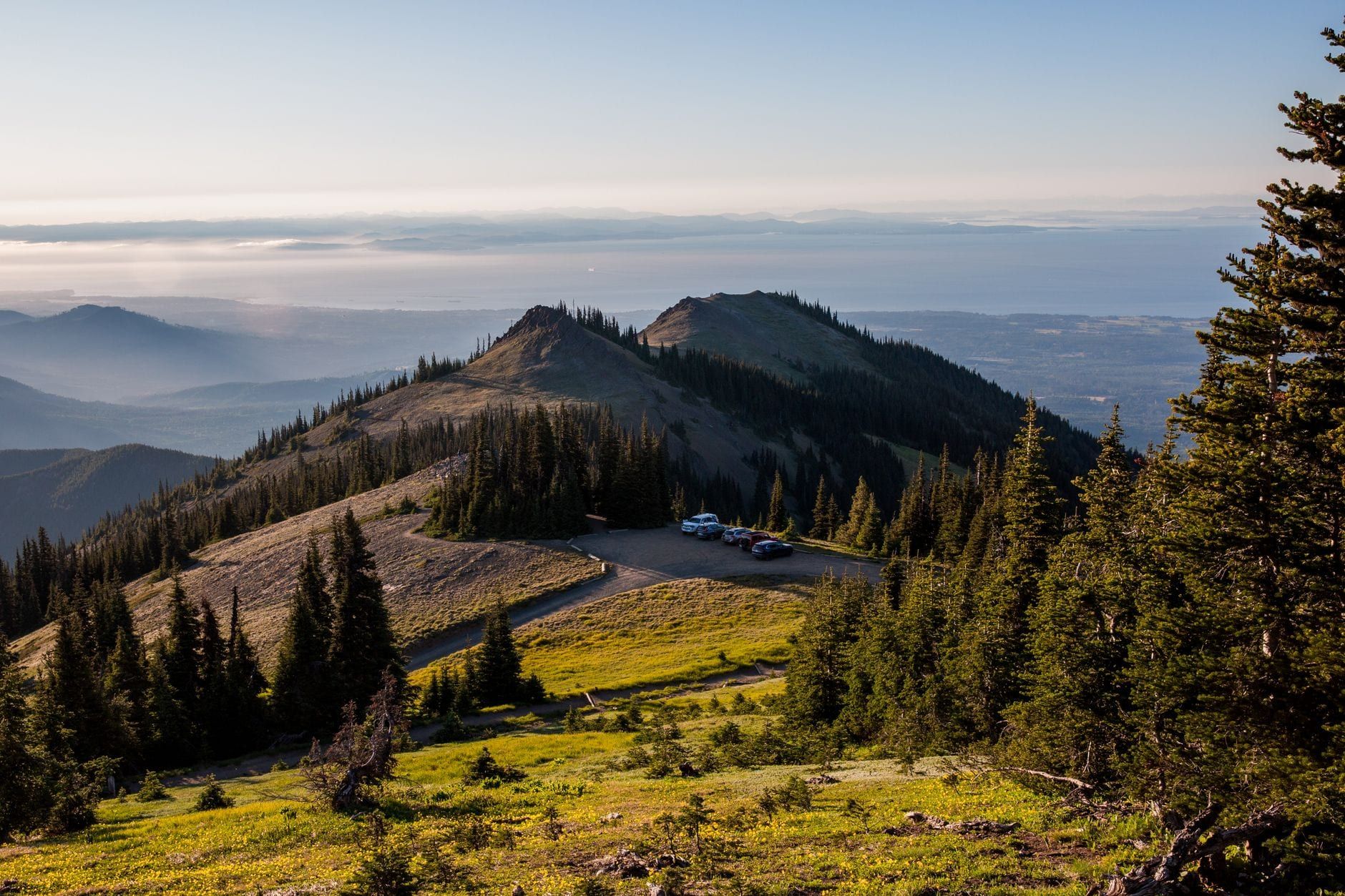
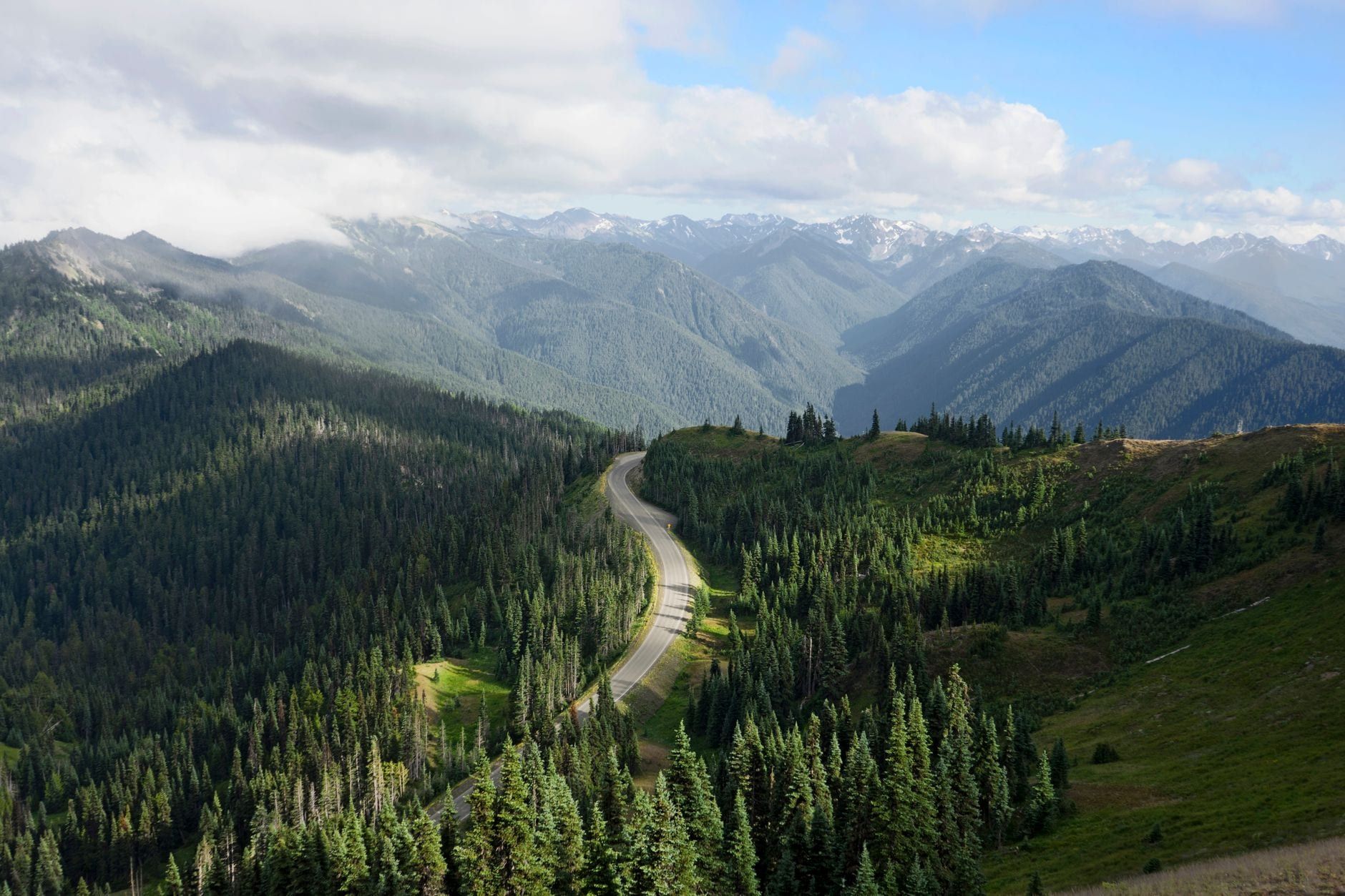
Leave Port Angeles by 7:15am. The Hurricane Ridge Road climb takes 45 minutes, parking fills by mid-morning in season, and the marine layer burns off late — an early start buys you both a space and the day's clearest views.
Hurricane Ridge and Hurricane Hill
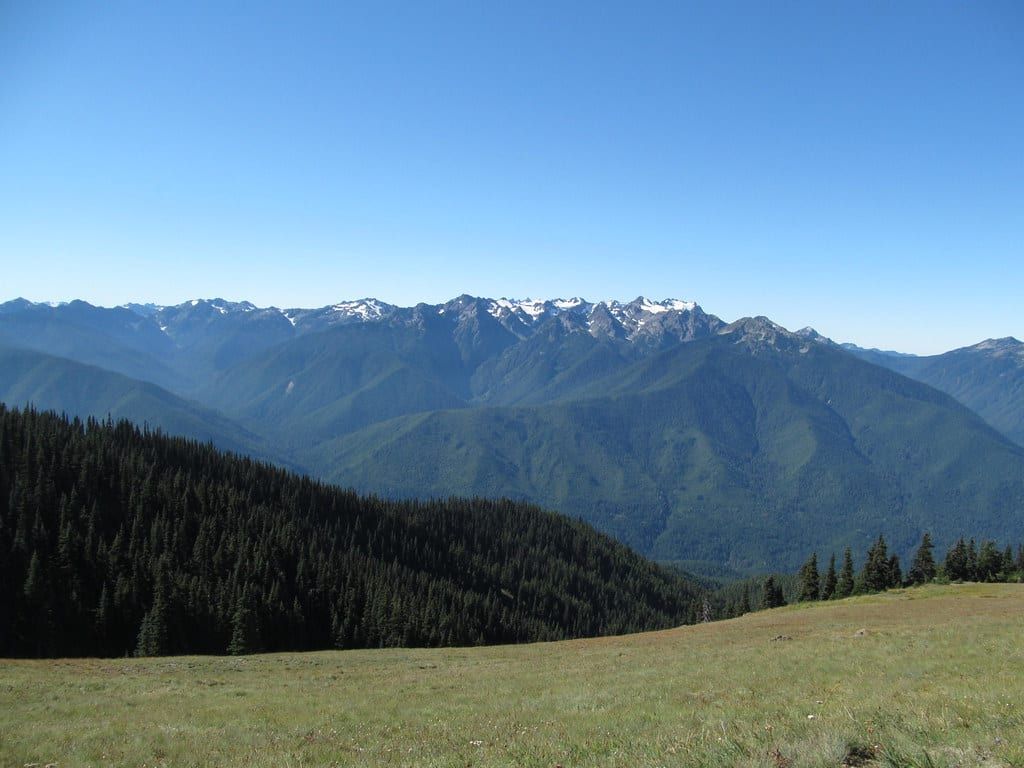
From the visitor-center parking lot you get the full panorama — Mount Olympus at 7,980 feet, its 32 named glaciers, and on clear days Vancouver Island, Canada — without walking a step. If the sky is clean, continue past the lot to the Hurricane Hill trail: 3.2 miles round trip, paved, moderately steep, with 360-degree views the whole way. Easy for fit hikers; manageable for anyone used to a steady uphill walk. Watch the meadows for Olympic marmots, which live nowhere else on Earth. Budget two hours with the visitor center.
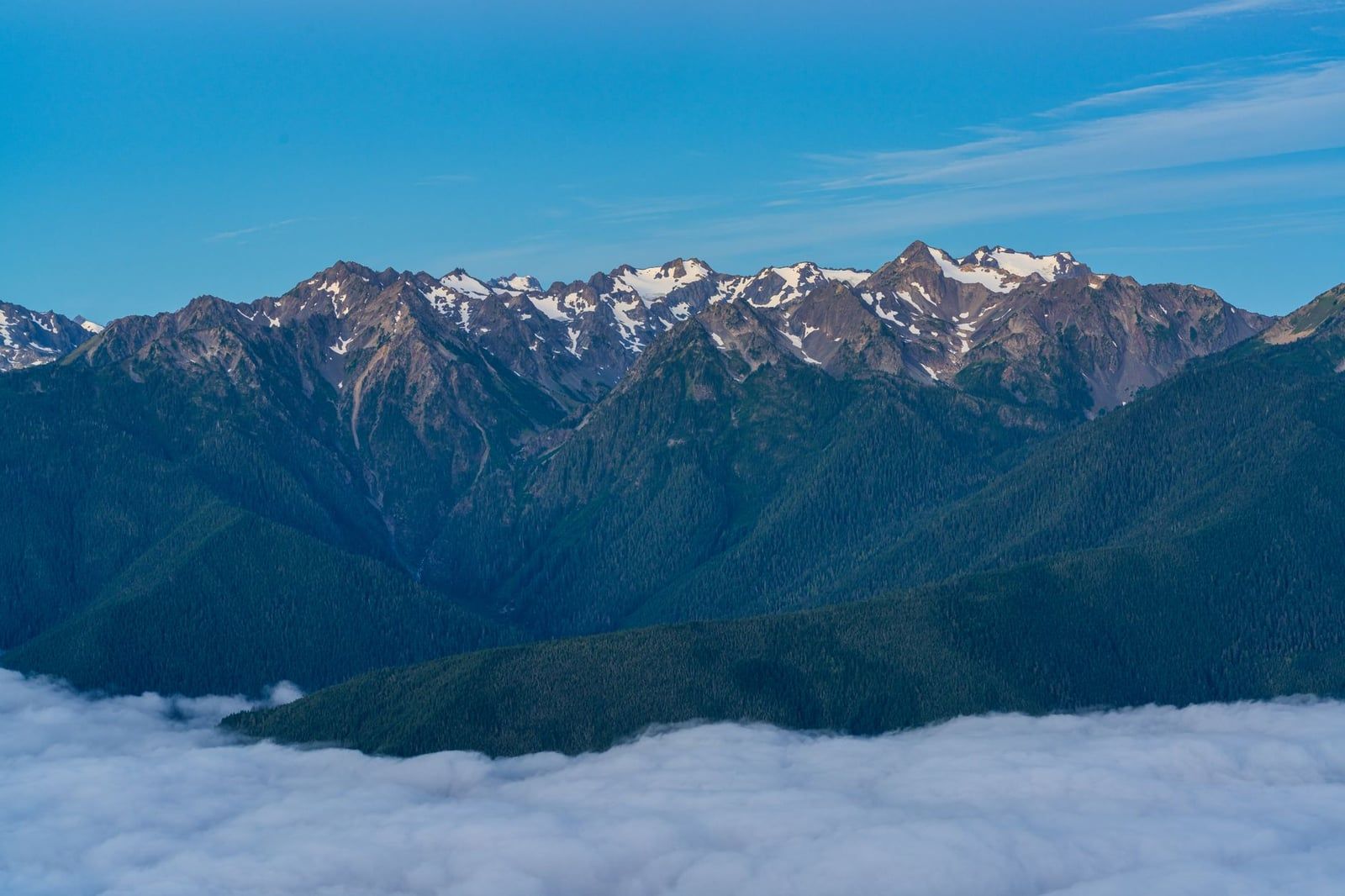
If fog swallows the ridge or the road is closed, swap the morning for lowland Lake Crescent hikes and try the ridge on your way back — the contingency costs you nothing because everything in Day 1 sits within an hour of Port Angeles.
Lake Crescent and Marymere Falls
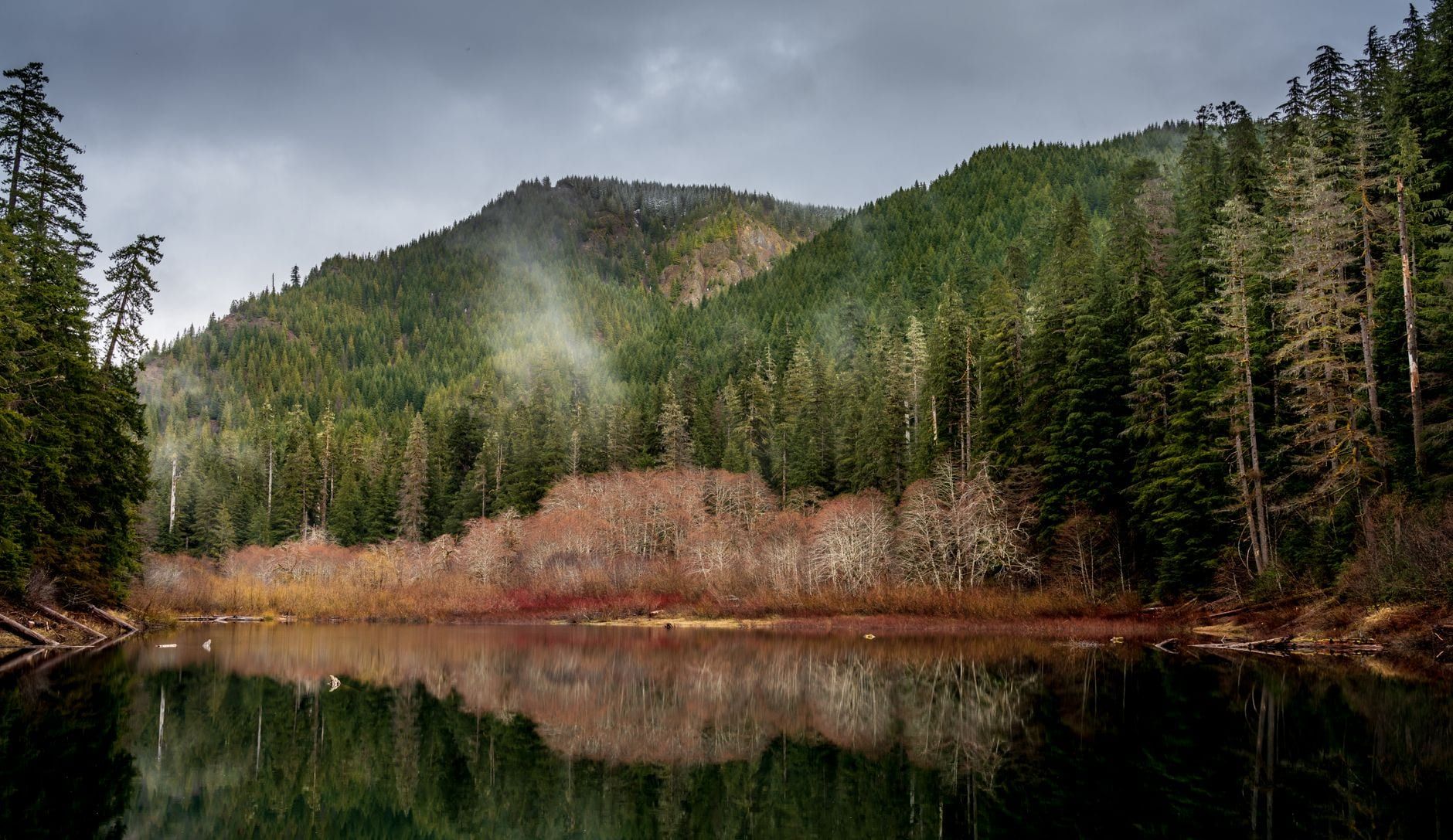
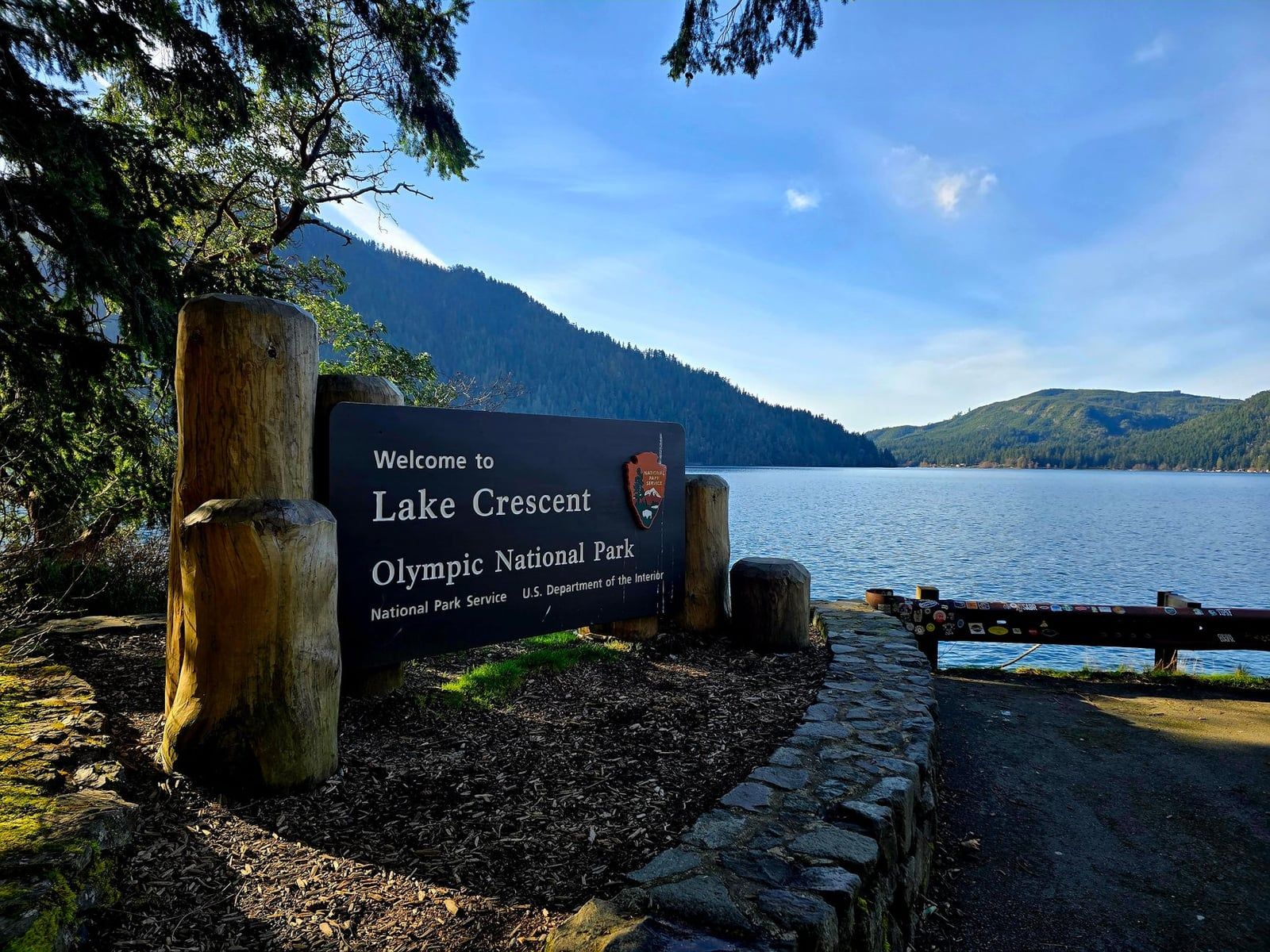
Back down to Highway 101 and 30 minutes west, Lake Crescent is a glacially carved lake of deep, improbably blue water. Stop first at Madison Falls — a 0.2-mile round trip on a paved, wheelchair-accessible path to a 60-foot waterfall — then picnic at the lake using the Lake Crescent Lodge dining room or the Fairholme general store at the west end. More detail in our Lake Crescent guide.
After lunch, Marymere Falls: 1.8 miles round trip, nearly flat, through old-growth forest to a 90-foot cascade. It's the easy pick, and it's the best hike in the park for kids and anyone who wants forest without elevation. Allow 90 minutes.
Ambitious parties should instead take Mount Storm King — 4.1 miles round trip, about 3 hours, steep enough that the final scramble uses a fixed rope. The payoff is a cliff-edge view over Lake Crescent that Marymere can't touch. The third option is water: Devil's Punchbowl via the Spruce Railroad Trail, 2.1 miles round trip on a paved path to a swimming hole, with kayak and paddleboard rentals on the lake in summer. Our best hikes in Olympic rundown ranks all three.
Sleep in Port Angeles or Lake Crescent tonight. Tomorrow goes west.
Day 2: Sol Duc Falls, Hot Springs, and the Wild Coast
This day runs on tides, so check the NOAA tide tables for La Push the night before and build the afternoon around them. If low tide lands mid-afternoon, the plan below works as written. If it doesn't, flip it — the beaches move to Day 3 and the hot springs expand.
Sol Duc Falls and the Hot Springs
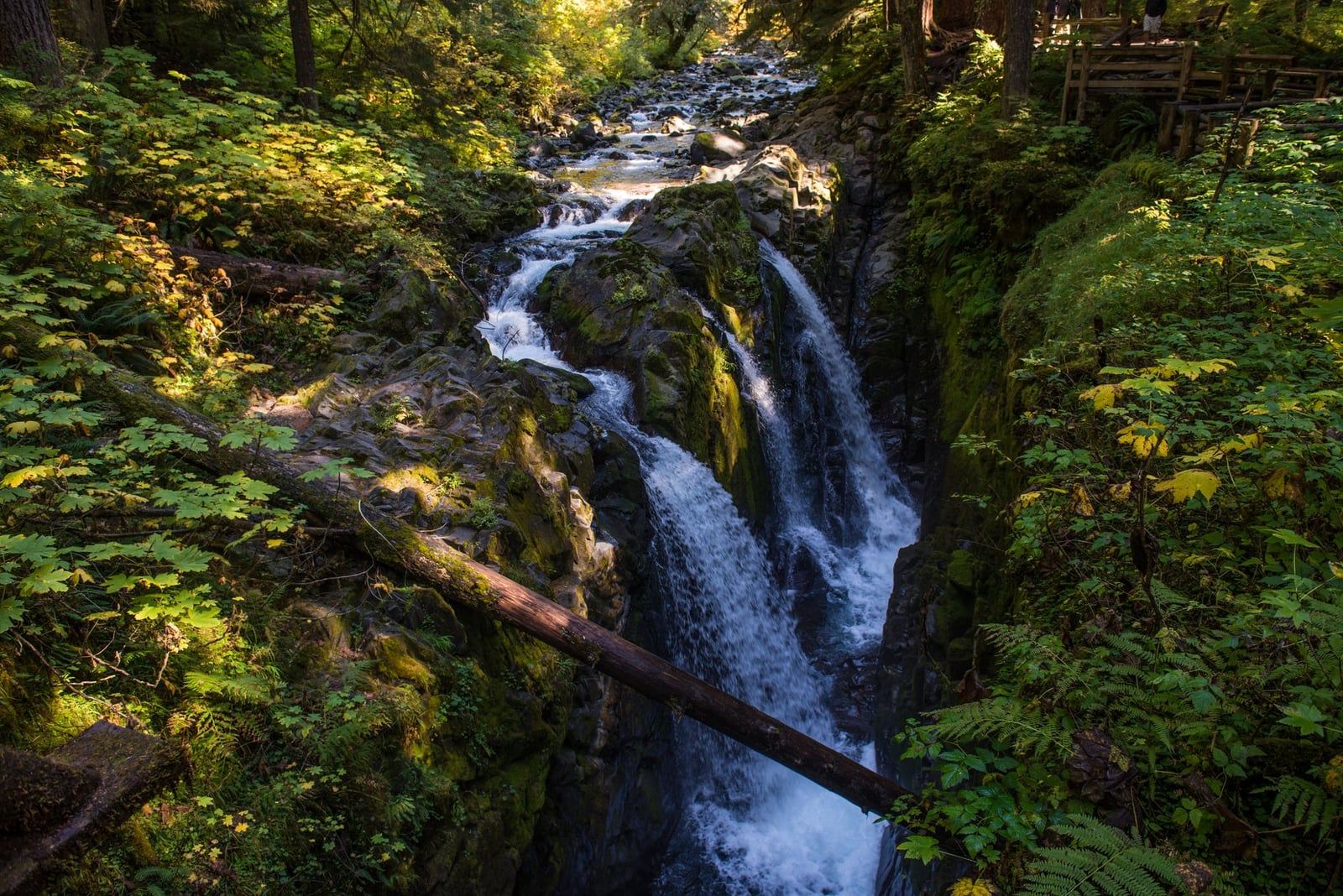
The Sol Duc Valley is 1h15 from Port Angeles. The falls trail is 1.6 miles round trip, easy, through old-growth forest to a triple cascade funneled through a narrow rock slot — one of the park's best short walks. Add the Salmon Cascades overlook on the valley road if you're here in fall, when salmon leap the rapids below the viewing platform.
Ten minutes back down the road, Sol Duc Hot Springs has three mineral pools at 99-104°F plus a freshwater pool, with day passes sold to non-guests and a season that typically runs March through October. Bring a towel and a lock; soak an hour, eat at the resort, and let your legs recover before the beach.
Rialto Beach or Second Beach
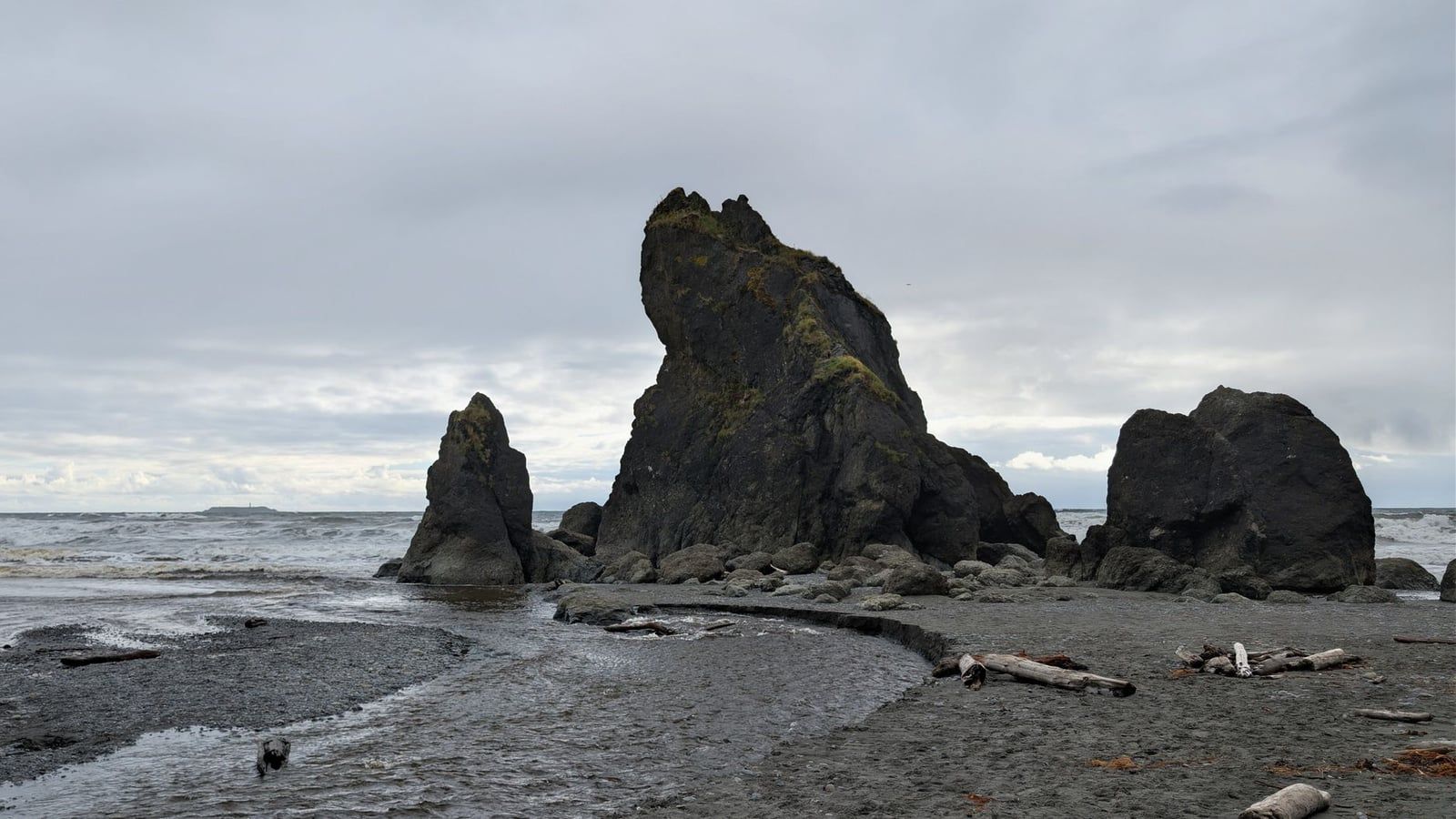
Mora and Rialto Beach are 1h15 from Port Angeles. The signature walk is to Hole in the Wall, a sea-carved arch 3.3 miles round trip along the sand — and it is only passable near low tide, with headlands blocking the way back at high water. Start the walk no later than two hours before low tide and be heading back before it turns. One big beach walk per tide window is the realistic daily max; sneaker waves are a documented danger here, so keep off logs near the surf line.
Second Beach is the alternative: about a mile through coastal forest, then a rope-assisted descent to sand and sea stacks. Pick Rialto if low tide cooperates and you want the arch; pick Second Beach if the tide timing is off, the walk is forest-shaded and the tide pools at the far end are best exposed at low water anyway — our tide pool guide lists what you'll find in them. High tide all afternoon? Do the falls and hot springs today and move both beaches to Day 3, which has slack.
Finish the day driving to Forks — an hour from either trailhead — and check into your west-side base.
Day 3: Hoh Rain Forest, Ruby Beach, and the Tree of Life
Be at the Hoh entrance before 8am. From May through September the booth backs up for a mile, and one visitor who arrived before 10am still reported a two-hour wait and left. The Hoh is 50-60 minutes from Forks, so a 7am departure does it.
The Hoh Rain Forest at Dawn
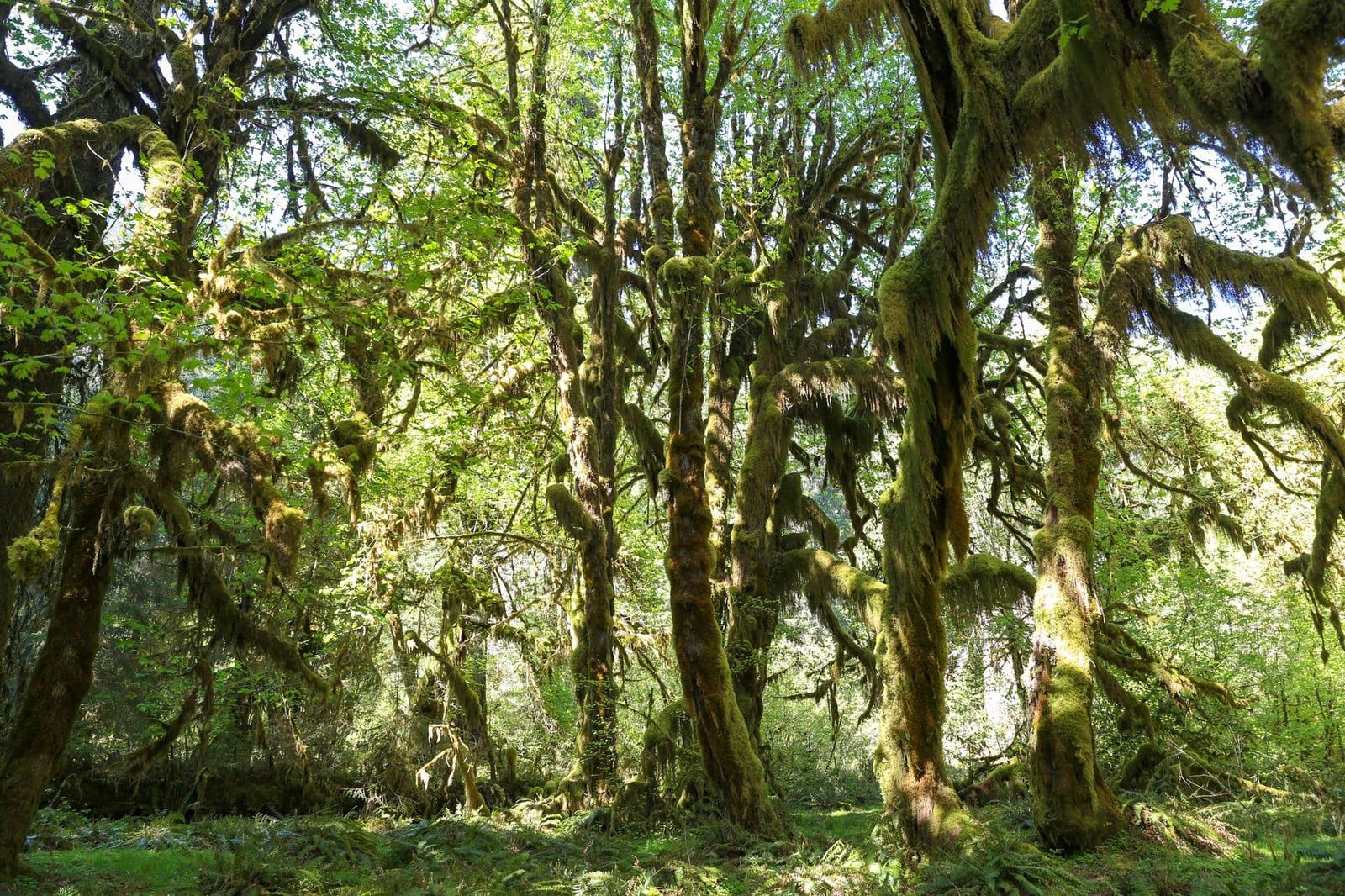
The Hall of Mosses is 0.8 miles, the Spruce Nature Trail 1.2 miles, and you should walk both — two flat loops, two miles total, under an hour and a half combined. Bigleaf maples wear curtains of club moss, the canopy filters everything to green, and the forest floor takes nearly 12 feet of rain a year. Both trails are easy enough for kids; watch for Roosevelt elk herds on the Spruce loop and keep 50 yards away. If the entry line is already long when you arrive, flip the day: beaches first, Hoh in late afternoon.
Ruby Beach and the Tree of Life
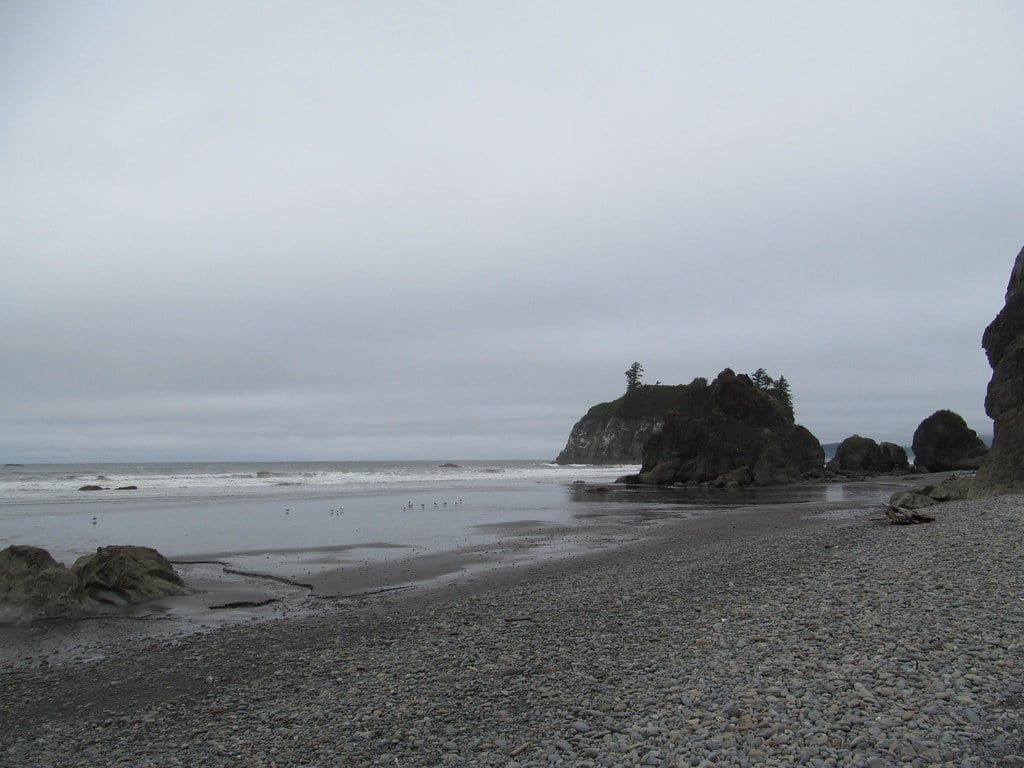
Ruby Beach is 30-40 minutes south of the Hoh turnoff on 101, with parking right above the sand — an easier beach than Rialto, all sea stacks, driftwood, and tide pools, reachable in minutes rather than miles. Linger here; there's no schedule left. It anchors our Olympic beaches guide for good reason.
Ten minutes south, the Tree of Life sits on the beach below Kalaloch campground: a massive Sitka spruce suspended horizontally over an eroded riverbank, its roots exposed and still holding. It's a five-minute walk from the Kalaloch Lodge parking area and makes the natural last stop.
Then the exit math: Kalaloch is 2h30 from Port Angeles and 3 hours from Quinault, so this day ends either driving home the long way around the peninsula or — better — sleeping near Kalaloch or Quinault and rolling south in the morning.
If You Have a Fourth Day: Cape Flattery, Ozette, or Quinault
A fourth day buys one whole region, not three squeezed stops. Pick by interest.
Cape Flattery and Shi Shi Beach
Cape Flattery is the northwesternmost point of the contiguous US, on Makah Tribe land rather than in the park — you'll need a $20 Makah Recreation Pass, sold in Neah Bay. The trail is 1.2 miles round trip on boardwalk to cliff-edge platforms above sea caves, easy for nearly everyone. From a Forks base it pairs with Shi Shi Beach, an 8.8-mile round trip under the same permit and one of the wildest beaches in the Lower 48. Strong hikers only on Shi Shi; the mud on the approach is famous.
The Ozette Triangle
The Ozette loop is 9.4 miles: roughly 3 miles of boardwalk through forest, 3 miles of wild beach, 3 more of boardwalk back. Flat the whole way but long, and the beach section passes petroglyphs carved at Wedding Rocks. It's a full day with tide timing — the headlands are passable only at lower water — so budget it only on a 4-day trip or longer.
Lake Quinault and the Drive Home
Quinault is the south-exit option, sitting on the Seattle return route if you drive around the peninsula. The 31-mile loop road circles Lake Quinault through rain forest; the Nature Loop is an easy 0.9 miles; and the world's largest Sitka spruce — 191 feet tall, roughly 1,000 years old — is a 0.4-mile round-trip walk from the road. Have lunch at Lake Quinault Lodge and drive home from there. The rule for any add-on: add a day per region rather than squeezing two regions into one.
FAQs: Planning Your Olympic National Park Itinerary
How many days do you need in Olympic National Park?
Three full days to cover mountains, rain forest, and coast — the NPS itself recommends 3+ days because no roads cross the park. Two days compresses to Hurricane Ridge/Lake Crescent plus the Hoh and one beach; a fourth day adds Cape Flattery, Ozette, or Quinault without rushing.
Do I need reservations or timed entry for Olympic National Park?
No. There's no timed-entry system and no entrance reservation — a $30 vehicle pass is valid for 7 consecutive days. Reservations only apply to peak-season campgrounds (Hoh, Kalaloch, Mora, Fairholme, Sol Duc, Staircase) and overnight wilderness permits, both booked via recreation.gov.
Should I stay in Port Angeles or Forks?
Both — rangers recommend splitting nights. Port Angeles is 45 minutes from Hurricane Ridge and 30 from Lake Crescent; Forks and Kalaloch are 50-60 minutes from the Hoh. For a 3-day trip, sleep 2 nights north and 1-2 west.
Can you do Olympic National Park as a day trip from Seattle?
Technically, at 2.5-3.5 hours each way, but you'll only manage Hurricane Ridge and Lake Crescent. The Hoh Rain Forest alone is 2h15 beyond Port Angeles. Stay overnight if you possibly can.
What is the best month to visit Olympic National Park?
Late May-June or September-October: lodges open, roads clear, crowds thin. July-August has the most reliable weather but the worst queues — the Hoh entrance can back up for two hours by mid-morning. Winter limits Hurricane Ridge access and closes Sol Duc Road.
Which Olympic beaches require checking the tide chart?
Hole in the Wall at Rialto Beach is only passable near low tide, and Second Beach's tide pools are best exposed at low water. Pull the NOAA tide tables for La Push the night before and build the day around the window.
Is Cape Flattery part of Olympic National Park?
No — it's on the Makah Reservation, and you need a $20 Makah Recreation Pass (sold in Neah Bay). The trail is an easy 1.2-mile boardwalk round trip to the northwesternmost point of the contiguous US.