Olympic National Park squeezes three parks into one boundary: glacier-capped mountains, temperate rainforest, and 73 miles of wild Pacific coast, spread across 922,650 acres on Washington's Olympic Peninsula. No road crosses the park's interior, so your trip is really a set of drives around Highway 101 — Hurricane Ridge sits 45 minutes from Port Angeles, the Quinault Valley three hours. That geography, more than anything else, decides what you can actually do.
This guide ranks the park's best things to do by region and pairs each with the numbers that matter: trail distance, difficulty, drive time, fees, and tide requirements. It assumes a first visit of two to four days, arriving by way of Seattle. For a full day-by-day plan, our Olympic National Park itinerary builds on exactly this list.
Olympic National Park at a Glance
Pick your stops from this table before anything else. Drive times are official National Park Service estimates from Port Angeles, the park's main gateway, and they're the reason a four-day trip feels different from a two-day one.
| Stop | Ecosystem | Trail distance | Difficulty | Drive from Port Angeles |
|---|---|---|---|---|
| Hurricane Ridge | Mountains | None (drive-up) | Easy | 45 min |
| Lake Crescent & Marymere Falls | Lake / forest | 1.8 mi round trip | Easy | 30 min |
| Sol Duc Falls | Rainforest valley | 1.6 mi round trip | Easy | 1 h 15 |
| Hoh Rain Forest (Hall of Mosses) | Rainforest | 0.8 mi loop | Easy | 2 h 15 |
| Rialto Beach & Hole-in-the-Wall | Coast | 3.3 mi round trip | Moderate, tide-dependent | 1 h 15 |
| Kalaloch & Ruby Beach | Coast | None | Easy | 2 h 30 |
Quick picks, depending on who you are:
- Families: Ruby Beach tide pools plus the Hall of Mosses loop — flat, short, and forgiving.
- Photographers: Second Beach at sunset, Hurricane Ridge at first light.
- Adrenaline hikers: Mount Storm King's rope-assisted scramble, then Klahhane Ridge.
- No hiking, no problem: Hurricane Ridge, Ruby Beach, and Kalaloch are all steps from the car.
What Makes Olympic Different: Three Parks in One
Olympic protects three ecosystems that normally wouldn't share a state, let alone a park: glaciated peaks up to 7,980-foot Mount Olympus, old-growth temperate rainforest on the western slopes, and a detached strip of wilderness coastline along the Pacific. Each ecosystem needs its own day, because 95 percent of the park is roadless wilderness and no road crosses the interior.
Highway 101 circles the peninsula and connects every entrance, which means you'll spend real windshield time between regions. The park logged about 3.7 million visits in 2024, yet the crowds concentrate at a handful of trailheads — Hurricane Ridge, the Hoh, Ruby Beach — while the rest of the park stays quiet. Congress established the park on June 29, 1938, building on the Mount Olympus National Monument created in 1909 to protect the Roosevelt elk.
In the Mountains: Hurricane Ridge, Obstruction Point & Deer Park
The alpine side of Olympic is the easiest to reach and the one most first-timers should do first. Everything below sits above 5,000 feet, and the weather up there decides your day.
Hurricane Ridge
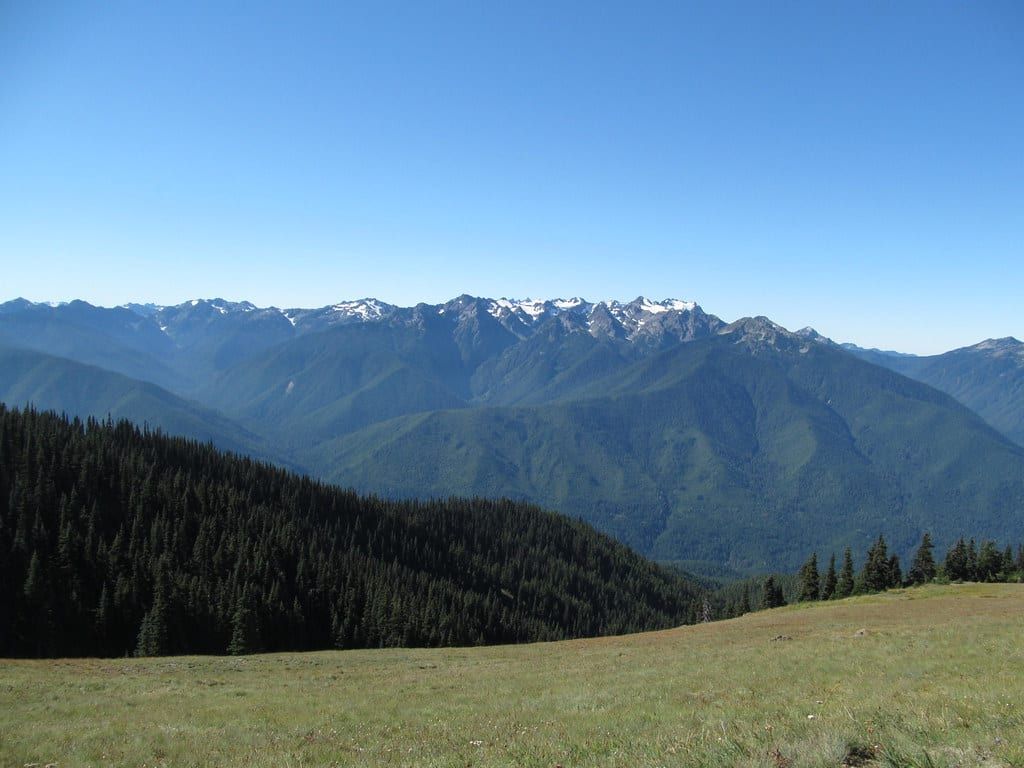
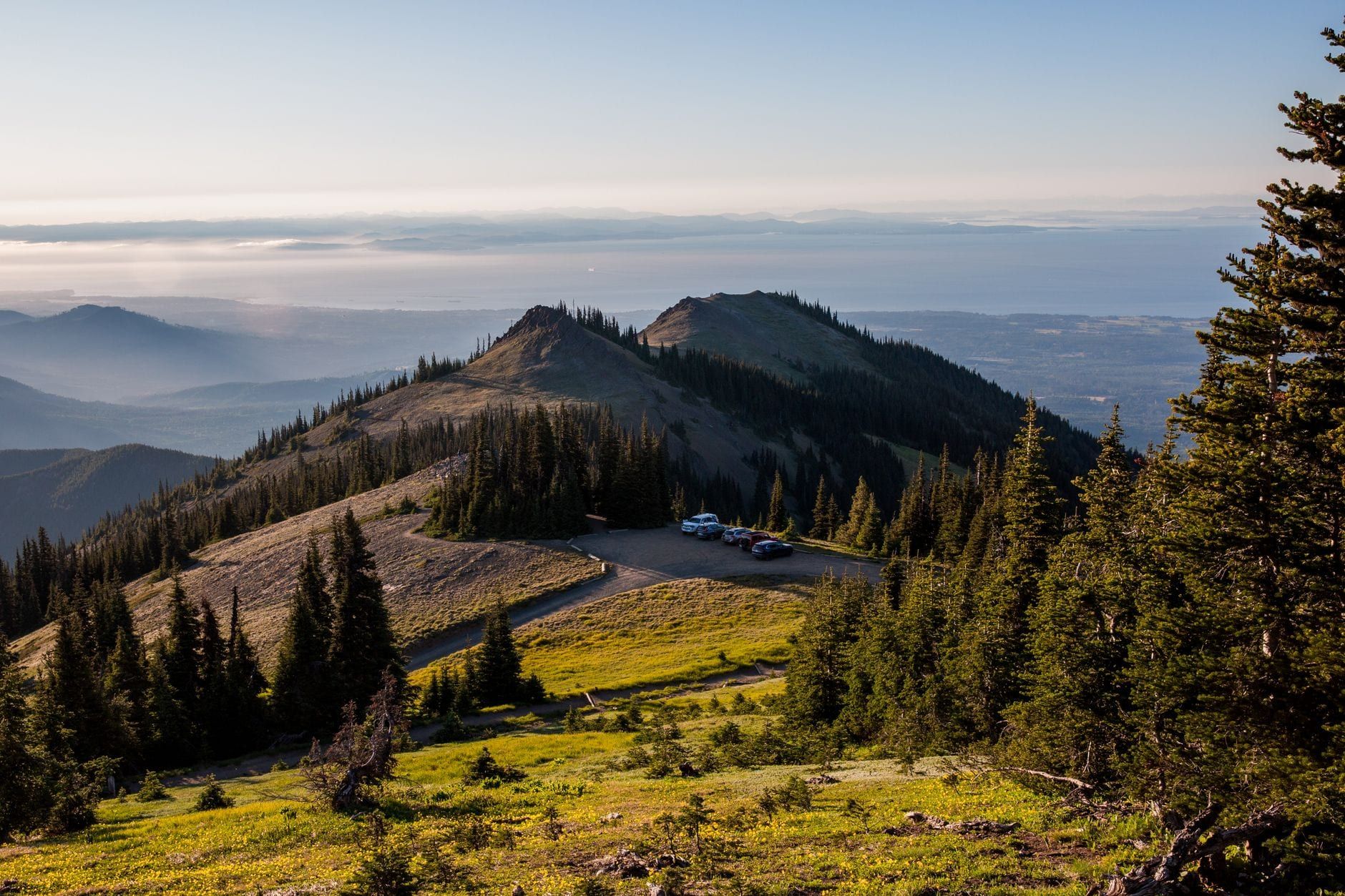
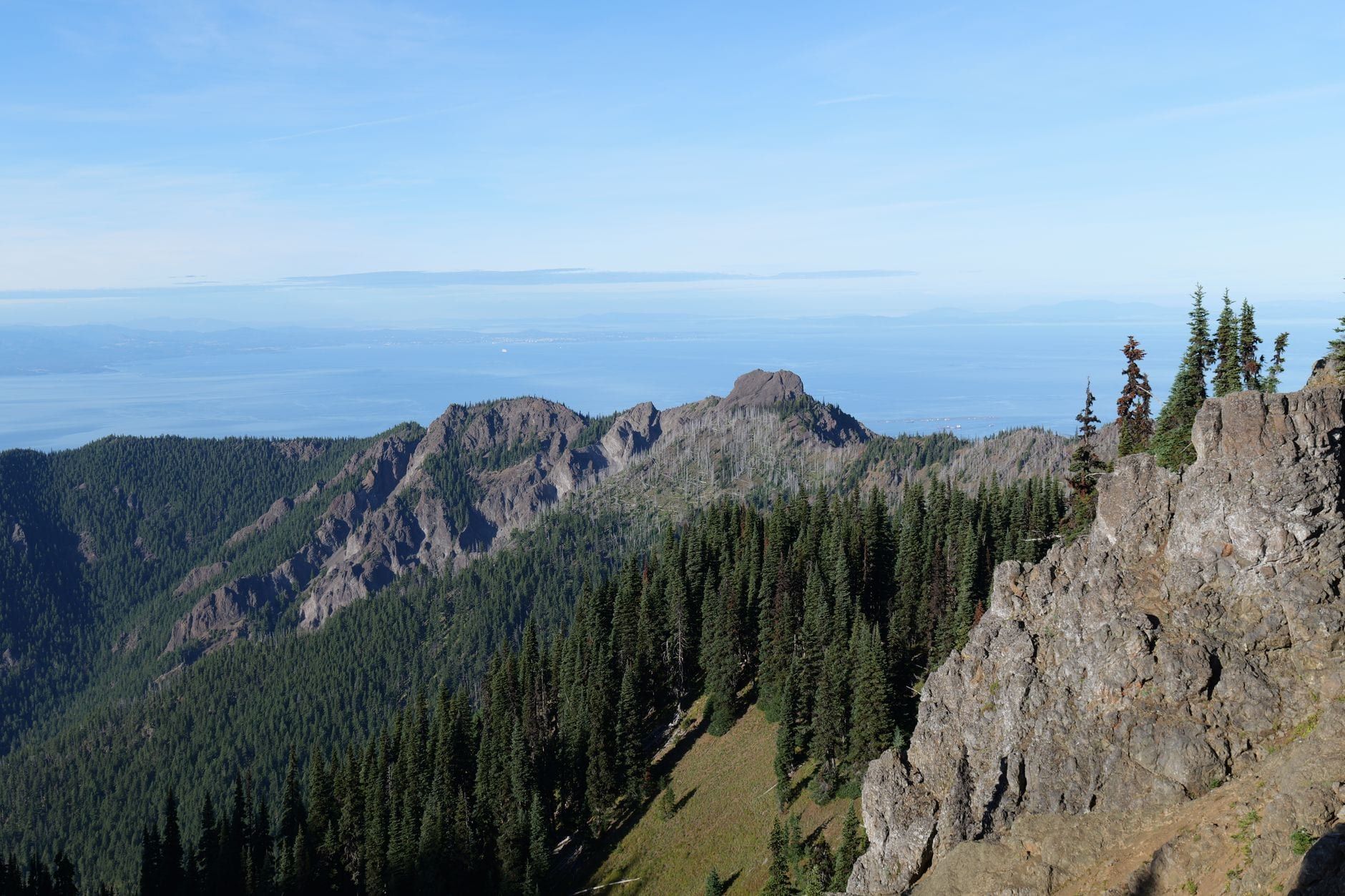
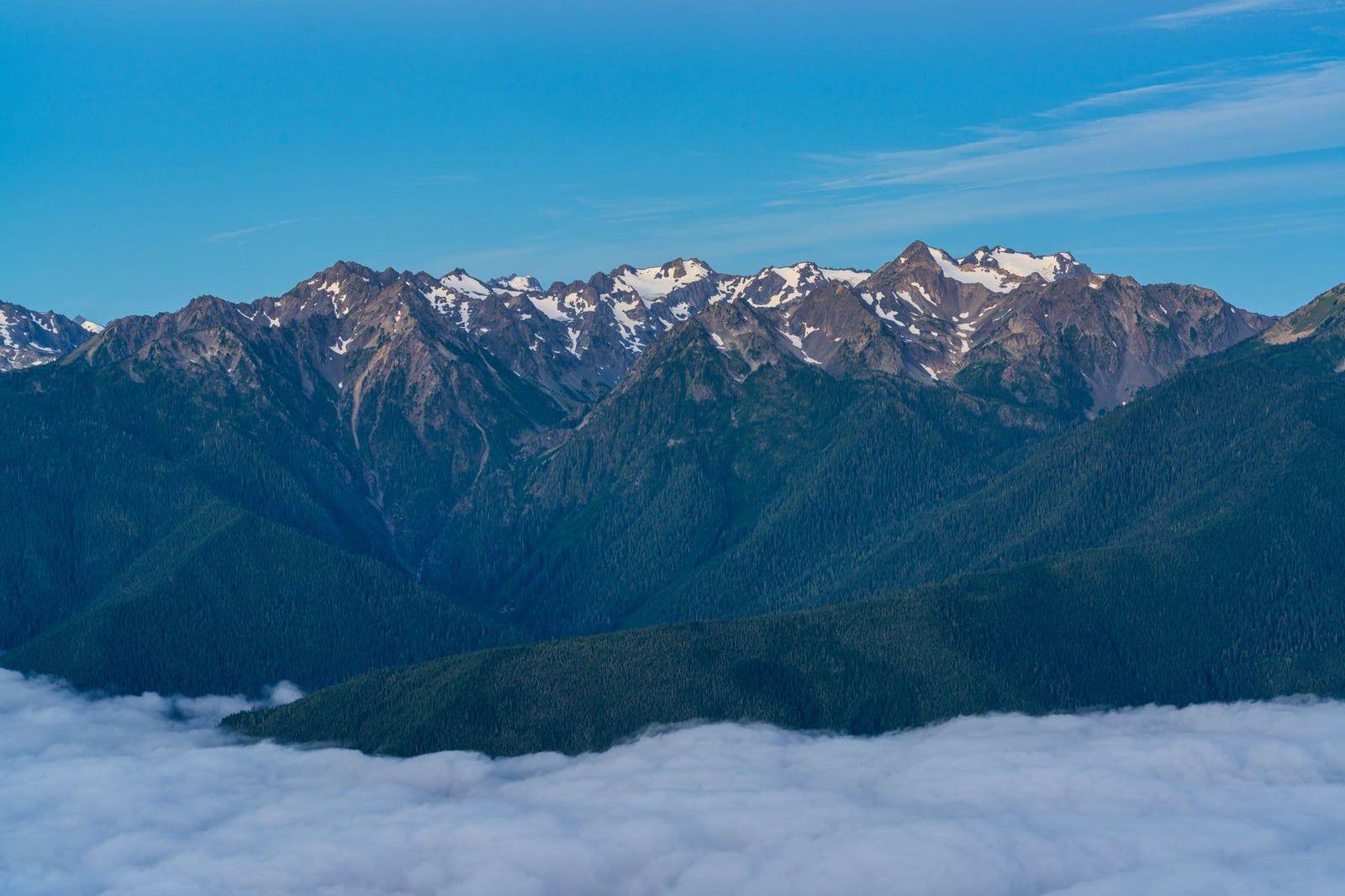
Hurricane Ridge is the park's best drive-up payoff: a 45-minute climb from Port Angeles to 5,200 feet, where the Olympic Mountains and the Bailey Range fill the horizon straight from the parking area, and Vancouver Island appears on clear days. Paved nature trails circle the visitor area, so nobody in the car is forced to hike. Bring a layer — even in August the ridge runs 20 to 30 degrees cooler than town.
Two caveats before you go. The Hurricane Ridge Day Lodge burned down in 2023, leaving only temporary restrooms and a contact station, and the road closes on some weekdays for utility work — check the park's current schedule before driving up. Also note the ridge sits 18 miles up a mountain road, so when fog or snow rolls in, the panorama becomes a white wall. Go on the first clear morning of your trip.
Hurricane Hill and Longer Ridge Hikes
Hurricane Hill extends the paved trail to a summit: 3.1 miles round trip with 797 feet of gain, on a ridge crest with views in every direction. It's the ridge's best short hike, and it's usually snow-free from July into October. Stronger legs can continue toward Klahhane Ridge and Mount Angeles on trails that leave the crowds behind within the first mile. Our guide to the best hikes in Olympic National Park covers these in detail, region by region.
Obstruction Point and Deer Park
Obstruction Point Road branches off near Hurricane Ridge and climbs 7.8 miles of gravel to the park's highest trailhead at about 6,150 feet. It opens late — usually mid-July, after the snow melts — and stays rough until then. Deer Park and Blue Mountain, on the park's northeast side, deliver the same high-country views without the entrance-road traffic.
Skip both side roads if you're driving a low-clearance rental or the forecast calls for fog. They're dirt, narrow, and pointless in a whiteout.
In the Rainforest: Hoh, Staircase & the Quinault Valley
Three rainforests, three moods: the Hoh is the famous one, Staircase the quiet one, Quinault the gentle one with a historic lodge. All three sit on the park's wet side, so the rain jacket comes along no matter the forecast.
Hoh Rain Forest and the Hall of Mosses
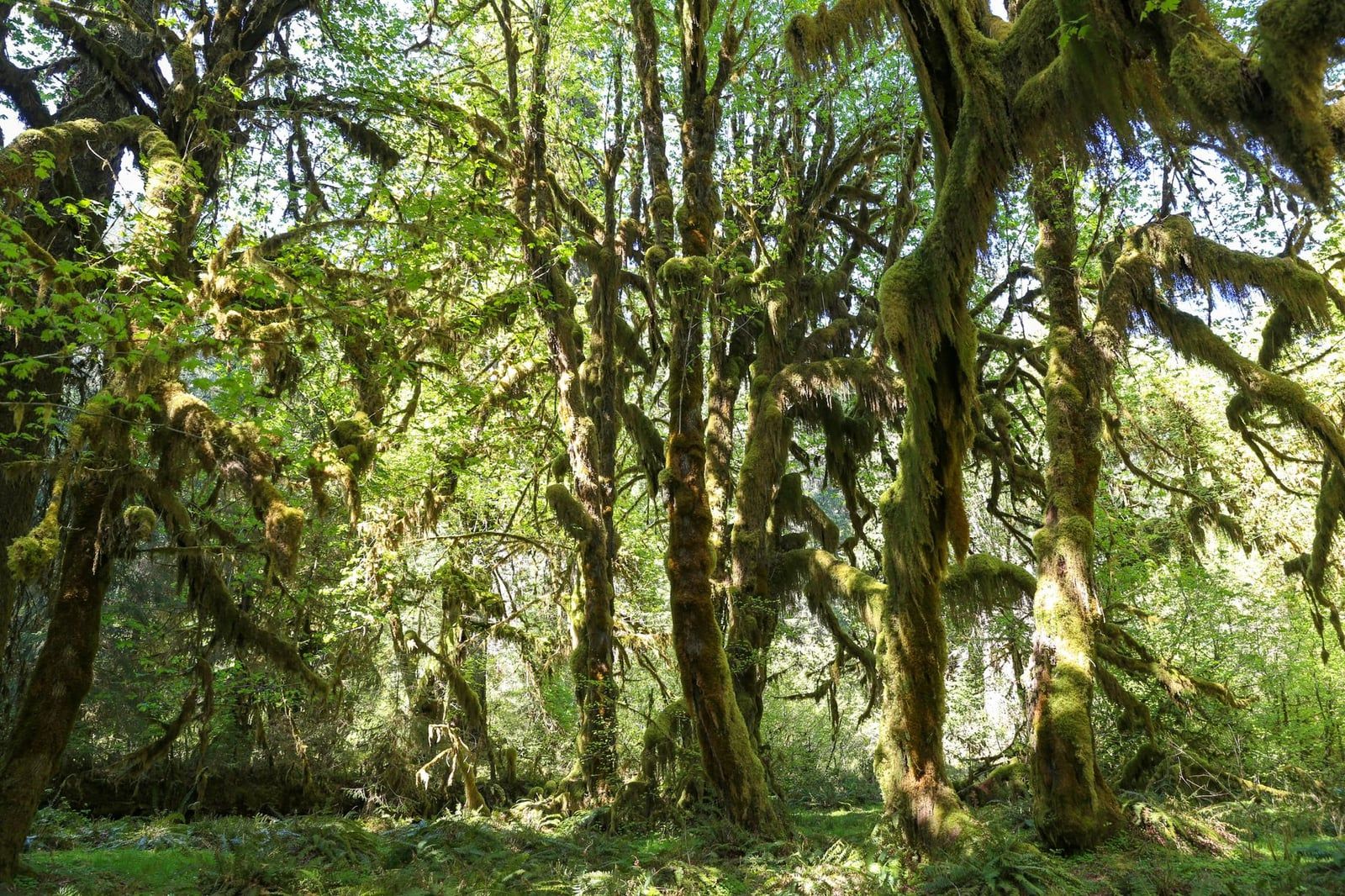
The Hall of Mosses is the single most photographed forest walk in the Pacific Northwest: a 0.8-mile loop where bigleaf maples wear curtains of club moss and the canopy filters the light down green. The 1.2-mile Spruce Nature Trail runs alongside the Hoh River if you want more. This valley gets close to 12 feet of rain a year — pack the rain jacket in any month.
Time it early. Between May and September, waits at the Hoh entrance booth can stretch past an hour by midday, and the small lot fills to capacity — arrive before 10 am or come after 4 pm. One status note: the Upper Hoh Road washed out in a 2024 storm and reopened in spring 2026, so confirm the road is open before committing to the 2-hour-15-minute drive out from Port Angeles.
Staircase Rapids Loop
Staircase, in the park's southeast corner along the Skokomish River, gives you the same mossy old-growth feel as the Hoh with a fraction of the visitors. The Staircase Rapids loop runs about 2 miles over roots and bridges, easy enough for most kids. It's a 2-plus-hour drive from Port Angeles, so it fits best if you're looping the peninsula or based on the west side.
Quinault Valley and Lake Quinault
The Quinault Valley on the park's south side holds some of the largest known trees in the world, including record Sitka spruce and Douglas fir, a short drive from the shores of Lake Quinault. Rainforest trails here are flat and quiet, and Lake Quinault Lodge, built in 1926, anchors the area with a historic place to sleep. Sunset over the lake's reflections is the valley's best free show. It's three hours from Port Angeles, so treat Quinault as its own day.
On the Coast: Ruby Beach, Rialto, Second Beach, Kalaloch, Ozette & Cape Flattery
Olympic's coastal strip is 73 miles of sea stacks, tide pools, and driftwood, and every stop on it answers to the same clock: the tide chart. Grab one free at any visitor center before you set out.
Ruby Beach
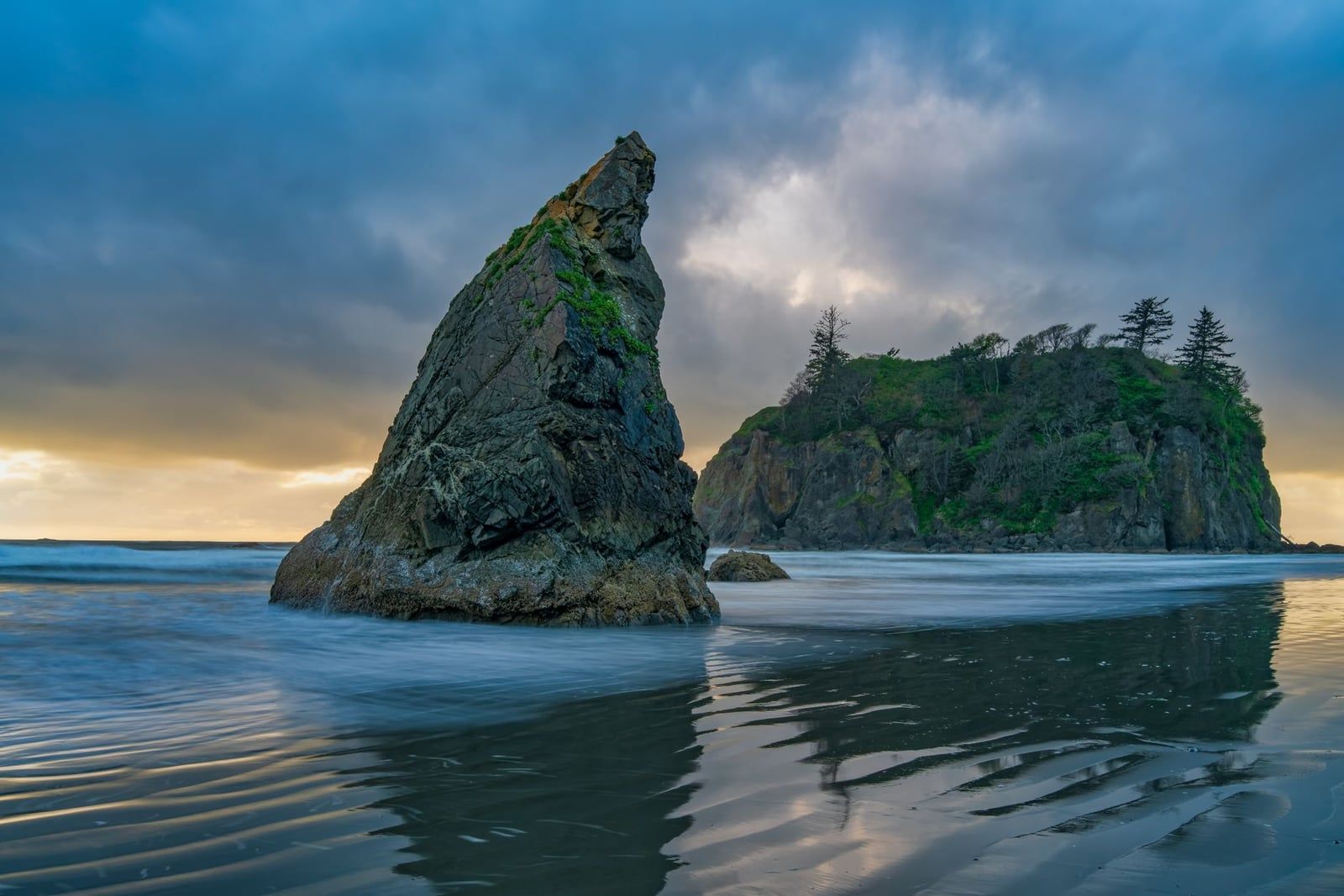
Ruby Beach is the coast's easiest hit: sea stacks, driftwood logs the size of cars, and tide pools, all a few hundred yards from the parking lot on Highway 101. Arrive at low tide for anemones and sea stars in the rocky pools, and give yourself an hour more than you think you need. There's no trail and no planning beyond the tide chart.
Rialto Beach and Hole-in-the-Wall
Rialto Beach, an hour and fifteen minutes from Port Angeles near La Push, is a wild cobble-and-sand shore where the surf hits hard. The walk to Hole-in-the-Wall, a sea-carved arch in a headland, is 3.3 miles round trip and only passable at low tide — the headland blocks the beach entirely at higher water. Check the tide table at the Mora ranger station or a visitor center, and time your walk around a minus tide if you can.
Second Beach
Second Beach, outside La Push, takes a 1.9-mile round-trip walk through coastal forest — including one rope-assisted log ladder — before opening onto sea stacks just offshore. It's the sunset beach. Photographers set up on the sand an hour before golden hour and stay past the color; camping here by permit is a classic overnight. If you're weighing all the shoreline options, our beach-by-beach guide to Olympic's coast compares them in detail.
Kalaloch, Beach 4 and the Tree of Life
The Kalaloch stretch along Highway 101 is the coast's most convenient access: pull off the highway and you're on the sand. Beach 4, a few miles north, has the best tide pooling on this coast at low tide — gooseneck barnacles, anemones, and sea stars by the dozen. The Tree of Life, a bleached Sitka spruce clinging to an eroding bluff below Kalaloch campground, is a five-minute stop and a strange one.
Ozette Triangle and Cape Flattery
The Ozette Triangle is the coast's full-day commitment: 9.4 miles on a loop of boardwalk trail through forest and three miles of wild beach, passing petroglyphs carved at Wedding Rocks. It's remote, muddy year-round, and completely worth it for hikers with a spare day. Shi Shi Beach, reached by a hike from the Makah reservation, is the other remote standout for tide pools and sea stacks.
Cape Flattery, the northwesternmost point of the contiguous US, sits outside the park on Makah tribal land — a 1.2-mile trail out to cliff-edge viewpoints over sea caves, about 1.5 hours one-way from Port Angeles plus a tribal recreation pass. Save it for a day with time to spare, and go when the forecast is clear; fog erases the whole point.
Lakes, Waterfalls & Hot Springs: Lake Crescent, Sol Duc & Mount Storm King
The north-side lake-and-waterfall cluster is the most flexible day in the park — everything sits within 1 hour 15 minutes of Port Angeles, and you can mix easy and hard from the same trailheads.
Sol Duc Falls and the Hot Springs
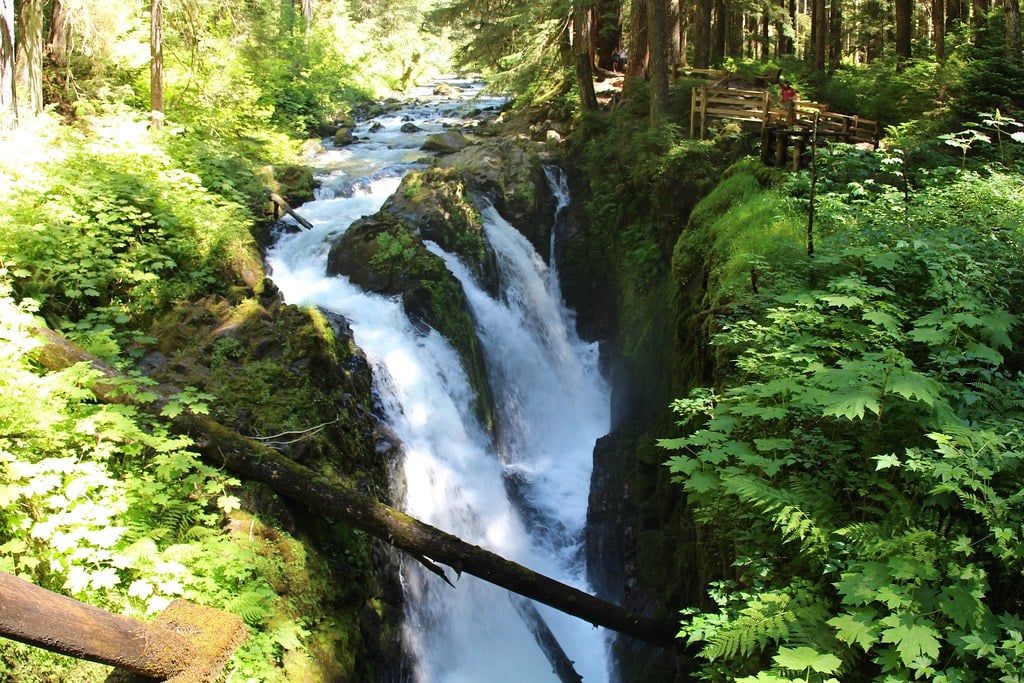
Sol Duc Falls splits into three channels as it drops through old-growth forest, and the trailhead is an easy 1.6-mile round trip from the road end — about as much waterfall as any easy hike in Washington delivers. The valley holds another draw: Sol Duc Hot Springs Resort, where soaking pools pair with the falls for a classic half-day combo, an hour and fifteen minutes from Port Angeles. Book the soak for after the hike, not before.
Lake Crescent and Marymere Falls
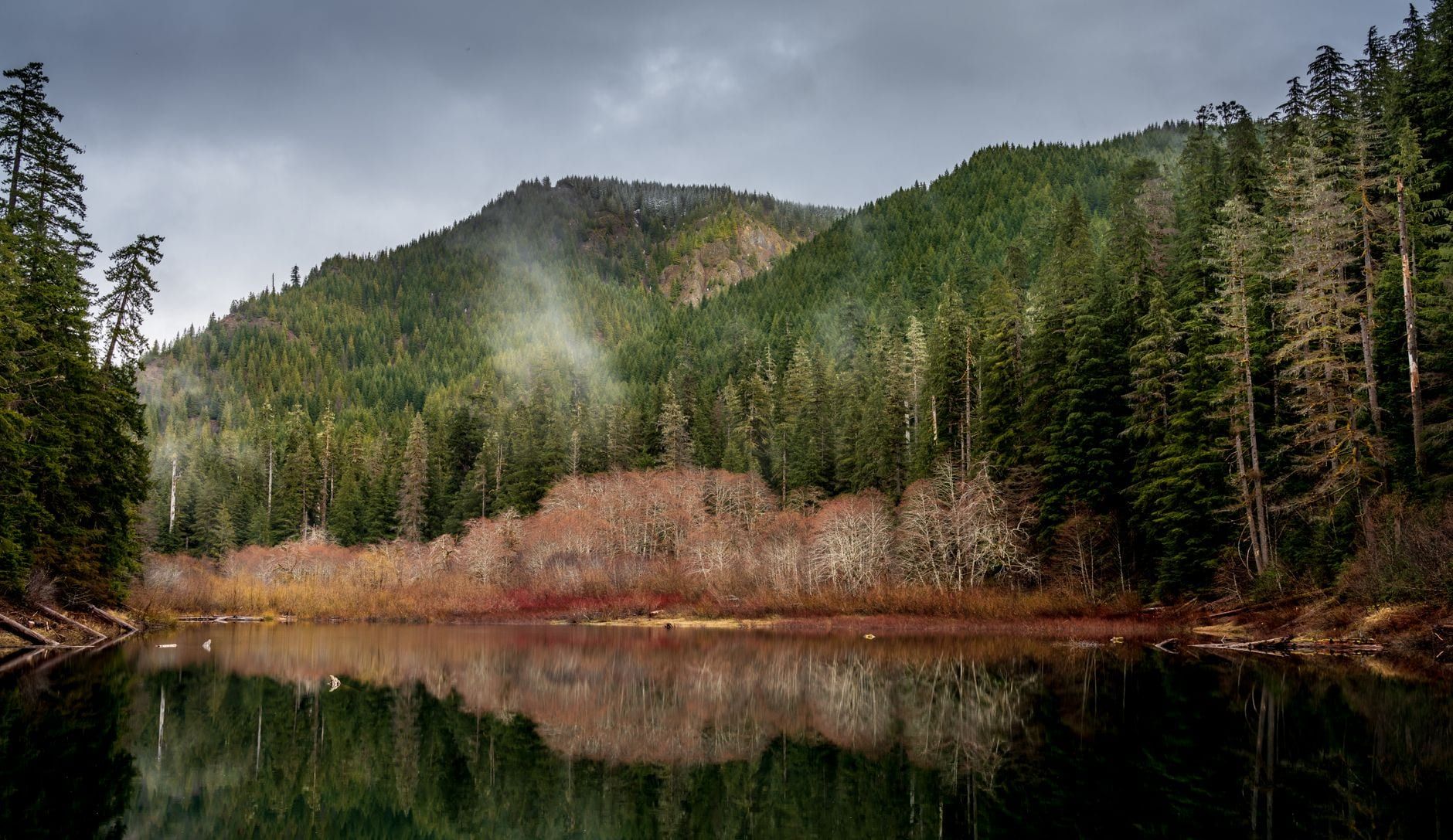
Lake Crescent, 30 minutes west of Port Angeles on Highway 101, is a glacially carved lake of deep blue water ringed by steep forest. Rent a kayak, canoe, or paddleboard at Lake Crescent Lodge starting around $20, or swim off the shores in August — it's cold, but the clarity makes up for it. The Marymere Falls trail leaves from near the Storm King ranger station and climbs gently 1.8 miles round trip to a 90-foot ribbon of water. It's the best low-effort payoff in the park.
This cluster is why the north side works so well as a base: Lake Crescent and Sol Duc are both within 1 hour 15 minutes of Port Angeles, and Hurricane Ridge is another 45 minutes beyond town. One day covers all three without rushing. Our Lake Crescent guide maps the stops, rentals, and the Devil's Punchbowl swimming hole.
Mount Storm King
Mount Storm King is the adrenaline pick on the north side: 4.1 miles round trip with about 2,100 feet of gain, ending at a bare granite slope with a rope-assisted scramble to the summit view over Lake Crescent. The trail ends at a viewpoint if you stop short of the ropes — and honest advice: if you fear heights or it's wet, stop there. The view from the ropes section is the payoff; so is knowing when to skip it.
Wildlife, Whales & Night Skies
Olympic protects the largest unmanaged herd of Roosevelt elk in the world — the animal the park was originally created for. See them at dawn or dusk in the Hoh and Quinault valleys, often right from the roadside, and listen for bugling during the fall rut in September. Higher up, Olympic marmots — found nowhere else on Earth — sun themselves on rocks in the subalpine meadows around Hurricane Ridge. Keep at least 50 yards from every animal, and back away if one approaches.
Gray whales migrate past the coast in spring and fall, and their spouts are visible from coastal overlooks with binoculars — no boat required.
Nights are dark enough that the Milky Way shows over the coast and from Hurricane Ridge. The formula: a clear forecast, a night near the new moon, and a backup plan for the marine layer that often swallows coastal skies after dark. The ridge above the fog line is the safer bet.
How Many Days Do You Need?
One day, and only the mountains-and-lakes half. The National Park Service's own half-day guidance from Port Angeles points to Hurricane Ridge, Lake Crescent, and the Sol Duc Valley — all within 1 hour 15 minutes of town, all reachable on a loop back to Port Angeles. Add Marymere Falls or Sol Duc Falls for the hike, and you've had a full Olympic day without crossing the peninsula.
Two days: keep day one as above, then spend day two on the west side — the Hoh in the morning (before 10 am) and Ruby Beach or Rialto in the afternoon. Stay overnight in Forks or Kalaloch so you're not driving three hours home in the dark.
Three or more days is when all three ecosystems fit properly: mountains, rainforest, and coast, plus the deeper picks like Staircase, the Ozette Triangle, or Cape Flattery. Rangers recommend splitting your lodging between the north side (Port Angeles) and the west side (Forks, Kalaloch, or Quinault) — with drive times running from 30 minutes to 3 hours from Port Angeles, one base means doubling back daily.
When to Go (And What Each Season Delivers)
June through September is the reliable window: driest weather, every road open, and daylight from before 5 am to nearly 10 pm near the solstice. That's also when the Hoh entrance line runs longest, May through September, so start famous trailheads early. May and September get similar access with fewer people.
Subalpine wildflowers peak from mid-July into August on Hurricane Ridge and around Obstruction Point — paintbrush and lupine across the meadows, and a strict rule to stay on trail where the plants are fragile. September adds the elk rut and quieter paths, at the price of a wetter coast. Our month-by-month guide to visiting Olympic goes deeper if you're choosing dates.
Winter flips the park. The coast becomes a storm-watching destination — book a Kalaloch window and watch 30-foot surf hit the sea stacks — while Hurricane Ridge, which receives about 30 feet of snow a year, runs snowshoeing, cross-country skiing, and tubing when the road is open. Rainforest trails stay open all winter. Bring the rain gear regardless; this is a rainforest year-round.
Entrance Fees & Park Logistics
Entry costs $30 per private vehicle, $25 per motorcycle, or $15 per person on foot or bike, valid for 7 consecutive days. Annual park passes ($55) and America the Beautiful passes are accepted. Two things most first-timers miss: the park is cashless, and you can prepay your pass on Recreation.gov to cut the entrance-station wait. Full details are on our hours and fees page.
No reservation or timed entry is required to enter the park. Reservations are required for the things inside it: in-park lodges, campgrounds ($15–24 per night at places like Hoh, Kalaloch, and Sol Duc), and wilderness permits for overnight trips.
Backcountry overnight trips cost $8 per person per night plus a $6 reservation fee, with groups capped at 12 — book through recreation.gov or the Wilderness Information Center. Bear canisters are required for food and scented items on coastal trips.
Getting There & Where to Base Yourself
Most visitors fly into Seattle-Tacoma International and rent a car; the drive to Port Angeles takes about 2.5 hours via I-5 and Highway 101, or you can cut across Puget Sound on the Seattle–Bainbridge or Edmonds–Kingston ferries, which adds scenery for a similar total time. A standard rental car is fine everywhere — no 4x4 needed. Route-by-route options are on our directions page.
Base yourself in Port Angeles for the north side: Hurricane Ridge, Lake Crescent, and Sol Duc are all within 1 hour 15 minutes, and the town has the main visitor center and most of the peninsula's restaurants. For the west side — the Hoh, Forks, La Push, Kalaloch, Quinault — sleep in Forks, Kalaloch, or Quinault itself. If you'd rather leave the driving to someone else, guided tours from Seattle handle the logistics in a single day.
The three in-park lodges — Lake Crescent Lodge, Kalaloch Lodge, and Sol Duc Hot Springs Resort — book out months ahead for summer, so reserve as soon as your dates are set. And the drive around the peninsula has bonus stops worth building in: Sequim's lavender fields and the Dungeness Spit sand spit east of Port Angeles, Victorian Port Townsend, and the Coho ferry from Port Angeles to Victoria, B.C. for a cross-border add-on.
FAQs: Olympic National Park, Answered
What is the number one thing to do in Olympic National Park?
The park's three signature experiences are Hurricane Ridge (45-minute drive, views from the parking lot), the Hall of Mosses loop (0.8 miles) in the Hoh, and Ruby Beach. Forced to pick one, Hurricane Ridge delivers the most for the least effort — no hiking required.
How many days do you need in Olympic National Park?
Three days is the minimum to see all three ecosystems — one each for mountains, rainforest, and coast. Drive times from Port Angeles run from 45 minutes (Hurricane Ridge) to 3 hours (Quinault), which is why one day can't cover the park.
Do you need a reservation or timed entry for Olympic National Park?
No — the park requires no reservations or timed entry for entrance. You do need reservations for lodges, campgrounds like Hoh and Kalaloch, and wilderness permits; prepaying your $30 pass on Recreation.gov speeds up the entrance line.
How much does it cost to get into Olympic National Park?
$30 per private vehicle, $25 per motorcycle, or $15 per person on foot or bike, valid 7 days, cashless. Camping runs $15–24 per night and a wilderness permit costs $8 per person per night plus a $6 fee.
What is the best time of year to visit Olympic National Park?
June through September, when weather is driest and every road is open. Wildflowers peak mid-July into August, the Hoh entrance has long waits from May through September, and winter brings storm watching on the coast plus snowshoeing at Hurricane Ridge, which gets about 30 feet of snow a year.
Can you see Olympic National Park in one day?
Yes, if you pick two of the three ecosystems. The realistic one-day loop from Port Angeles is Hurricane Ridge (45 min), Lake Crescent and Marymere Falls (30 min), and Sol Duc Falls (1 h 15) — all on the north side.
Is Hurricane Ridge open?
Generally yes, with limits. The Day Lodge burned down in 2023, leaving only temporary restrooms and a contact station, and the road closes on some weekdays for utility work — check the park's schedule before driving up.
Are dogs allowed in Olympic National Park?
Only in limited spots: on-leash in parking lots, campgrounds, picnic areas, roads, and a short list of trails such as Madison Falls and the Spruce Railroad Trail. Nearly all park trails are off-limits, so many visitors leave pets at home.