Olympic National Park protects twelve major river watersheds and more than 3,500 miles of rivers and streams, and together they keep over a dozen waterfalls running year-round. Come the rainy season, uncounted temporary falls appear on cliff faces that were dry a week earlier. Few parks give you this many ways to get wet on purpose.
This guide covers the seven falls worth building a trip around, from the triple cascade at Sol Duc to two quiet drops just outside the park boundary on Hood Canal. Each profile lists the round-trip distance, elevation, and access notes, and the day plans at the end pair falls by road corridor so you're not backtracking across a 922,650-acre park.
Olympic National Park Waterfalls at a Glance
The falls cluster along four road corridors, and that shapes every itinerary: Elwha and Lake Crescent (Madison, Marymere), the Sol Duc Valley (Sol Duc Falls and Salmon Cascades), the Quinault loop (Merriman and Bunch Creek), and Hood Canal (Murhut and Rocky Brook, both in Olympic National Forest). No roads cross the park's interior, so you pick a corridor and drive it — not the whole park in one day.
| Waterfall | Area | Round trip | Effort | Allow |
|---|---|---|---|---|
| Sol Duc Falls | Sol Duc Valley | 1.6 mi, ~200 ft gain | Easy | 1.5–2 hrs |
| Marymere Falls | Lake Crescent | 1.8 mi, ~500 ft gain | Easy–moderate | 1.5–2 hrs |
| Madison Falls | Elwha Valley | 0.2 mi, flat and paved | Easy | 20–30 min |
| Merriman Falls | Lake Quinault | Roadside stop | None | 10–15 min |
| Murhut Falls | Hood Canal (N.F.) | 1.5 mi, ~300 ft gain | Moderate | 1–1.5 hrs |
| Rocky Brook Falls | Hood Canal (N.F.) | Under 0.25 mi | Easy | 20–30 min |
Quick picks: Sol Duc is the signature. Merriman is the zero-effort stop — park beside the road and look. Madison is the most accessible and the only one on the list where you can bring the dog. Murhut is the quiet gem, a two-tiered forest fall most visitors never hear about. Bunch Creek, the seventh, has no published trail stats; it's covered below with the other Quinault falls.
There are dozens more falls inside the park, and the Olympic Peninsula Waterfall Trail — a tourism-board route marketing 20-plus sites across the peninsula — is a good extension once you've finished these. For longer approaches to water and ridgelines, start with our guide to the best hikes in Olympic National Park.
Sol Duc Falls: The Signature Waterfall
If you have time for one waterfall in Olympic, make it this one. Sol Duc splits into three or four prongs depending on flow, and you watch the whole thing from a log footbridge directly above the drop — the only waterfall on the peninsula you see from above rather than below.
1. Sol Duc Falls
From the road-end trailhead, it's 1.6 miles round trip with about 200 feet of gain, nearly all of it gentle. The trail runs through old-growth hemlock along the Sol Duc River and ends at the footbridge, where the water fans into its prongs and drops into a narrow, churning gorge. Allow 90 minutes to two hours.
Staying at Sol Duc Hot Springs Resort? Skip the trailhead and take Lover's Lane, a 6-mile loop with about 500 feet of gain that finishes at the soaking pools. Either way, the valley is about 40 minutes west of Port Angeles off Highway 101 via Sol Duc Road, and the parking lot fills by late morning in July and August.
Two add-ons share the same road. Salmon Cascades is a roadside pullout where the Sol Duc River's coho salmon leap upstream during migration — timing is luck, but the stop costs five minutes. Then there's the resort itself, where a post-hike soak in the hot springs pools caps the afternoon.
Marymere Falls: The Lake Crescent Classic
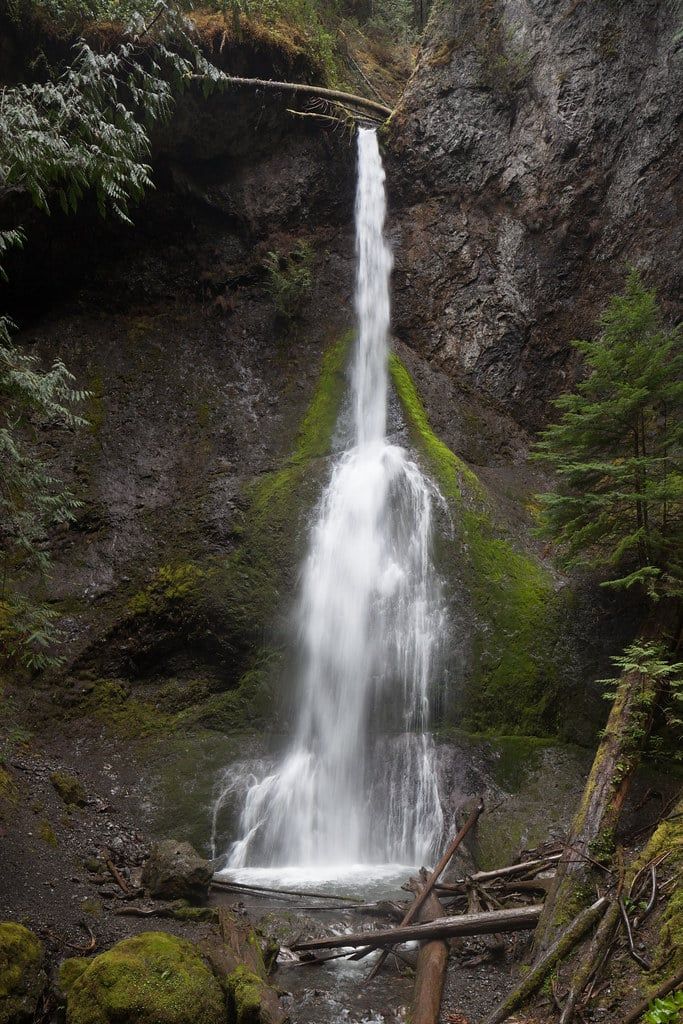
Falls Creek drops nearly 90 feet into a small pool here, and the walk is half the point: a nearly flat three-quarters of a mile of old-growth forest from the shore of Lake Crescent. This is the classic half-day stop on any northern Olympic route.
2. Marymere Falls
The round trip is 1.8 miles with about 500 feet of gain — but don't let the number scare you. Almost all the climbing comes in one short set of stairs right at the falls; the rest is flat walking under hemlock and fir. Start at the Storm King Ranger Station on Highway 101 at Lake Crescent's east end, where you'll find parking and restrooms.
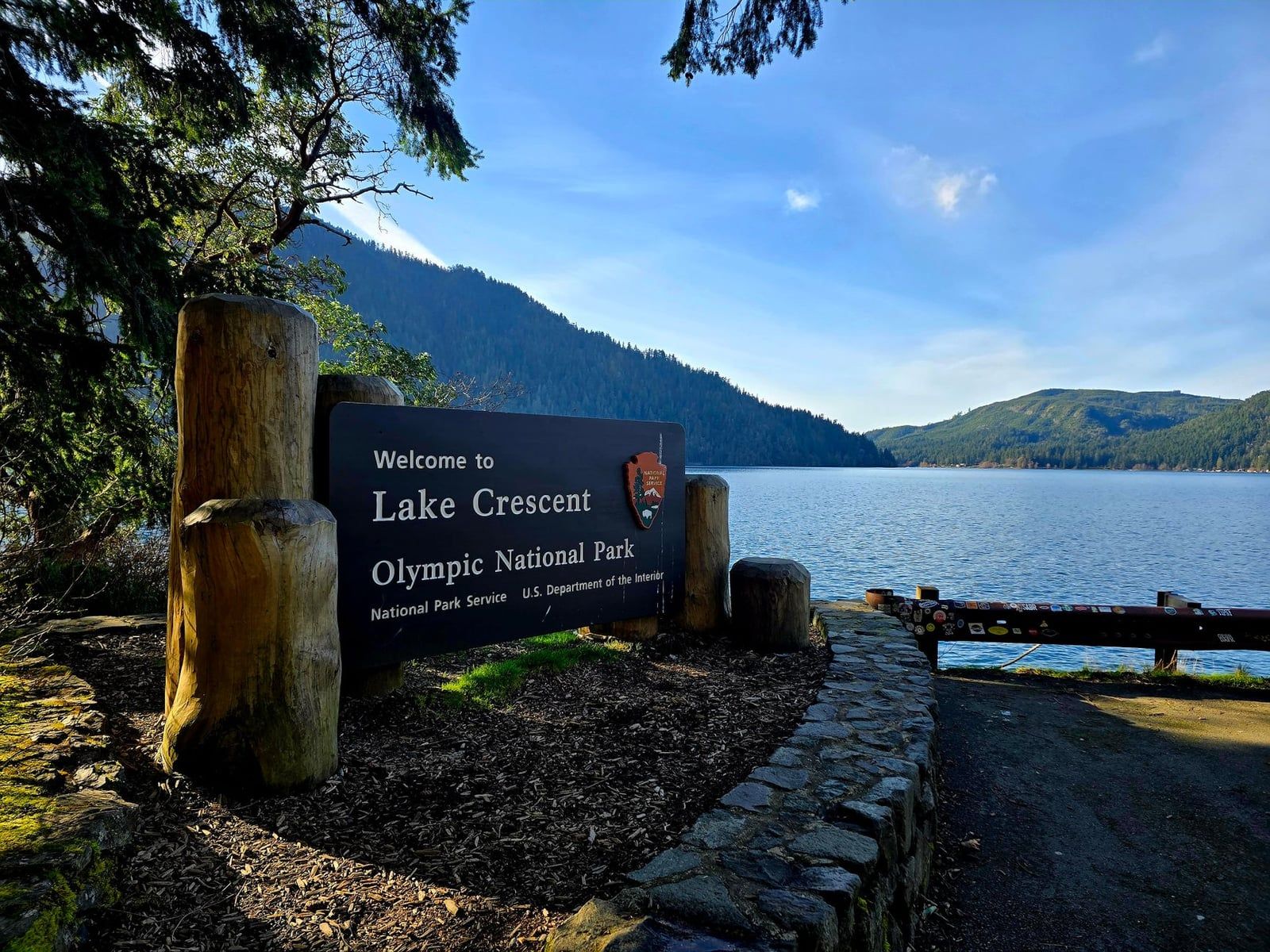
In summer, park rangers lead guided nature walks on this trail. It also slots into a bigger Lake Crescent day: extend through the Moments in Time trail to reach Lake Crescent Lodge for lunch, or bring a kayak or paddleboard and put in after the hike — our Lake Crescent guide covers where to launch, swim, and stay.
Madison Falls: The Easiest, Most Accessible Waterfall
Yes, you can see a waterfall in Olympic National Park without hiking. Madison Falls is a tenth of a mile from the parking area on a flat, paved path — wheelchair and stroller friendly, with picnic tables and a pit toilet at the trailhead.
3. Madison Falls
The creek drops about 60 feet in the Elwha Valley. Getting there is simple: Olympic Hot Springs Road, roughly two miles up the valley off Highway 101 between Port Angeles and Lake Crescent. Twenty minutes covers the visit, with time left over to stand at the base and look up.
Two things make Madison more than a checkbox. It's one of the very few trails in Olympic where dogs are allowed on leash — Sol Duc, Marymere, and the Quinault trails all turn pets away. And it runs especially pretty in winter and spring, when the low Elwha Valley stays green and wet. That combination makes it a reliable stop if you're visiting with kids or when the high country is snowed in.
Quinault Rainforest Waterfalls: Merriman Falls & Bunch Creek Falls
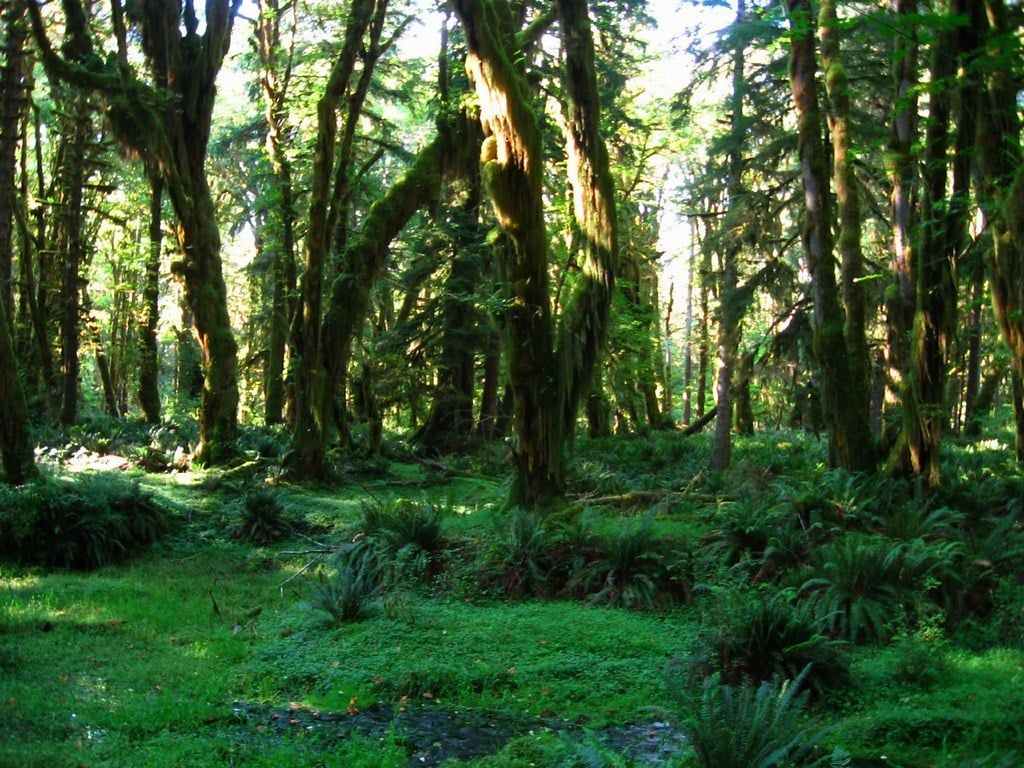
The Quinault valley sits in the park's rain-soaked southwest corner: moss on everything, record-size spruce along the lake shore, and two falls you can see with almost no walking. Most first-time itineraries skip it. Don't.
4. Merriman Falls
This is the easiest scenic reward in the park — a roadside stop on the Quinault loop road. Pull over, walk a few steps, and there it is, a ribbon of water dropping through the rainforest canopy. It suits limited-mobility visitors better than anywhere else on this list, and it costs about ten minutes.
5. Bunch Creek Falls
Bunch Creek, along South Shore Road, is one of the largest falls in the Quinault Rain Forest — a broad, multi-strand drop that runs hard after rain. Pair it with the Quinault Rain Forest Nature Trail and the full loop drive around Lake Quinault, which passes some of the largest known trees in the world and the 1926 Lake Quinault Lodge.
Backpackers have a bigger prize here. Enchanted Valley, reached on a multi-day hike up the Quinault River, is known locally as the Valley of 10,000 Waterfalls for the strings of falls that pour off its walls during snowmelt. Our Enchanted Valley guide covers the route, permits, and the historic chalet.
Murhut Falls & Rocky Brook Falls: The Best Waterfalls Just Outside the Park
Both of these sit just outside the park boundary in Olympic National Forest, on the Hood Canal side of the peninsula. No entrance fee applies, the access roads turn to gravel, and the crowds are a fraction of what Sol Duc draws. The detour pays off.
6. Murhut Falls
Murhut Falls drops 120 feet in one tier, then another 35 feet below it, and you view both straight-on from a bench across the drainage. The trail is 1.5 miles round trip with about 300 feet of gain through old-growth forest — a real hike, but a short one. Allow an hour and a half.
To get there, drive about 8 miles up Duckabush Road from Brinnon; the pavement ends and the road continues as gravel forest road 2430 to the trailhead. Most passenger cars manage it in dry weather. Take it slow and check conditions after storms.
7. Rocky Brook Falls
Rocky Brook is under a quarter mile round trip, reached near Dosewallips Road about 12 miles south of Quilcene. You view it from below, close enough to catch the spray, and in spring the whole wall thunders. If you're driving the Hood Canal route between Seattle and the park, these two falls turn a transport leg into the day's highlight.
Time a late-May or early-June visit and both trails are lined with wild rhododendrons in bloom — Washington's state flower, and worth the drive on its own.
When to See Waterfalls in Olympic National Park (Flow by Season)
April and May are the answer, most years. Snowmelt sends the heaviest water over every fall on this list, and the park's dozen-plus year-round waterfalls hit their loudest, most photogenic flow. If pictures are the goal, this is the window.
The rainy season, roughly November through March, multiplies the inventory. Per the National Park Service, countless waterfalls emerge that simply don't exist in summer — cliffs that are bare in August stream with water in January. A rainy-day strategy that works: you'll get wet anyway, so make the wet days your waterfall days.
Summer trades flow for reliability. The falls run lower, but every road is open, daylight stretches from about 5 a.m. to 10 p.m. near the solstice, and rangers lead guided walks to Marymere and other falls. That's the season to pair a morning waterfall with an afternoon on the coast.
Winter suits the low-elevation falls. Madison and Marymere run strong while their roads usually stay passable, and Madison is at its best then. Expect mud on every trail, check the park's road and weather conditions before driving out, and bring traction for icy patches. Our month-by-month guide breaks down the trade-offs in detail.
How to Plan Your Waterfall Trip: Fees, Dogs, Driving & Day Plans
Entry costs $30 per private vehicle, valid for 7 consecutive days; a $55 annual Olympic pass pays for itself on a second trip. No reservations or timed entry apply to any waterfall area — you just show your pass at the entrance station. Current hours and fee details are worth a quick check before you go, since some entrance roads close seasonally.
Dog rules surprise people. Pets are allowed only on a short NPS list of trails — Madison Falls among them, along with the Spruce Railroad Trail at Lake Crescent — plus campgrounds, picnic areas, and paved or dirt roads, always on a leash. Marymere, Sol Duc, and the Quinault trails are off-limits. Board the dog or plan the day around Madison.
Pacing is the other trap. Olympic covers 922,650 acres with no road through the middle, and its destinations sit on separate entrance roads off Highway 101 — a "quick" hop between corridors can eat an hour of winding driving. One corridor per half-day is a realistic pace. Arrive before 10 a.m. at Sol Duc and Marymere in summer, when lots fill fastest. A self-guided driving tour handles the routing and stop order for you.
Footwear: waterproof shoes. Olympic trails hold mud year-round, and the stair sections at Marymere stay slick in every season. In winter, add traction devices.
Day Plan 1: Elwha, Lake Crescent & Sol Duc
Start at Madison Falls early — you'll have it nearly to yourself. Continue west on Highway 101 to Storm King Ranger Station for Marymere, then lunch at Lake Crescent Lodge. In the afternoon, drive Sol Duc Road: pause at the Salmon Cascades pullout, hike Sol Duc Falls, and finish with a soak at the hot springs. It's a full day at an unhurried pace, all within 40 minutes of Port Angeles.
Day Plan 2: Quinault Loop, Plus Hood Canal
Drive the Lake Quinault loop road, stopping at Merriman Falls and Bunch Creek Falls with a walk on the Quinault Rain Forest Nature Trail between them and lunch at Lake Quinault Lodge. If your route to or from Seattle runs along Hood Canal, add Murhut and Rocky Brook on the way — that leg alone justifies the detour. Slotting the falls into a longer trip? Our 3-day Olympic itinerary has the frame.
Frequently Asked Questions
What is the most famous waterfall in Olympic National Park?
Sol Duc Falls. It splits into three or four prongs depending on flow and is the only waterfall on the Olympic Peninsula you view from above, from a log footbridge reached by an easy 1.6-mile round-trip walk with about 200 feet of gain.
When is the best time to see waterfalls in Olympic National Park?
April and May, when snowmelt sends the heaviest water over the falls. The park supports over a dozen waterfalls year-round, and countless more appear during the rainy season from November through March.
Which waterfalls in Olympic National Park require no hike?
Madison Falls (a tenth of a mile of flat, paved, wheelchair-accessible path in the Elwha Valley), Merriman Falls (a roadside stop on the Quinault loop road), and Rocky Brook Falls (under a quarter mile, just outside the park near Quilcene).
Are dogs allowed on the waterfall trails in Olympic National Park?
Barely. The NPS allows pets only on a short list of trails — Madison Falls Trail is on it — plus campgrounds, picnic areas, and paved or dirt roads, always leashed. Sol Duc, Marymere, and the Quinault waterfall trails are all off-limits to dogs.
Do I need a pass or permit to visit the waterfalls?
You need the park entrance pass: $30 per private vehicle, valid for 7 consecutive days, or a $55 annual Olympic pass. No reservations or timed entry are required for any of the waterfall areas.
Sol Duc Falls vs. Marymere Falls — which should I choose?
Do both if you can — they're about 40 minutes apart by road. Sol Duc is the multi-pronged cascade viewed from above with a gentle grade of about 200 feet; Marymere is a roughly 90-foot plunge through old growth with a steeper stair climb at the end.
Can you see waterfalls in Olympic National Park in winter?
Yes, and it's a good season for it. Rainy-season flow is the strongest of the year, and low-elevation Madison Falls is especially pretty in winter. Trails are muddy, so bring waterproof shoes and check road conditions before heading out.
How far is Sol Duc Falls from Port Angeles?
About 40 minutes west of Port Angeles via Sol Duc Road off Highway 101, per the National Park Service.
Sources
- nps.gov/experiences/onp-waterfalls.htm
- nps.gov/olym/planyourvisit/visiting-the-sol-duc-valley.htm
- nps.gov/olym/planyourvisit/pets.htm
- nps.gov/olym/planyourvisit/fees.htm
- nps.gov/olym/planyourvisit/tripideas.htm
- nps.gov/olym/planyourvisit/accessible-facilities.htm
- olympicpeninsula.org/drive-the-loop/waterfalls