Washington's two marquee parks sit on opposite sides of Puget Sound, and most Seattle-based travelers have time for only one. Mount Rainier is the efficient choice: a single 14,410-foot glaciated volcano, two concentrated trail corridors, and a two-hour drive with no ferry involved. Olympic is the bigger commitment — 922,651 acres stitching temperate rainforest, 70-plus miles of wild coast, and alpine ridges into one park, reached by ferry or a long loop around the Sound. This guide breaks down the drive times, trails, wildlife, seasons, and costs so you can pick with confidence.
Quick Answer: Mount Rainier vs Olympic at a Glance
Short version: Rainier for a day trip or a focused weekend built around one overwhelming mountain; Olympic for a 3-day-plus road trip through three ecosystems. Rainier sees roughly 2 million visitors a year across 236,381 acres, while Olympic logged about 3.7 million visits in 2024 spread across a park nearly four times larger. Both are 2–3 hours from Seattle, but the friction is completely different — Rainier is one road in, one road out, while Olympic means a ferry crossing (or a long southern loop) plus serious mileage between destinations.
| Mount Rainier | Olympic | |
|---|---|---|
| Size | 236,381 acres | 922,651 acres |
| From Seattle | 2–2.5 hours, no ferry | 2.5–3+ hours via Bainbridge ferry |
| Entry fee | $30/vehicle, 7 days (cashless) | $30/vehicle, 7 days |
| Signature feature | 14,410-ft glaciated volcano | Rainforest, coast, and alpine ridges |
| Ideal trip length | 1–2 days | 3+ days |
| Best months | July–mid-October | June–September |
The Core Difference: One Iconic Mountain vs Three Ecosystems
The choice really comes down to what kind of scenery you want to spend your days inside. Rainier concentrates everything on a single overwhelming subject; Olympic spreads its appeal across three landscapes that have almost nothing in common with each other.
Mount Rainier: one mountain fills the sky
Rainier, established in 1899 as one of the country's oldest national parks, orbits a single subject: a 14,410-foot stratovolcano the Coast Salish peoples call Tahoma, draped in more snow and ice than any other Cascade peak. Nearly everything you do happens in two corridors — Paradise on the south side and Sunrise on the east — both built to put you face-to-face with the mountain. Glaciers, subalpine meadows, mountaineering history, and winter snowshoeing all hang off that one volcanic massif. If you want a postcard that says "Washington" in a single frame, this is it.
Olympic: three parks stitched together
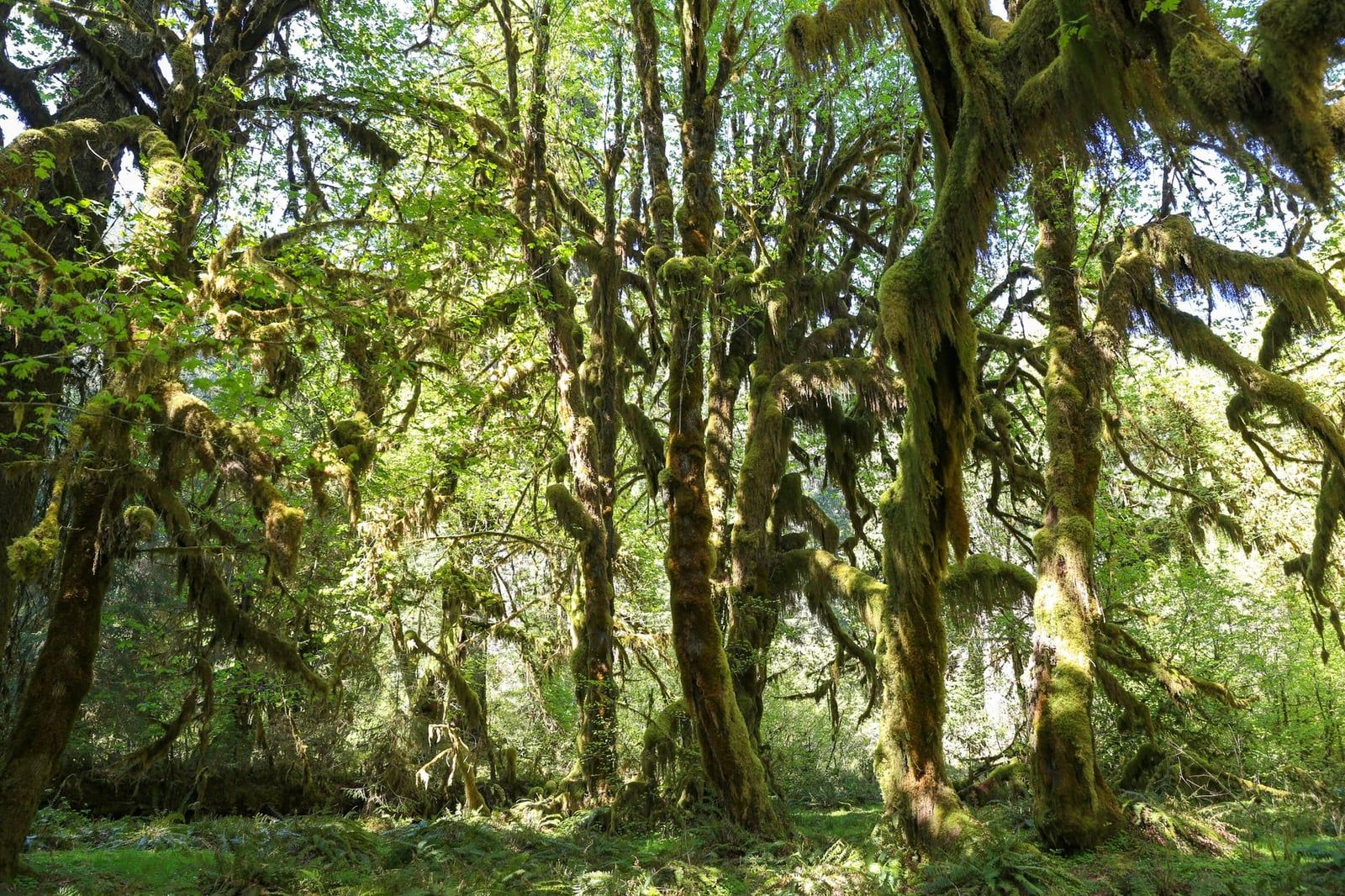
Olympic, established in 1938, has no single centerpiece. It protects the Hoh and Quinault rainforests — where parts of the Hoh receive nearly 12 feet of rain a year — more than 70 miles of wilderness coastline, and the glacier-capped Olympic Mountains topping out at 7,980-foot Mount Olympus. No road crosses the interior; 95% of the park is designated Wilderness, so getting from rainforest to coast to high country means long stretches on US-101 around the peninsula. The park is also a UNESCO World Heritage Site, recognized for its ecosystems and endemic species found nowhere else.
What they share
Both parks are in Washington, both use the same federal pass system, and both can swap sunshine for fog in an hour — carry a rain shell at either one, in any month. Neither has gas stations inside park boundaries, and cell service disappears fast once you leave the gateway towns. The differences bite harder in practice: Olympic's precipitation dwarfs Rainier's west-side rain, its activities span tide pooling to hot springs, and its crowds disperse across a park four times the size instead of stacking into two parking lots.
Getting There from Seattle: Drive Times, Ferries, and Park Entry
Rainier is the easy drive. Sunrise is about 100 miles from Seattle via SR-410 through Enumclaw, roughly 2 to 2.25 hours; Paradise is about 2.5 hours via I-5 and the Nisqually entrance at Ashford. No ferry, no bridge schedule, no reservations — you point the car at the mountain and go. That simplicity is why Rainier dominates the Seattle day-trip scene.
Olympic adds a body of water to the plan. The standard route is the Seattle–Bainbridge ferry (a 35–45 minute crossing), then about two hours of driving on US-101 to Port Angeles — 2.5 to 3 hours door to door. On summer weekends, unreserved vehicles can wait 1–2 hours for a sailing, so reserve space through Washington State Ferries or be at the dock before 7 AM. The no-ferry alternative is driving south around Puget Sound through Tacoma and Olympia, which trades the crossing for extra hours behind the wheel. We cover the full route options in our guide to getting to Olympic National Park, and current hours and entry fees are worth a quick check before you drive.
Entry costs are identical: $30 per private vehicle, valid for 7 consecutive days, at both parks. Ignore the $35 figure floating around some comparison posts — the National Park Service lists $30 at both. Rainier's entrances are cashless, so bring a card. If you're doing both parks in one trip, the $80 America the Beautiful pass pays for itself and leaves $20 change versus paying twice.
One more number for combined-trip planners: driving directly between the parks is about 208 miles, or 4.5–5 hours in normal traffic. Seattle sits almost exactly between them, which makes the city the natural pivot for a two-park loop.
Hiking Showdown: The Best Trails in Each Park
Rainier's trails are concentrated and easy to chain into a single day — you can hike the Skyline Loop in the morning and still fit in a short walk to Myrtle Falls or Nisqually Vista (both paved, both easy) before dinner. Olympic's trails are scattered across three ecosystems, so the honest strategy is one region per day: rainforest, coast, or ridge. For a deeper cut, our guide to the best hikes in Olympic National Park breaks trails down by region.
| Trail | Park | Round trip | Elevation gain | Why it matters |
|---|---|---|---|---|
| Skyline Loop | Rainier | 5.5 mi | ~1,400 ft | Wildflower meadows below the glacier |
| Mount Fremont Lookout | Rainier | 5.7 mi | 1,100 ft | Historic fire lookout from Sourdough Ridge |
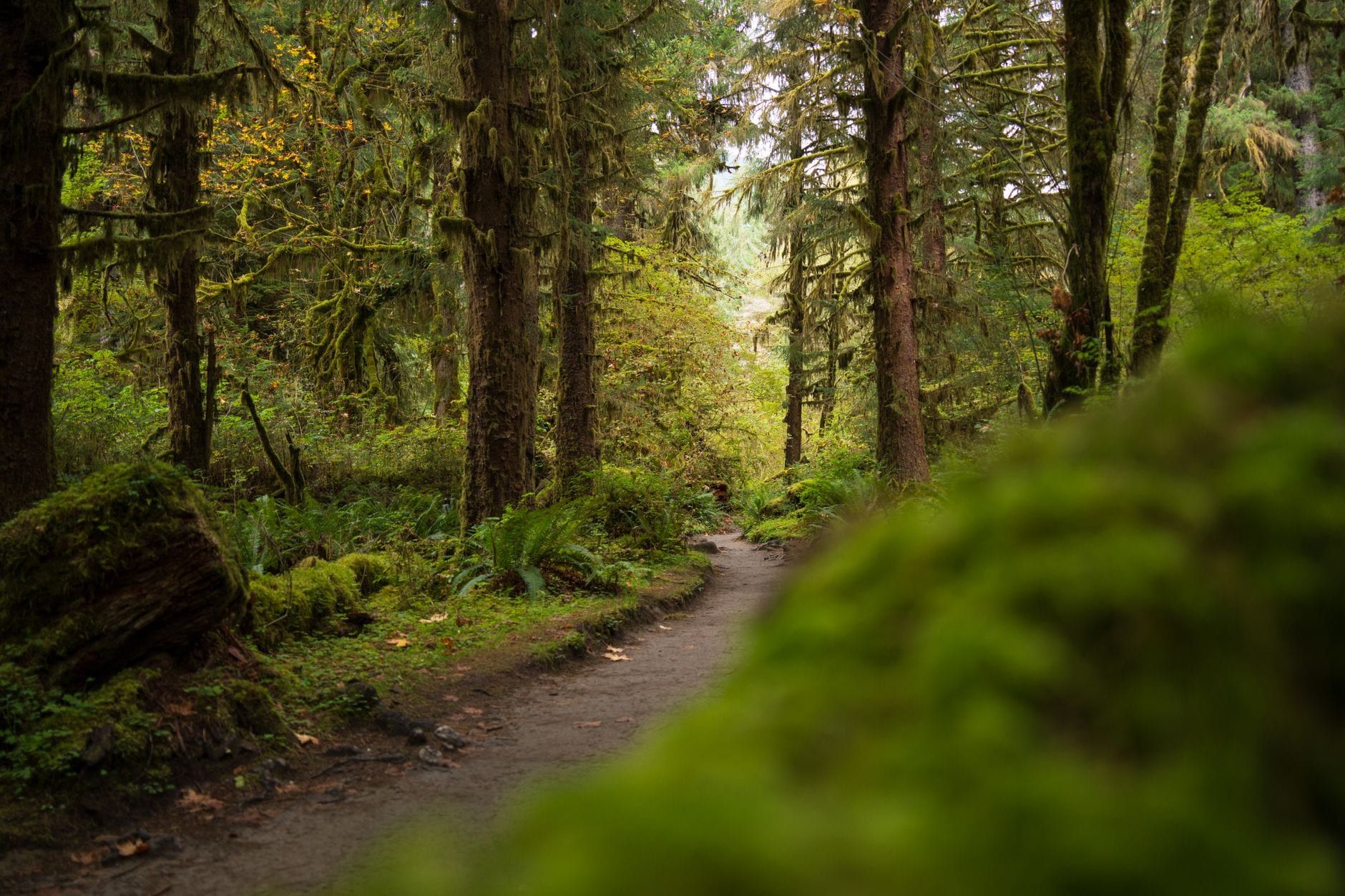
| Hall of Mosses | Olympic | 0.8 mi | ~100 ft | Moss-draped old growth in the Hoh |
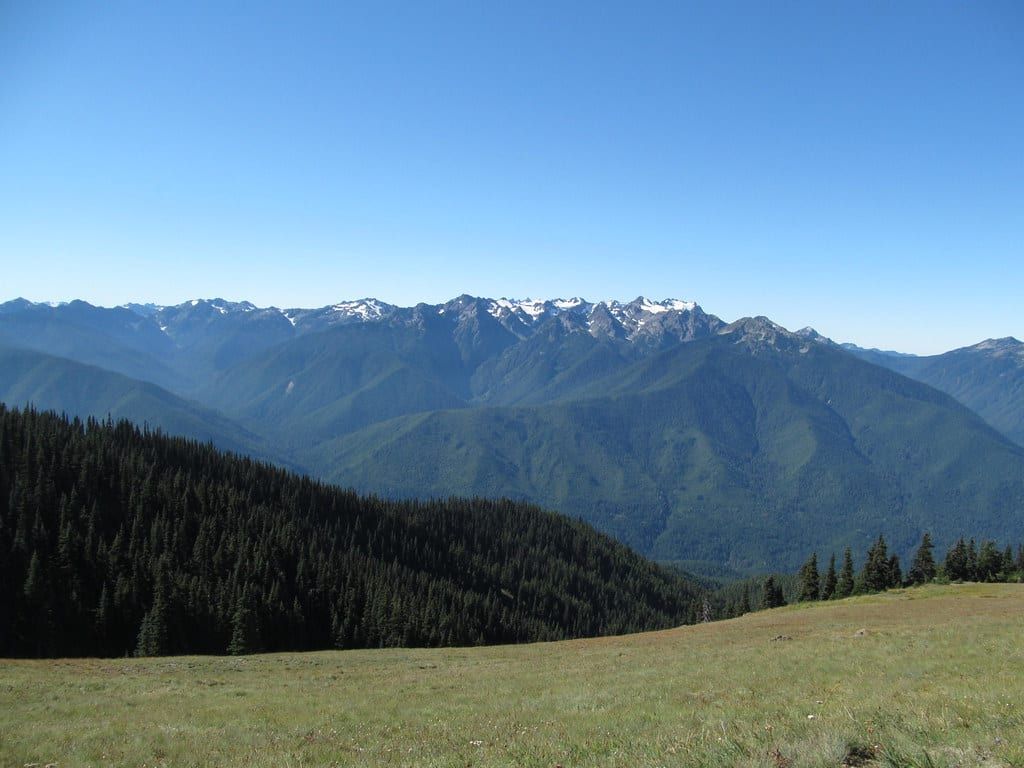
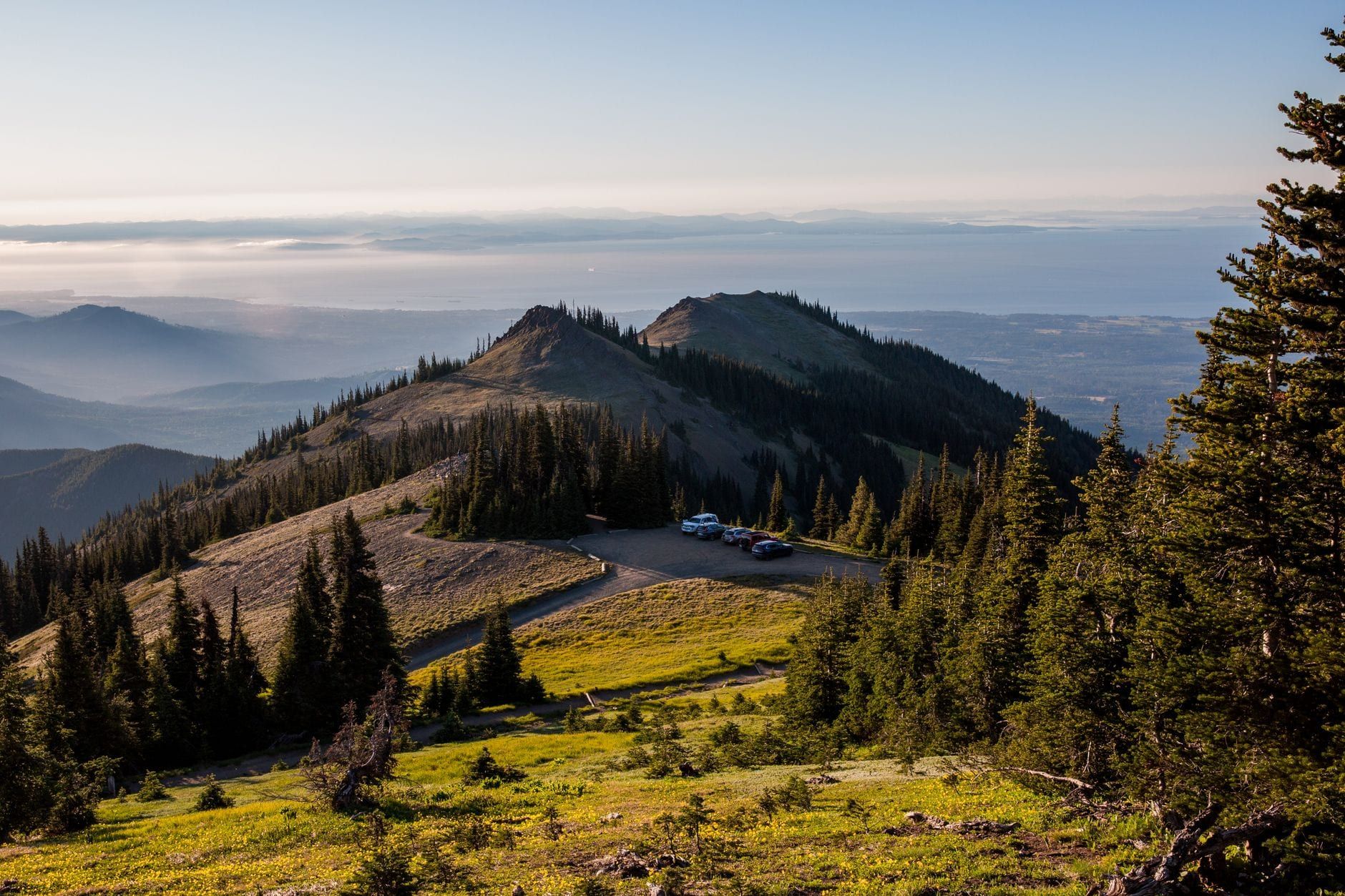
| Hurricane Hill | Olympic | 3.2 mi | 700 ft | Panoramas over the Strait of Juan de Fuca |
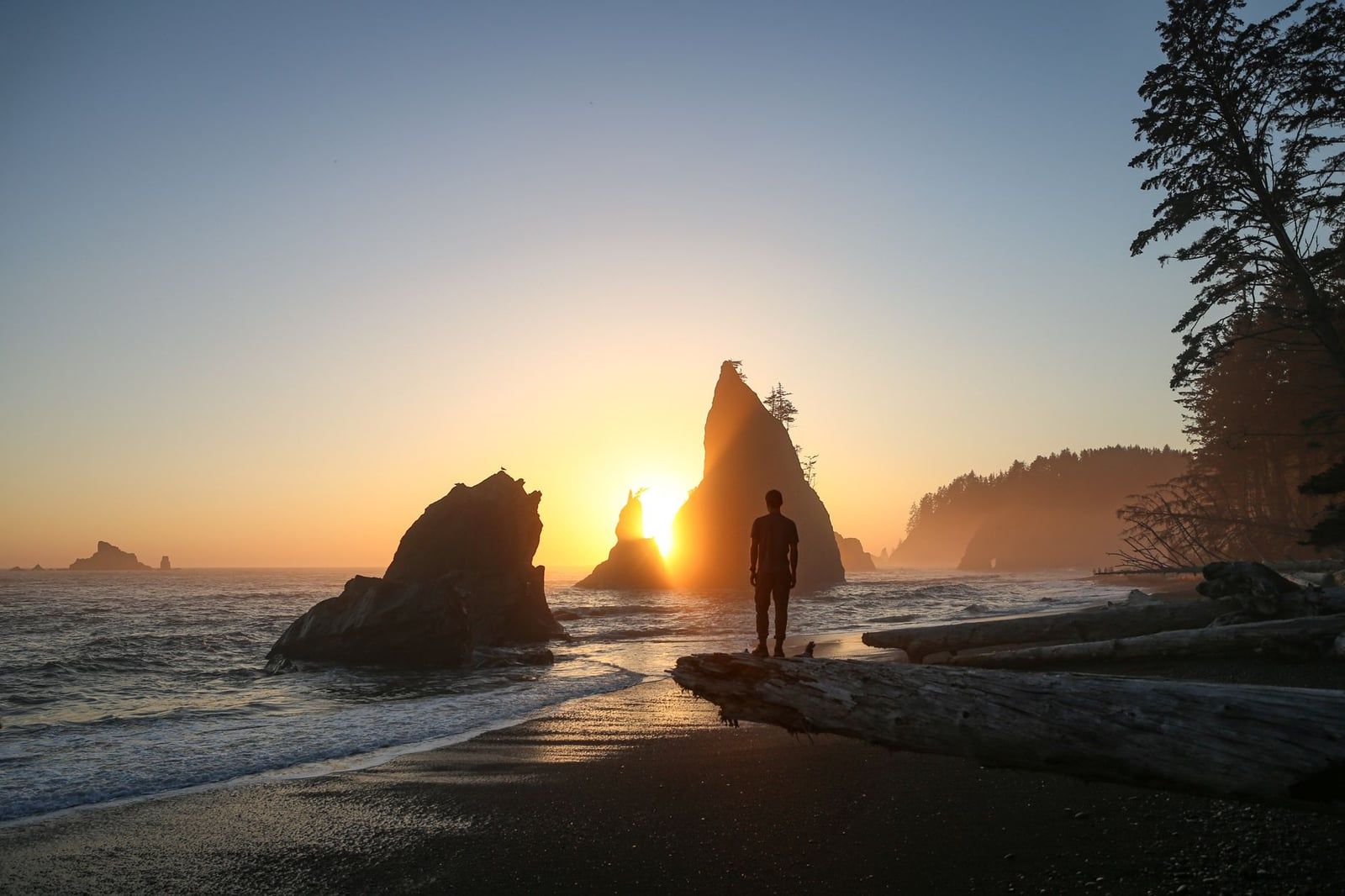
| Rialto Beach to Hole-in-the-Wall | Olympic | ~3.3 mi | Flat | Sea arch, tide-dependent beach walk |
| Mount Storm King | Olympic | 4.1 mi | 2,100+ ft | Steep ropes-assisted climb above Lake Crescent |
Rainier holds the edge for alpine payoff per mile — nothing in Olympic matches standing in a wildflower meadow with the Emmons Glacier a few thousand feet above you. Spray Park, north of Carbon River, delivers similar meadow scenery with a fraction of Paradise's crowds if you want to work harder for it. Olympic's edge is variety: nowhere else can you walk a moss-carpeted rainforest loop in the morning and reach a Pacific sea arch the same afternoon. Sol Duc Falls, an easy 1.6-mile round trip through old growth to a triple cascade, is a good add-on if you're based near Lake Crescent.
One Olympic rule Rainier doesn't have: tide charts. The walk to Hole-in-the-Wall is only passable near low tide, and headlands elsewhere on the coast can trap hikers as the water rises. Grab a free tide table at any visitor center, and read up on the coast in our guide to Olympic's best beaches before you commit to a coastal route.
Wildlife and Wildflowers: What You'll Actually See
Olympic wins on wildlife richness. Roosevelt elk — the largest elk subspecies in North America — graze the Hoh and Quinault valleys in herds of 10 to 30, often right off the road. The Olympic marmot lives nowhere else on Earth and suns itself on rocks near Hurricane Ridge. Gray whales migrate past the coast in spring, tide pools at Kalaloch and Rialto hold sea stars and anemones, and bald eagles work the shoreline. Our Olympic wildlife guide covers where and when to find all of it.
Rainier counters with reliability. Hoary marmots pose on rocks at Paradise almost on schedule, mountain goats work the high cliffs, and pikas squeak from talus fields — all within a compact alpine zone you can cover in a morning. Black bears live there too, but sightings are rare compared with the elk you'll practically trip over in the Hoh. Keep 50 yards from everything with hooves or claws; in Olympic that distance is park regulation, not a suggestion.
Wildflowers are Rainier's signature event. The Paradise meadows peak mid-July through mid-August, with lupine and paintbrush drawing photographers from across the country. Hurricane Ridge blooms on the same July–August schedule, but without one looming volcano anchoring every frame. If the bloom is the point of your trip, Rainier in late July is the single best week in Washington.
Best Time to Visit Each Park (and Beating the Crowds)
July and August are peak season at both parks — full bloom at Rainier, the driest weather and widest road access at Olympic — and the busiest months of the year. Paradise's lots fill by about 9 AM on summer weekends, and Olympic's pressure points (Hurricane Ridge, the Hoh, Ruby Beach) can see 30-minute to 2-hour entry delays once lots hit capacity. Arrive before 10 AM or after 4 PM at Olympic's hot spots, favor weekdays, and check the park's road and weather line (360-565-3131) before driving — conditions change without warning. For a month-by-month breakdown, see our guide to the best time to visit Olympic.
Fall flips the script. September and October are quieter at both, and Olympic arguably owns the shoulder: elk bugle through the rut in the rainforest valleys, mushrooms push up under the old growth, and the coast turns moody and dramatic. Sunrise closes to vehicles after mid-October, thinning Rainier's options to the Paradise side, but the trade is nearly empty trails.
Winter is where the parks diverge hard. Rainier keeps Longmire and Paradise accessible year-round — Paradise holds the world record for snowfall in a single season, and rangers lead snowshoe walks when the white stuff piles up. Hurricane Ridge Road, Olympic's only alpine road, typically closes for extended stretches from November through March. Spring brings low crowds and a snowbound Rainier upper country while the Hoh hits its greenest, wettest stride.
How Many Days You Need: Day Trip, Weekend, or Full Week
A day trip works for Rainier and honestly doesn't for Olympic. Rainier from Seattle is a 2–2.5 hour drive each way with no ferry, so a 7 AM departure buys you a full day at Paradise or Sunrise and a reasonable return time. Olympic's ferry crossing plus the distances between regions eat the day — the drive from Rialto Beach to Hurricane Ridge alone is about two hours, and that's one leg of a park with three unmissable ecosystems.
A weekend suits Rainier perfectly: one day at Paradise, one at Sunrise, done. Olympic needs a minimum of 2 days to see two regions well, and 3 is the real floor if you want rainforest, coast, and Hurricane Ridge without racing. The National Park Service itself recommends 3-plus days to cover the park properly. A full week is where Olympic shines — add Lake Crescent, Sol Duc, and the Ozette coast, or split the week between both parks.
Families can bend the math either way. Rainier is the spontaneous pick: paved interpretive trails, a Junior Ranger program, and a mountain view from the parking lot. Olympic pays off bigger for older kids — tide pools, elk herds, and a rainforest that feels like another country.
Where to Stay and Eat Near Each Park
Neither park has a single hub town, so where you sleep shapes what you can actually see. Rainier's bases cluster at two entrances; Olympic's are spread across the peninsula, one per region.
Basing for Rainier
Ashford, about 2 miles from the Nisqually Entrance, has the widest lodging selection near Rainier; Packwood covers the east side for Sunrise trips. Inside the park, the National Park Inn at Longmire stays open year-round, while Paradise Inn (at 5,420 feet) runs roughly mid-May to early October and books out months ahead. Campers: Cougar Rock has 173 reservable sites about 10 miles from Paradise, and White River, near Sunrise, holds 112 first-come, first-served sites from July through September.
Basing for Olympic
Olympic's gateways divide by region: Port Angeles for Hurricane Ridge and the north, Forks for the Hoh and the coast, and Lake Quinault for the southern rainforest. In-park lodging includes Lake Crescent Lodge, a 1916 lodge sitting directly on its namesake lake — see our Lake Crescent guide for the full picture — plus Kalaloch Lodge on the ocean, Sol Duc Hot Springs Resort, and Log Cabin Resort. Camping runs the same gamut, from oceanfront Kalaloch to Mora near Rialto Beach; the popular campgrounds take reservations through recreation.gov in peak season.
Food is a real difference. Port Angeles and Forks are actual towns with actual restaurants — seafood diners, taquerias, coffee shops — while Rainier's dining scene is essentially lodge dining rooms and Ashford diners. Picnic culture rules at both parks, and neither has food service beyond the gateway infrastructure. Book summer lodging at either park as early as you can; the desirable beds sell out months ahead.
Can You Do Both? The Combined Washington Loop
Yes — with 6 to 7 days. The parks sit on opposite sides of Puget Sound, about 4.5–5 hours apart by road, and Seattle makes the natural midpoint between them. The efficient circuit looks like this: two days at Rainier based in Ashford, a transfer day south through Olympia to the peninsula, then three to four days on the Olympic side hitting the Hoh and coast before finishing at Hurricane Ridge and ferrying back to Seattle from Bainbridge. Our 3-day Olympic itinerary handles the peninsula half in detail.
Do Rainier first. Its early-start days pair well with a Seattle arrival, and it burns less planning energy, saving the ferry logistics and multi-base juggling for the back half of the trip when you're settled into road-trip rhythm. One hard rule: with only 3 days total, pick a single park. Splitting three days across a 5-hour transfer leaves you roughly a day in each, which is enough to taste Rainier but cruelly thin for Olympic.
Final Verdict: Which Park Should You Choose?
Choose Rainier if you have two days or fewer, want the iconic volcano-and-glaciers shot, value no-ferry simplicity, need winter access, or are traveling with first-timers and young kids. It's also the pick if wildflower photography is the trip's purpose — Paradise in late July is the benchmark bloom in Washington.
Choose Olympic if you have three days or more, want maximum ecosystem variety in one trip, care about wildlife beyond the alpine regulars, love coastlines, or are traveling in the shoulder season. Its crowds spread across four times the acreage, so you're less likely to circle a full parking lot at 10 AM.
For completeness: Washington's third park, North Cascades, charges no entrance fee, sees only about 30,000 visitors a year, and holds more glaciers than any park in the lower 48 — the solitude hiker's call, if you can spare the extra drive. But for the choice most travelers face, the tiebreaker is simple. Free up 3 or more days and Olympic's rainforest-to-coast-to-ridge range is the more memorable trip; with less time than that, Rainier is the smarter, kinder-to-your-itinerary pick.
Frequently Asked Questions
Which is better, Mount Rainier or Olympic National Park?
Neither is objectively better. Rainier suits trips of 1–2 days built around one iconic 14,410-foot glaciated volcano with the easiest Seattle logistics; Olympic suits 3-plus days spanning temperate rainforest, Pacific coast, and alpine ridges across 922,651 acres — nearly four times Rainier's size.
Which is closer to Seattle?
Mount Rainier. Sunrise is about 100 miles via SR-410 (2–2.25 hours) and Paradise about 2.5 hours, with no ferry. Olympic takes 2.5–3 hours to Port Angeles via the Bainbridge ferry, longer to the Hoh and coast — and summer weekend ferry waits can add 1–2 hours.
How many days do you need in each park?
Rainier works as a focused 1–2 day visit since Paradise and Sunrise are concentrated. Olympic needs at least 3 days — its regions sit 1.5–2 hours apart with no roads crossing the interior, and the National Park Service recommends 3-plus days to see all three ecosystems.
Can you visit both in one trip?
Yes, with 5–7 days. The parks are about 208 miles and 4.5–5 hours apart by road, with Seattle as the natural midpoint — a common split is 2 days at Rainier, a transfer day, then 3–4 days on the Olympic Peninsula before ferrying back.
Which park has better wildlife?
Olympic, on variety: Roosevelt elk (the largest elk subspecies in North America), the endemic Olympic marmot, whales offshore, and rich tide pools. Rainier's hoary marmots, mountain goats, and pikas are more reliably seen in its compact alpine zones.
Which is better in July or summer?
Both peak July–August. Rainier's Paradise wildflower bloom (mid-July to mid-August) is Washington's benchmark, but its lots fill by 9 AM. Olympic's crowds spread across a park four times larger, and its coast runs driest in late summer.
Do you need reservations or timed entry?
Olympic requires no reservation to enter, though popular campgrounds and wilderness permits book through recreation.gov. Rainier dropped its 2024–25 timed-entry pilot, but requirements change year to year — verify on recreation.gov for your dates, and arrive before 9 AM regardless.
Which park is cheaper to visit?
Entry is identical: $30 per vehicle for 7 days at both parks, and the $80 America the Beautiful pass covers both. Your real cost levers are lodging base, gas, and Olympic's ferry fares, not the entrance stations.